The enhanced PYP moves towards action for the learner and this new focus or (re)newed focus on the importance of the learning community. I guess the easy connections are parents, other people within the school, and maybe even experts from outside our school but somewhat connected to our school community.
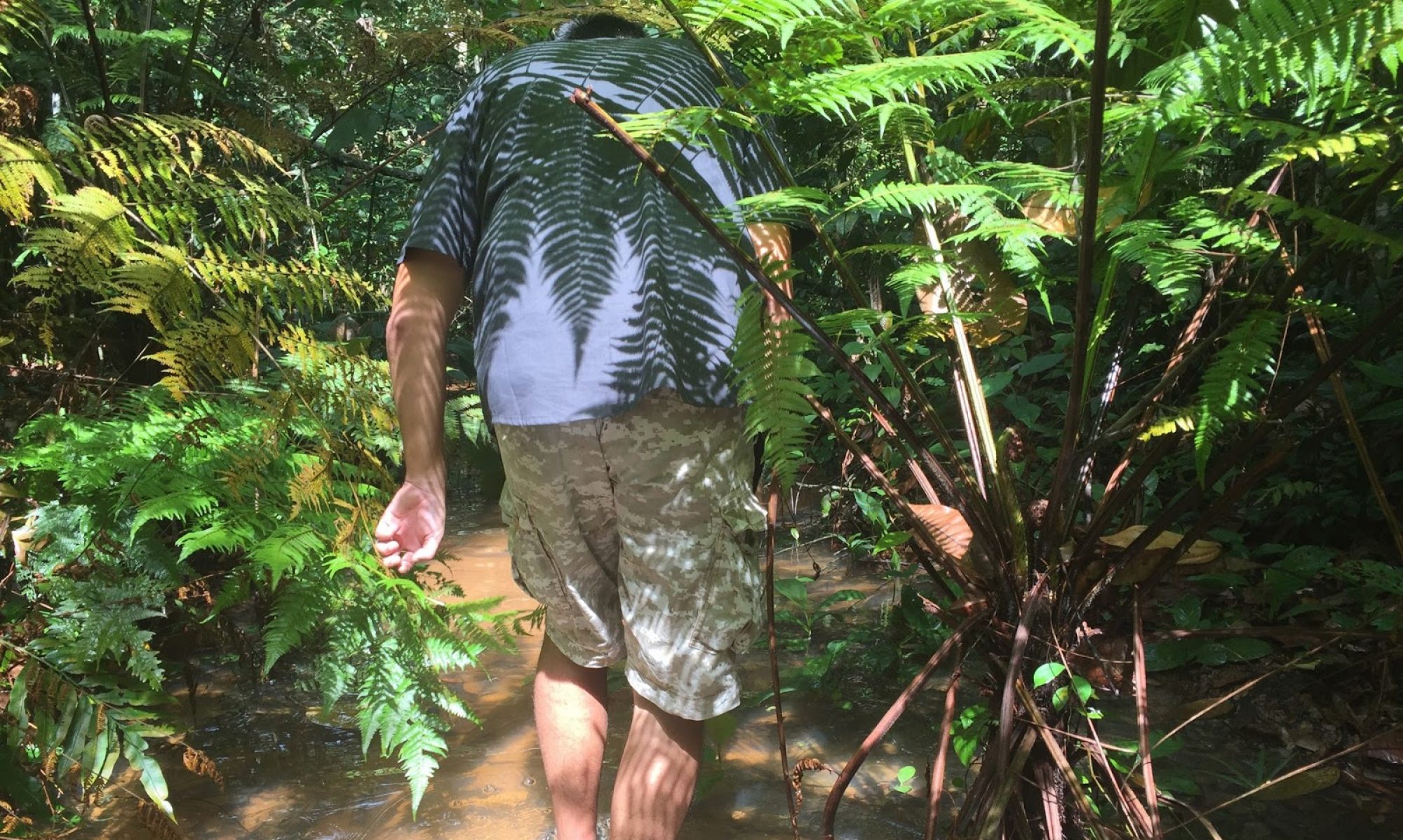
I’ve been thinking more about how our community should involve the more than human world (a phrase I love from Place, Being and Resonance). This idea that we don’t really go out and treat our place as a community, what do the little lizards have to teach us, what about the ants, the leaves, anything? If we want students to love our land we have to know it, but maybe before we know it we have to acknowledge it’s a part of our community.
There’s been a lot of reading, reporting, new role wondering this past week and I really think that this idea is one I have to think seriously about how to incorporate into the rest of the year.
I’ve been reading a lot and this is my favourite sentence recently “What if local knowledge – which in Geertz’s appropriately pleonastic locution, “presents locally to locals a local turn of mind (1983:12) – precedes the knowledge of space?” (Casey, 1996, p. 16). I think it’s hilarious that someone who is very wordy talks about another person’s wordiness. But more than that it got me really thinking of what comes first. Space, or place?
And why does one come first? Can we know the general without knowing the specific? Do we need to know a bunch of things before we can go deep? Or do we need something that isn’t abstract first? Casey argues (I think anyway) that we need to understand our place first, and place should be a priority. I happen (right now) to agree.
So, what does this mean for teaching, does general happen before specific? Do we do the hands on thing first because we need that to know the general (again I think so)? But when do we do this outside? When do we dig deep in to our place (especially in an international school)?
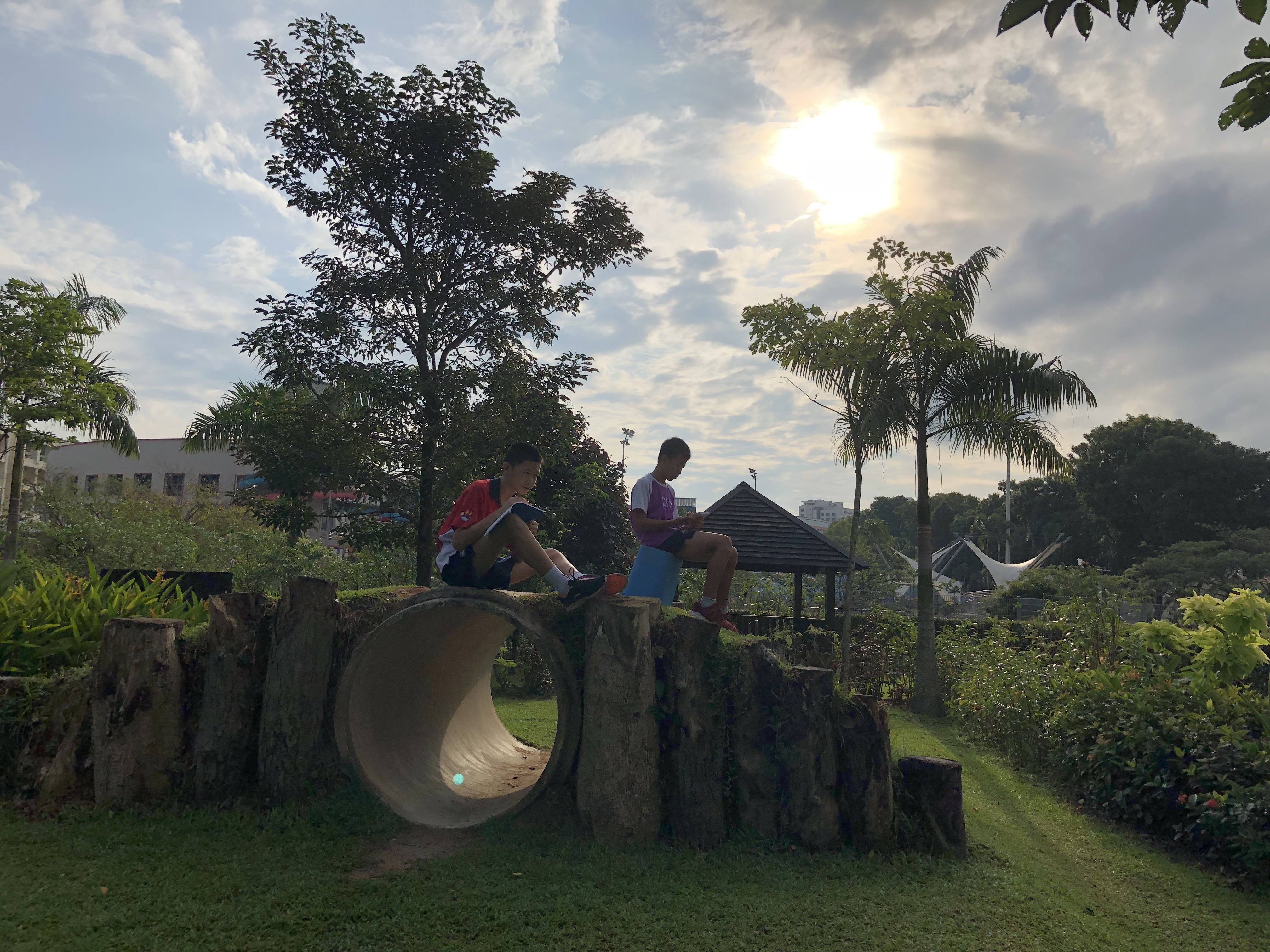
We’ve been doing open minds this week, getting out into our city and exploring what it means to be here. We looked at China town and really started to wonder what objects might define us as a place. What is happening around us? Who is here? Why are these things here? The questions were great, and I think the students are feeling more connected (they asked for my Sang Cancil stories anyway, so they hopefully are becoming more connected to where they are).
So even though we may want students to know specific content standards, or general concept ideas, how can we really make things meaningful? What comes first?
Casey, E. (1996). How to get from space to place in a fairly short stretch of time phenomenological prolegomena. In K. Basso, H. (Ed.), Sense of Place. U.S.A.: School of American Research.
I’ve been reading about different ways to develop a sense of place, and feel more connected to the land. One of the ways both Basso and Raffan talk about, especially when looking at indigenous nations, is how we name places. When we name things we build our relationship with them, we define how to use them, and we create a way to interact with the place.
I’ve been thinking about how I’ve changed one of my classroom practices since last year. Last year, one of the first things we did as a class is name ourselves. How do we want to be called. I have two classes this year, and I had planned on doing it in our new unit, but I think I missed an early opportunity.
There’s two ways for me to think about this. One is that, we could have taken an early opportunity to define ourselves, and how we work together. We could have started naming and identifying ourselves as a group in order to really think about how we work with the place around us. The other is that now that we know more about us, and how we work together we can maybe come up with a more informed and relevant name.
I suppose though, I know now that we need to name ourselves, we need to name our team, and we need to think about the places we inhabit. I’ve been working more on talking about the Sang Cancil stories. The Little Mouse Deer, who is much like Briar Rabbit. The students are really liking them, they connect and think Sang Cancil is funny, they are asking more questions about who the leaders were in the past, and making guesses about important other creatures in the jungle. It’s more surprising than I thought.
It’s been a good journey so far, knowing more about our place, and starting to make connections. The kids even went out in the rain yesterday. Fun times.
Basso, K., H. (1996). Wisdom Sits in Places: Landscape and Language among the Western Apache. Albuquerque: University of New Mexico Press.
Raffan, J. (1993). The Experience of Place: Exploring Land as Teacher. ERIC Online, 16(1), 39-45.


 Joe Teft