Over the last few months, I’ve found myself returning to a simple question: What does it actually mean to teach reading well?
Like many teachers, I’ve spent years collecting strategies, trying new programs and searching for ways to help students become stronger readers. But recently my thinking has shifted. Rather than looking for another activity or another routine, I’ve started looking more closely at the thinking that sits underneath reading.
Two ideas have become central to that journey.
The first is The Writing Revolution. While it is often thought of as a writing approach, I’ve become increasingly convinced that its greatest strength is how clearly it reveals thinking. If students can explain, compare, justify and connect ideas in writing, they are demonstrating something much deeper than sentence construction—they are showing comprehension.
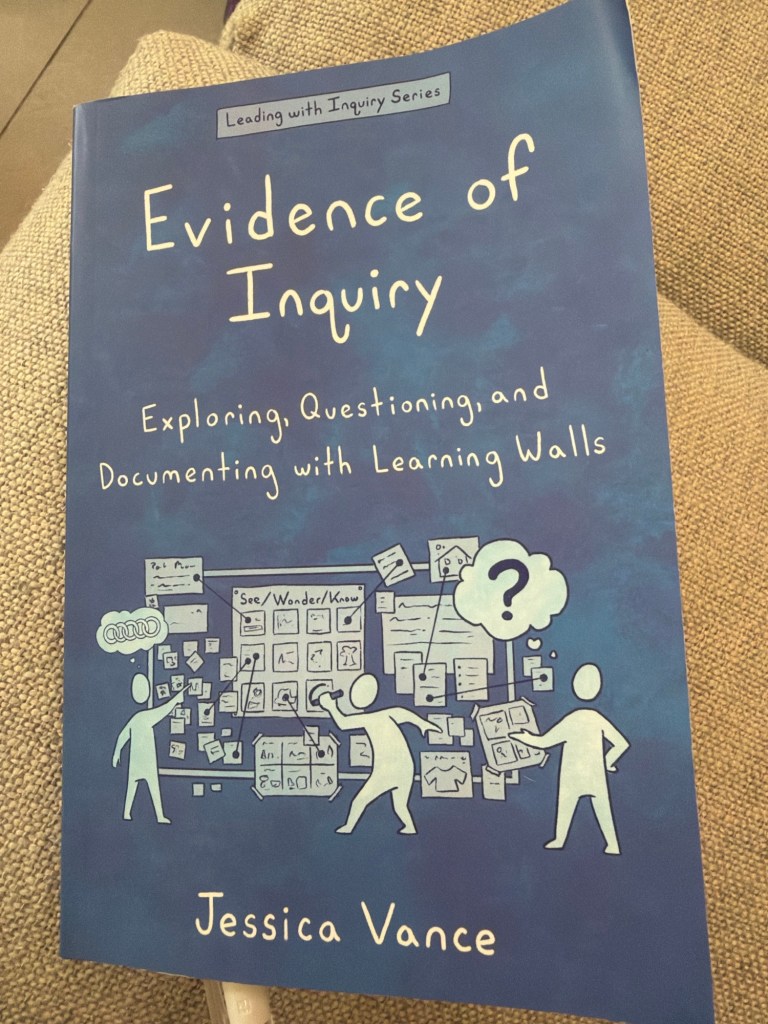
The second is the inquiry wall.
Instead of treating reading as something that happens quietly inside each student’s head, the inquiry wall makes our collective thinking visible. Questions stay on the wall. Predictions evolve. Connections between texts emerge over days and weeks. Students begin to see that understanding isn’t something you arrive at after finishing a chapter; it’s something you build together. We can also authentically link our learning to our reading as I’m doing my best to mix read aloud with our units of inquiry.
What excites me most is that these ideas seem to complement each other. Inquiry encourages curiosity. TWR provides the language and structure to communicate that curiosity with precision. One helps students ask better questions. The other helps them think more clearly about the answers.
I’m still very much at the beginning of this journey. There will be ideas that work beautifully and others that don’t. But that’s part of the process. Reading instruction shouldn’t be static any more than reading itself is. Plus we learn more effectively (I hope) when our reading (and writing) instruction is linked to our units.
My hope is that our classroom becomes a place where books aren’t simply completed, but explored. Where students learn that great readers notice patterns, wrestle with uncertainty, change their minds and leave a trail of thinking behind them for others to build upon.
I’m can’t wait to see where this journey leads.

