Starting a new year is always kind of exciting, seeing friends, new people, maybe too many meetings.
This year, one of the things I am most interested in developing is my inquiry wall.
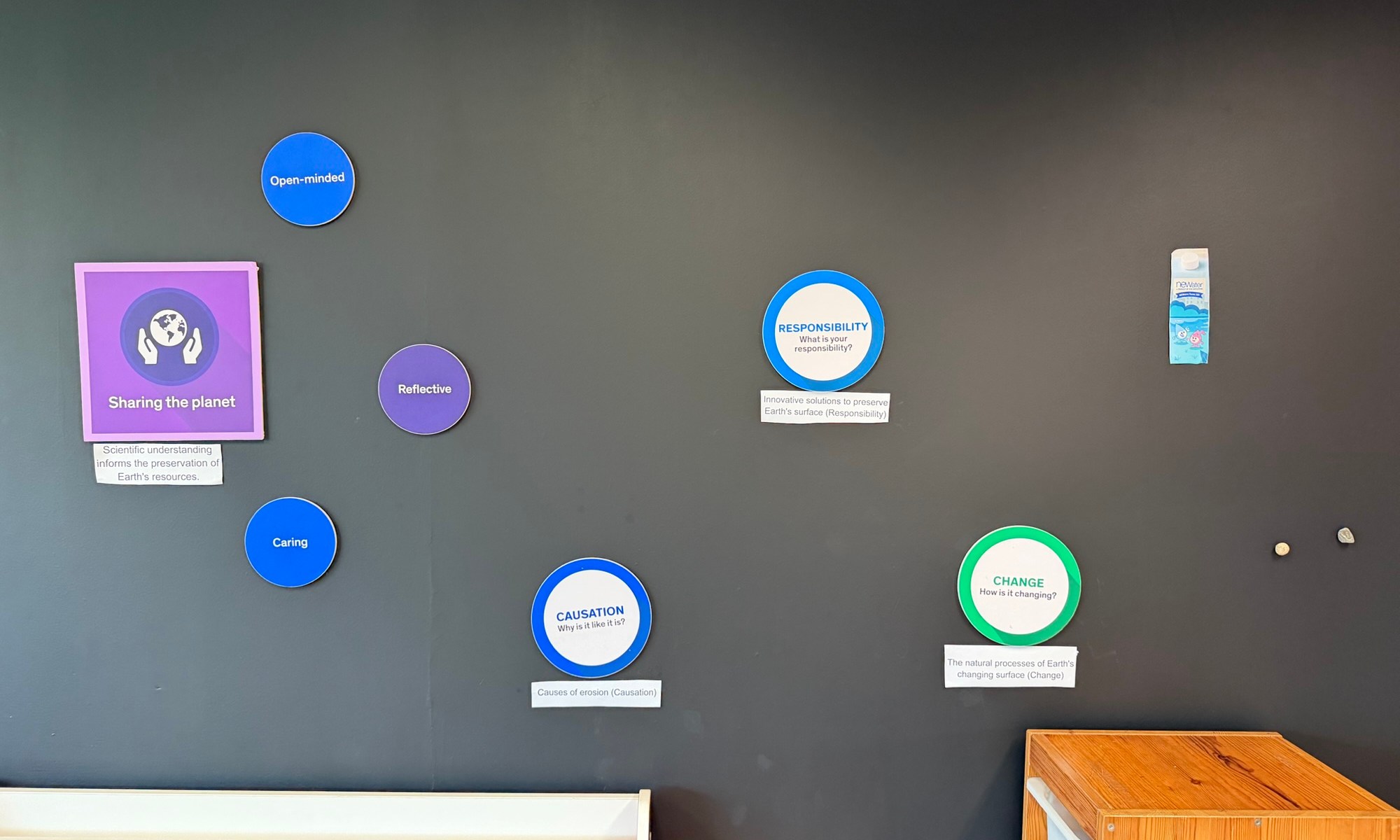
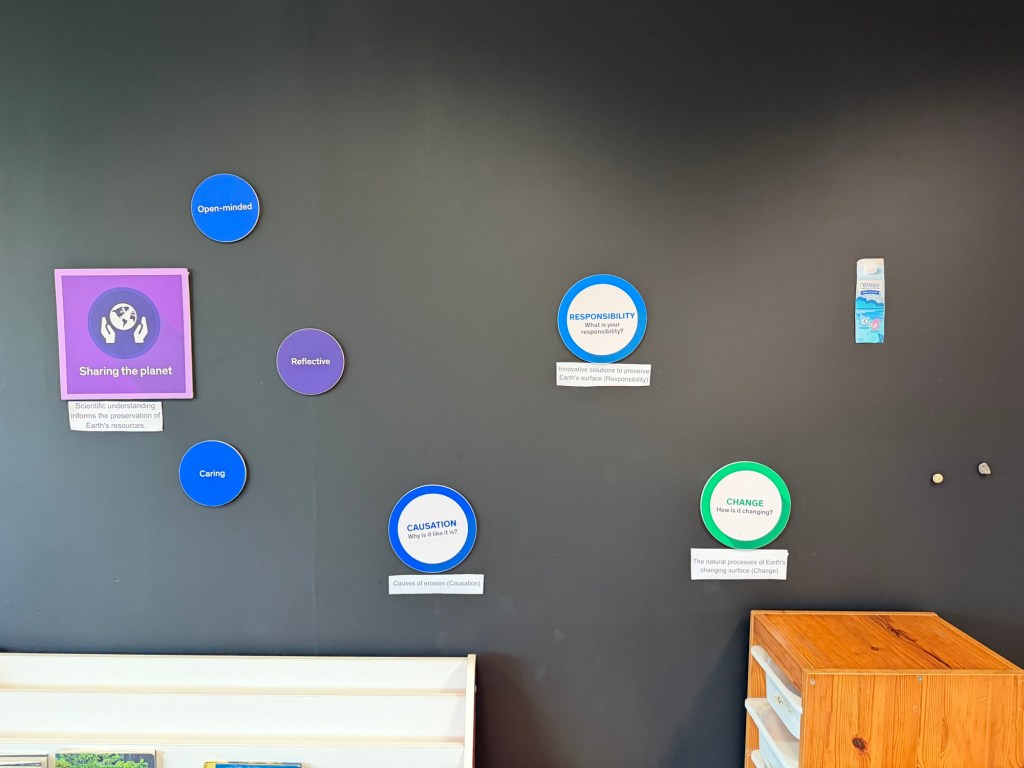
I have started with a half of a large black chalkboard (since I share my class). At the moment, it is still fairly empty, but I think that is important. I do not want the wall to begin the year looking finished. A finished wall can sometimes feel like a display of what the teacher already knows. I want this one to become a record of what the class notices, questions, investigates, connects, and gradually comes to understand.
The black background already gives it a different feeling. It makes the wall look a little more like a space for thinking than a traditional bulletin board. Chalk lines, arrows, questions, photographs, quotations, and student ideas can appear, disappear, and be revised. At least, that is the hope. I may change my mind once the chalk dust starts covering everything [including me].
I have also started thinking carefully about the artefacts that will sit on and around the wall.
For our first unit, I have placed some rocks on the board and added a picture of a bottle of NEWater. Neither object explains the unit by itself. That is part of their value.
The rocks can lead us towards questions about Earth’s surface, erosion, time, pressure, movement, and change. They can be held, compared, sorted, sketched, and examined. They are not simply pictures of rocks printed from the internet. They have weight. They have texture. They came from somewhere.
The NEWater bottle opens a different set of possibilities. It connects scientific understanding with design, infrastructure, sustainability, public trust, and the choices communities make about their resources. It is also something connected to the place where we live. Students may have seen NEWater bottles before without thinking deeply about what they represent.
That is what I am beginning to see as one of the most important purposes of an inquiry wall. It can help us look again at things that have become ordinary.
A rock is just a rock until someone asks how it formed.
A bottle is just a bottle until someone asks where the water came from, what happened to it, and why a country might invest in creating it.
I want to bring more real things into the learning wall this year. Not just polished final products, printed definitions, or carefully selected photographs, but objects that carry stories and invite questions.
Some of these objects might come from me, particularly at the beginning of a unit. Others might come from students. A piece of broken pavement, a dried leaf, a food wrapper, a newspaper clipping, a bus ticket, a small model, or a photograph taken on the walk to school could all become part of the learning.
The challenge will be making sure the objects do not simply become decoration.
An artefact should do something.
It might provoke a question. It might provide evidence. It might connect an abstract concept to everyday life. It might remind us of an earlier theory that we later revised. It might help a student explain an idea that is difficult to express only through writing.
I am particularly interested in how artefacts can move around the wall as our thinking changes. A rock might begin in a space for noticing and wondering. Later, it might sit beside an explanation of erosion. Eventually, it might connect to a proposed solution for protecting a coastline or preserving soil.
The object stays the same, but our relationship with it changes.
That feels like a useful representation of learning.
As teachers, we often feel pressure to prepare everything before the students arrive. We label the spaces, organize the resources, plan the provocations, and try to anticipate where the learning will go.
I am trying to resist completing too much of the wall in advance.
I want students to see that the empty spaces belong to them. Their photographs, questions, sketches, theories, disagreements, and discoveries should gradually take over. The wall should become less mine as the unit continues.
Perhaps getting ready for school is not always about finishing the classroom.
Sometimes it is about preparing a space that is ready to be changed.

