Doing my reading this week, and being interested in environmental education I often wonder about how to start developing a new curriculum or a new approach to teaching and learning.
This week we focused on Schwab’s The Practical: A language for curriculum (1970) and how we (still) may have a problem with a crucial part of school, the curriculum. When we use one theory or approach to solve a problem we can miss out on other opportunities to see a problem from different perspectives. By thinking that one theory or curriculum can solve a very complex problem like education we may be missing out on subtle ideas that can be taken from many theories.
I guess what I’m wondering is what are the variety of ideas that we can draw from to integrate environmental education into our “everyday” curriculum? How do we (re)start the process of creating an environmental curriculum without a singular focus, while trying to teach multiple disciplines.
This week in class (both my doctorate and my grade six class) we have been looking at values and beliefs. I feel like I explicitly teach the PYP values and explain my own personal values (not that my values, or the PYP values are the values to have, but rather it forms a part of who I am, so students should be aware of them).
Our school had an incredibly provoking speaker come in last week. Peter Daglish works in many different roles, but one of them is with the UN habitat organization that does work in Afghanistan. He mostly talked about how he works with kids, and what kids can do to make a difference. Again it was very values oriented.
I’ve started to wonder, especially since I’m going to focus mostly on qualitative research, about how important it is to have values, and how we plan with people who have different values than we do.
The learners are headed into the exhibition this week. We as a class are digging deep into our values and beliefs so we can start to take some action. We think that if we know who we are and what we believe it’s easier for us to take action.
AttributionNoncommercial Some rights reserved by photoptimist
This week I’ve been wondering how the local and global work together. I know it’s messy but in the PYP how can we balance the importance of a local focused curriculum in a world of global issues.
In the PYP the main focus is on the learner and developing learner agency. The goal is to develop agency through explicit teaching of the learner profile. Through a concept based, inquiry driven program focused on learners, the International Baccalaureate aims to create compassionate, life-long learners who know when and how to take action with their learning (Barnard, 2016). The International Baccalaureate and the PYP in particular is a value-laden curriculum focusing on the Learner Profile as a way to teach the core values of the PYP (International Baccalaureate Organization, 2009). By teaching an internationally value laden curriculum I think the PYP is trying to address Schwab’s commonplace of milieus. The PYP strives to be a school that regardless of size or location develops an “internationally minded person” (International Baccalaureate Organization, 2009, p 3). The International Baccalaureate Organization (IBO) does not seem to see milieus as separate or distinct. However, they see the need to develop an international student who can move between places.
One of the IBO’s standard C 2.7 says that “The written curriculum promotes students’ awareness of individual, local, national and global issues” (International Baccalaureate Organization, 2014, p. 5). The IBO wants students to see global connections as well as local issues. Schwab (1973) discusses the idea of milieus resting in milieus but in this regard he was highlighting the different cultures and identities within the classroom not local, national, global issues. In the local, contextualised milieu teachers are supposed to be looking at the interactions between the students, the students and their home life and the students and their community. While it is important that we think about global context, Schwab was highlighting the importance of learning within the community, knowing who the students were as people and community members, and the cultural climate of the learners. By expanding this to offer global issues or perspectives the PYP is trying to create a more connected world. However, they fail to address the importance of understanding the world the students live in and how they live. By looking at the student’s communities and families and what might pop up first we can start to link their knowledge to the larger world.
So how should we, or is it important to focus on the local classroom issues first, or do we start off by looking at what makes us all human and making connections with the world. Any ideas?
Reading Schwab (1973) for my curriculum class has made me think a little differently about how I approach the idea of content (and personal content mastery) in my teaching.
Being a part of the IB, and firmly believing in concepts, I’ve always kind of thought that having a mastery of content might not be that important. I thought that good teachers can ask good questions to get people to deeper understandings, even if they don’t fully understand.
Since reading this article though, I think I may have missed some key points (hopefully because I have a solid knowledge of all the required understandings). If we as educators don’t really know the content how can we ask good questions or lead to a desired enduring understanding. Backwards design is a powerful planning tool, but if we don’t know what the end goal is (or we’re unable to do the end goal ourselves) how can we get students there?
Working in the outdoors has always been easy for me, and other people have told me they’ve felt uncomfortable outside, they always wanted to know what they could teach. I was always slightly confused by this (I guess because I felt like I knew enough of the outdoor content) but they need to become masters in their understanding.
I guess I’m wondering if we need to be more focused on content for PD at times. Like make sure our teachers really and fully understand the content of our place so they feel more comfortable sharing what they know. If we can really download some local knowledge about our place, we may be better able to teach about it.
Our unit right now looks into the “ethical implications of science”. Recently for my doctorate we’ve been talking about the hidden curriculum or the null curriculum and how that effects how and what we teach. I wanted the class to explore either the ethical implications of school, or the ethical implications of science.
It was a loud hour. I remember one of my PD opportunities when I was in Australia. The leader had some balls, we were in a circle and he was trying to explain something to us while we had to move the balls around the class. It turned into a very loud exercise. The leader reminded us this is sometimes what it’s like to learn. By bringing in new thoughts and new concepts we often had to communicate loudly, or talk it out in order for it to make sense to us. So I didn’t try to disrupt the loudness too much, instead I just reminded them we had to talk about it before the end of the period.
Despite the noise there were many thoughtful responses to what is being done in science and school, the conversation (happily) didn’t end when the class ended either. Students were really digging deep to wonder why the believed something, and if what they were doing was “good”.
We’re moving from this unit into our exhibition where we are trying to sort out our values and beliefs and how we express them in our everyday actions, so I think this is a pretty good stepping stone, plus I learned a lot about how and what my co-learners are thinking.
During my course we looked into “what is a curriculum” so we could learn about how we talk about things. We were looking from a perspective of could there be one definition or should there be one definition?
We wanted to know if post-modernist thought was somewhat useful in a real world educational setting, and I guess as any good post-modernist, why is that good. Our small class all had different viewpoints on what they thought curriculum was, and all of us could see success (especially if criteria of success was well defined when explaining curriculum).
This made me think a lot about how team meetings are structured (more at an IB school, or a school where teachers are more in charge of creating the day to day curriculum). If we lay out our values at the beginning of the year, and we talk about the similarities we have, I wonder if our meetings throughout the year will be more effective. It seems to me that most of our conversations that block us from effective co-planning are due to a difference in opinion about the why behind what we are teaching, not the actual things we are teaching.
Any thoughts?
Jackson, P. W. (1992). Conceptions of curriculum and curriculum specialists. In P. W. Jackson (Ed.), Handbook of research on curriculum (pp. 3-12). New York: Macmillan.
This week I’m starting my professional doctorate. Exciting times for sure. During our introduction to the process we discussed what it meant to be a teacher/researcher.
Many of us follow curriculum or try to implement pedagogy. But not many of is (myself included) actually look at what it is like to be a teacher/researcher. To be both at one time, to teach and practice working with the students, but also to try to do new things, document that practice and then share our findings.
This goes on a little bit from my last post about the importance of sharing. I’ve been thinking a lot about the process of learning, the how and reasons behind what we learn. When I think of the importance of sharing, or publishing, I wonder why (other than the perception of time) so few of us engage in this practice.
We have blogs, twitter and other forms of social media designed to make the practice of sharing our findings easier. I wonder why we don’t all actively share what we are doing in our class. Why do we not think of ourselves as researchers?
My methods class and focus on curriculum is starting this week. I’ve done most of the readings, and it is sparking a renewed passion for learning. I consistently think of myself as a learner, but sadly as someone who mostly consumes. I’m excited to act more through this process and research intentionally and purposefully.
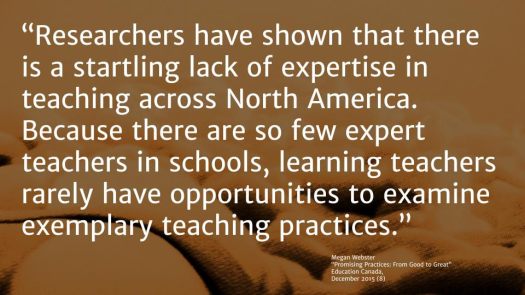
One of our guest lecturers talked about the decline in the perceived importance of academe in North America. There is a distinction and at times a fear (?) of people who dedicate their lives to knowing and researching. I wonder where these thoughts come from, how were they (socially?) constructed and how we can move more people to actively research in their classrooms.
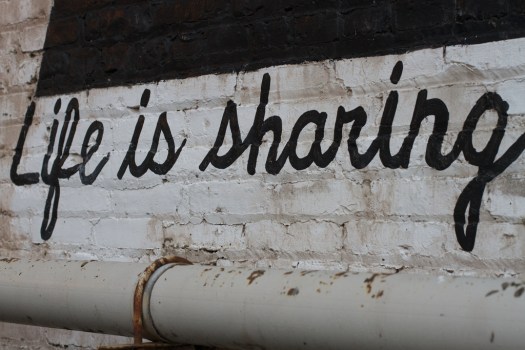
Talking to a colleague today about how to start the beginning of the year. We’re thinking about the importance of sharing.
Working in grade six the kids are making a transition into high school. The students are a little nervous and want to know a little more about what’s coming. I’d like to be more honest and open with them about some of the transitions I’ve made, and what problems I’ve encountered and how I dealt with it, but I think more importantly I have to listen and actually acknowledge their fears and concerns.
By promoting the idea that it’s okay to feel certain things, and believe certain things I hope the students are better able to cope with emotional changes.
I’ve been thinking a lot this week about the importance of resting for reflection (maybe because the holidays are coming up?). Also a couple of weeks ago when we did our presentation, one of the teachers talked about the importance of giving students time (for learning on their own, but now I’m also thinking for reflection).
I know personally that for me holidays need to be restful. I need to take time and sit on the couch so I can think and reflect about what’s been happening and how to improve. I need the time to actually create headspace and wonder about how to improve. This can’t be something I do in school, or something forced, it needs to be time intensive.
I guess for me, I’ve been wondering if I know this to be true to me, and I suspect it to be true of most people, then when do our students get this. When do they have a chance to authentically reflect (not just reflect for me, or for learning, or for something else). My new year’s goal is to make sure they have some time to think.