Using scientific equipment

A new unit for us this year, but something similar to what we’ve done in the past. We’re using scientific equipment for us to better understand the resources we have in order to make more sustainable choices. So far it’s been pretty great.

I guess one of the main perks of the job is watching kids grow, I’ve known some of these learners since grade 1 (some of my grade 2 kids are now in grade 12 which is crazy, but I was doing something else at the time). so seeing how they have changed and grown as they’ve come to grade 5 has been incredible.

For this unit we’ve been using different scientific tools to measure different aspects of soil and water. We’ve got a big focus on soil this year, mostly because no one really talks about it, and also because it’s good to get dirty. The learners have been really into it, grabbing samples with their hands, exploring different textures, inquiring about the PH levels, it’s been really great.

I’m excited to see where this goes, and hope I’m more consistent with this blog so I can reflect on it as well.

Exploring our forests

Monitor in a tree

I recently just had my beginning of the year meeting for goal setting. We have a new administrator and my job is pretty unique so not everyone knows the ins and outs of it. He asked what my primary goal is, and I said connecting people to places.

In the international world, when we think about third culture kids, or even teachers who move around we do frequently miss connections to places. As I discuss in this blog, at least I feel I discuss it pretty frequently, this can lead to a lack of interest in all places and especially the environment. In order to get kids feeling safe and connected we need to connect them to their place as well.

We usually start off the year with grade six, exploring our urban environment. We’ve just finished our scouting missions of our next unit which is exploring our forests and looking at ecosystem connections.

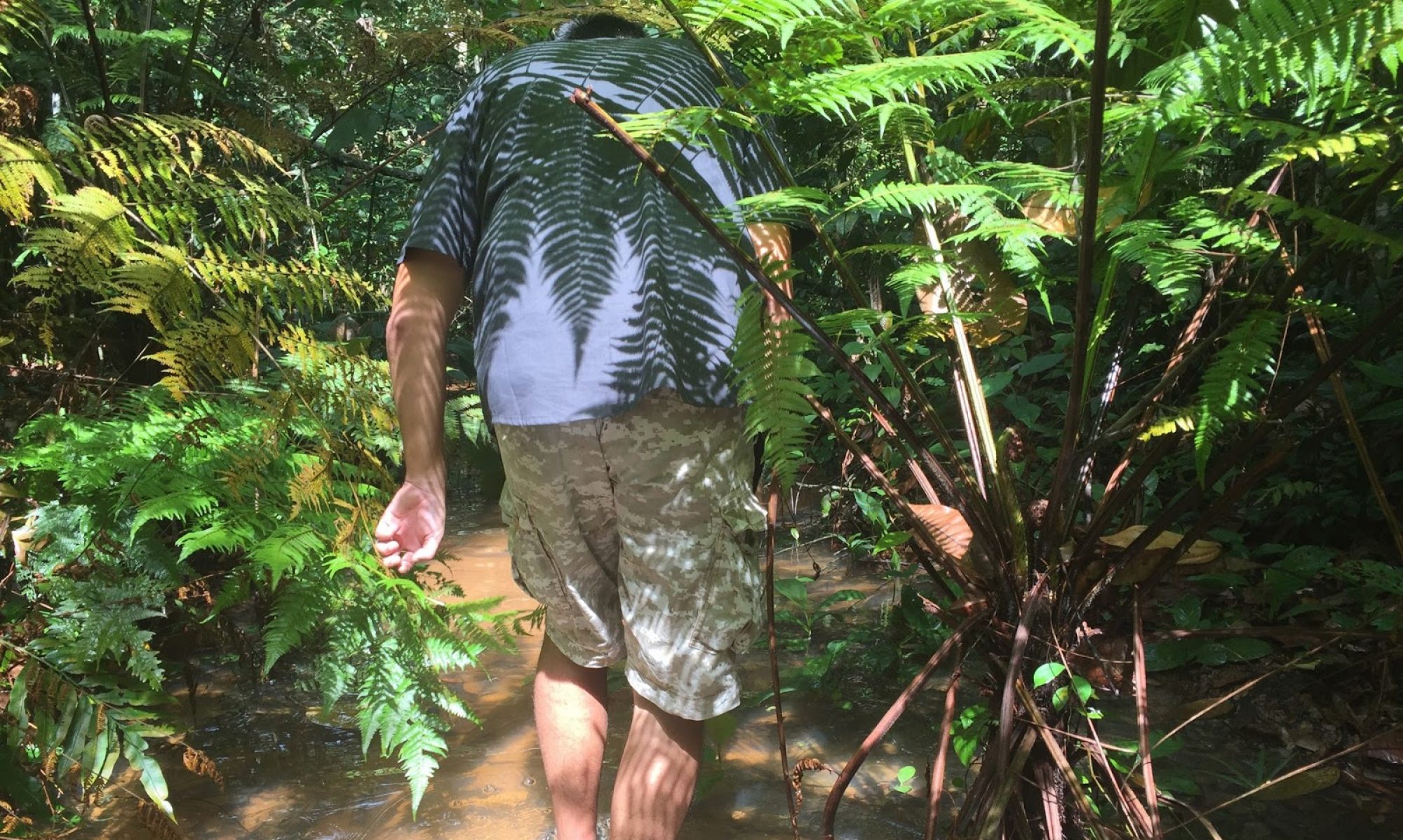
I personally love this one, it’s always a chore to choose between my first and second units out as my favourite. But out in the forest our first couple of days I’ve seen a couple colugos, a ton of monitors, crocs, birds, some macaques and heaps of insects (I’ve been snake free so far, but don’t expect that for long).

I’m just happy to be back out, while I love exploring the city, getting out into the forest with kids we get to explore different kinds of connections, it’s a couple of weeks away, but I honestly can’t wait.

Designing our spaces

Starting the year again with our Grade 6 students. I absolutely love this unit, and I love going to the URA city gallery.

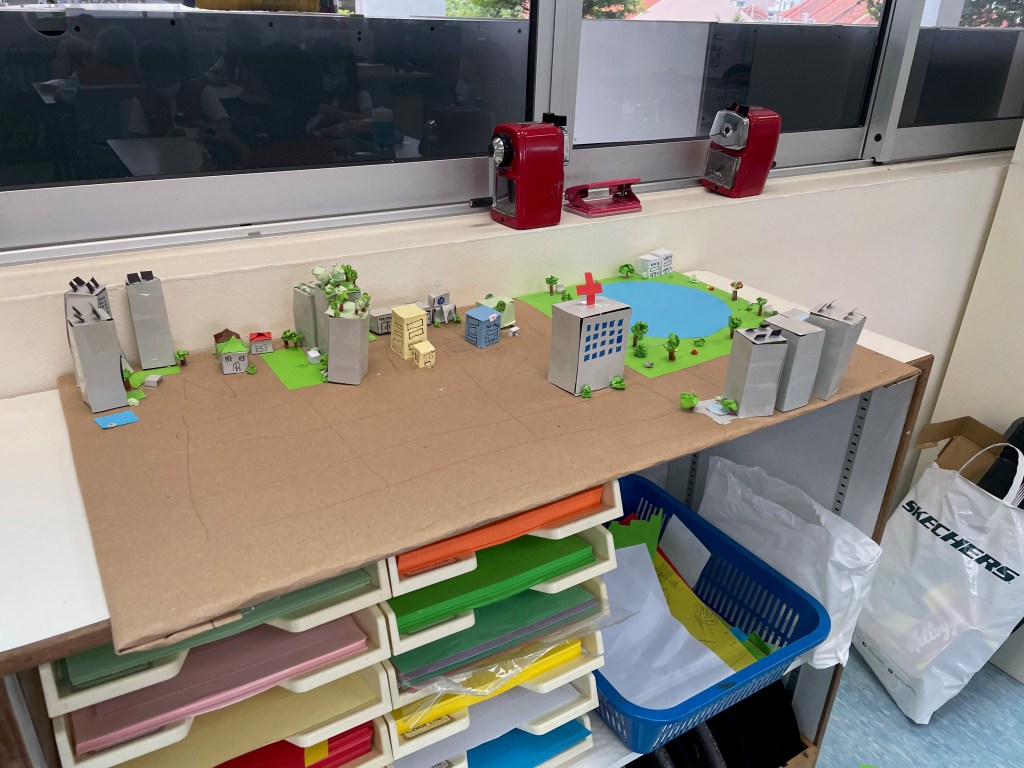
This year our students are able to choose between the places they want to design, normally we give them a space and some criteria. This year we are allowing them to think of a sustainable living space, a CBD or technology park.

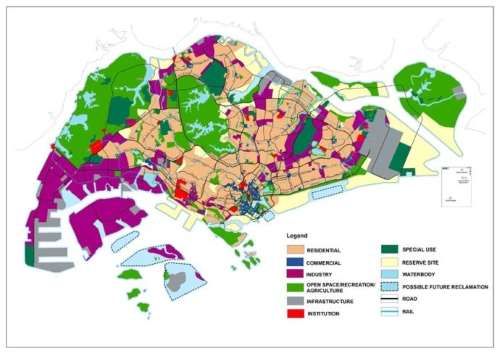
While we’re out exploring the city, we are looking at how maps are created and used, we look at how Singapore is developing their city and the concepts that drive sustainable development here. We look at existing structures and natural landscapes and how they have changed and we interview community members and check out neighbourhood demographics.

In class we’ve been doing classroom mapping, drawing how we want our classroom developments and coming up with concepts about what the classroom should look like.

All of this is helping us understand that urban areas develop based on what they believe progress is, the needs of the community members and the natural environment around them.

It’s great to be back out with the young explorers, checking things out and getting to know our city better, I really love this unit.

Letting learners do the learning

With our grade 5 students we’ve been exploring how the learners can be more in charge of their learning, even if we’re off campus.

While we’ve been exploring the barrage we’ve had student groups look for problems that have been happening in Singapore. Each group can choose their own particular problem and learn in the gallery how Singapore has tried to solve it. At the end of the day students could either add the solution or communicate their solution in some way. The students really enjoyed choosing their own problem, and almost every group (over 200 students) chose something slightly different, which makes it way more exciting for me.

Earlier in the unit we went to Fort Canning to look at primary and secondary sources. They then used this information to create stories about Fort Canning. Again each student had slightly different stories based on the information they collected and how they interpreted this information.

Both trips allowed the students some voice and choice in their learning, while we went to the same places, each student saw or thought about something slightly different. The parent volunteers enjoyed watching the students make sense of what was around them and contributed to some thoughtful discussions about what was important when observing different sources and galleries. All in all I think we learned a lot and had a lot of fun.

Becoming artists

I love Kampong Glam.

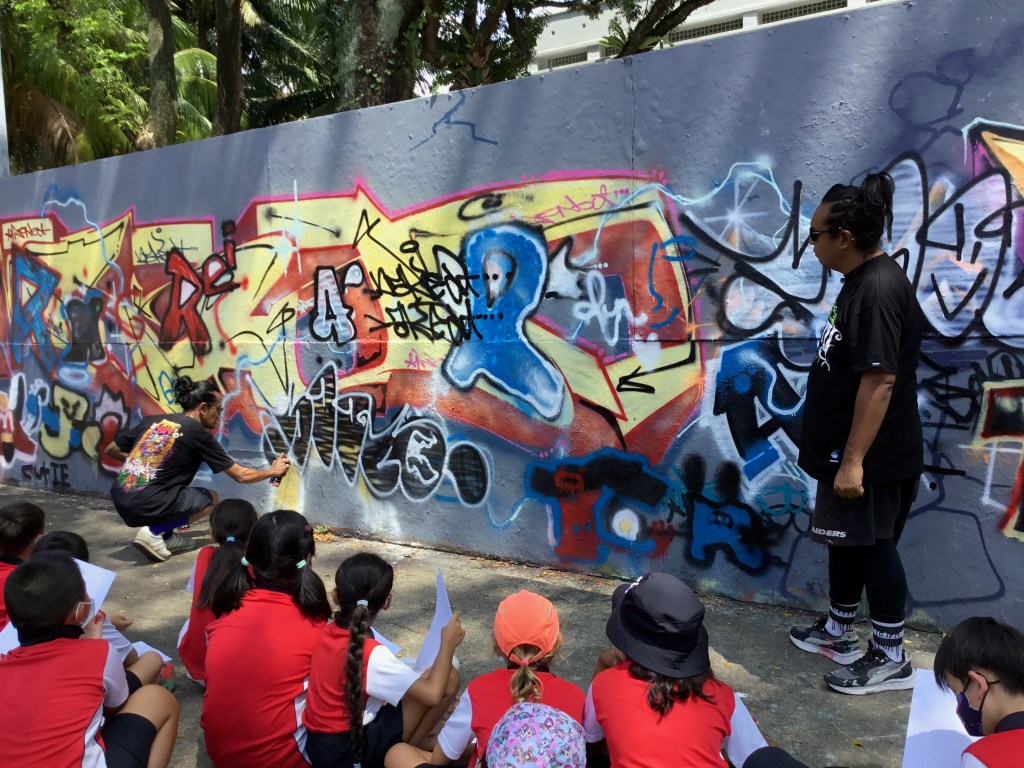
For our grade 3 unit on How We Express Ourselves we’ve been looking at art. This year we worked with some of the street artists to create something.

We started our day walking around Kampong Glam and trying to come up with a definition of street art. We wanted to know what it was, how it was different from art in a museum, what techniques we usually used and anything else that might help us create. In the afternoon we went to The Blackbook studio to practice some street art on our own. First they showed us how to use the spray cans, and then students worked on their lettering.

They crew at The Blackbook Studio were amazing, but so were the kids. Throughout the day the developed as artists and created some incredible art. I think what they loved the most though was learning with people in the community. Boon and Ayid were amazing at working with the kids, asking them questions and bringing out each student’s style. More than that though, I think when we work on creating in a place we feel a deeper connection to that place, I think after the trip everyone felt a little more at home in Kampong Glam, I know I can’t wait till next year

Ants

Checking out their test tube

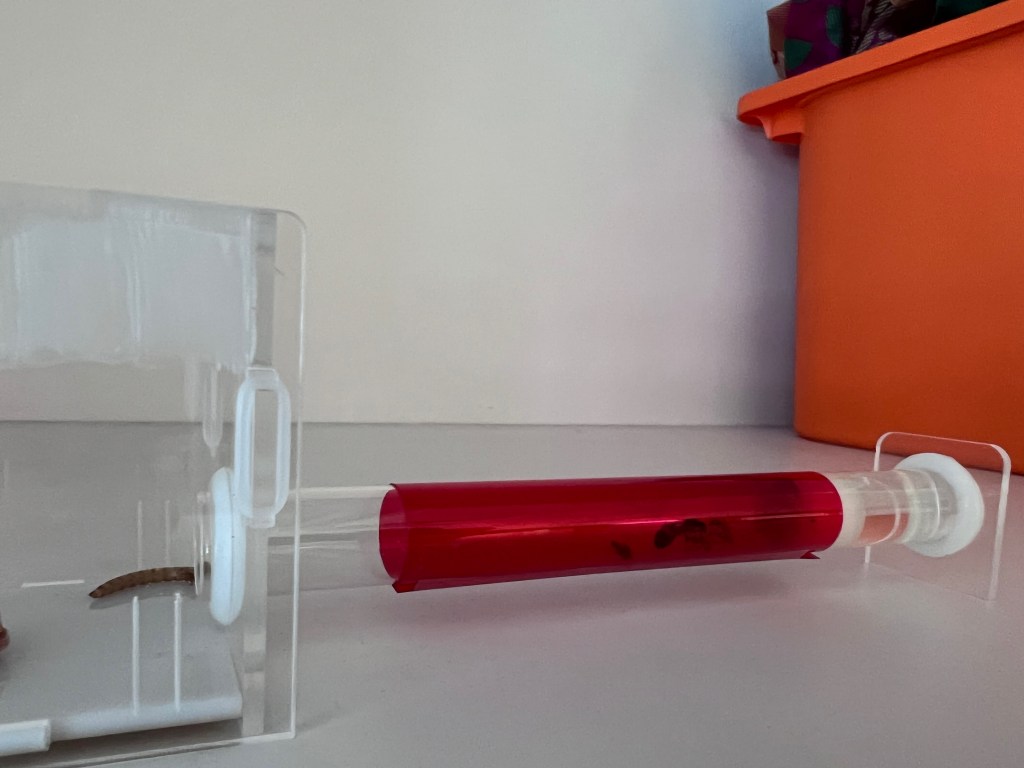
Not being to go off of campus has been challenging for some parts of the job. For our Grade 1 students studying ecosystems this has been even more challenging to plan. We’re not able to go out, most of our green space is under construction and I’m trying to plan an experiential approach to understanding why habitats are important for living things.

Luckily I bumped into a friend who suggested ants. They start off in a test tube, so upkeep is pretty easy and the hook for the kids is we have to build the best habitat for them.

So we can go outside, see where ants are (thankfully ants are almost everywhere). Look at what natural things they do and need, what they eat and where they want to live and then start designing a new home for them. The winning design will get to have their home be created for the ants to live in.

So hopefully this goes well, we don’t start for awhile, but the kids I think will be interested. It gives them a chance to look at what’s happening in another living thing’s life and hopefully think about how to make it better. We’ll see how it goes anyway.

Belonging and Migration

Photo from Little India

There’s been kind of a mix of ideas hitting me lately. With our grade 3 unit we’ve been looking at the idea of migration. That there are push and pull factors, challenges and opportunities and many other factors that make us move.

Once we move though, we want a sense of belonging. We even move because we’re don’t feel like we belong where we are.

I recently had a chat with two people from the Big Questions Institute. We were wondering how to develop this sense of belonging in our new teachers. I think we’re thinking about bringing small groups of people with similar interests, creating a sense of purpose and working towards a common goal.

The unit has been interesting with the questions the students have been bringing up. If you get a chance The Mango Tree by Hidayah Amin is a great read about Malay people in Singapore.

Favourite Spots

I’ve been working for awhile on this idea. How can we connect people and places. This year I’ve asked for some volunteers to share their favourite spots with me so we can share with others. I’m thinking we can start with new teachers, when they are recruited we can share what we think of our place and how we can get others to connect with them once they’re here. We can then open up to students and maybe welcome new student to school too.

The idea, I hope is that place can be an important way to connect people and enjoy our jobs as well as understand where we are a bit better.

Learning about managing living things

We’re working with our grade 6 students to reimagine what it is like to manage living things. Traditionally in this unit we have explored different types of farming. This year we wanted to actual make a small farm. However, COVID restrictions have put a damper on some of our best wishes.

Regardless, I wanted students to really think about possible outcomes of managing living things. Singapore is unique in the fact that they are allowing meat to be grown from cells. They are marketing and working on creating clean meat. This idea that we can grow just the meat in the lab, it will prevent us from killing living things and perhaps it will be more sustainable.

The idea is very interesting and I hope motivates discussions in the classroom about what living things are and how to use them effectively. We are lucky to have Chef Kaimana who is one of the people who work with JUST come and talk to us. It’s exciting because they are rethinking traditional food and traditional ways of making and growing products.

I wonder what the kids will come up with.