Who’s responsible

AttributionNoncommercialShare Alike Some rights reserved by Steve took it

To be honest, I haven’t been really looking forward to this post.  I’ve already been really focused on Common Sense Media and I’m looking forward to being certified for my job this summer.  I thought it I would just write everyone.  Everyone is responsible.  But then I started thinking more about how we are taught about how to live in the “physical world” and for me, ideas expanded beyond just students.

During my Environmental Education Master’s program we discussed the idea of intergenerational learning how everyone can learn from each other.  Talking with Addy while driving for a meal I really started to think about the possibilities.  
My grandma used to get all kinds of games, viruses, etc. on her computer.  She wanted to be on facebook to keep in touch with her grandkids.  She needs to know about digital citizenship.  My boss is scared of twitter because of possible repercussions, so he needs to learn about digital citizenship.  The students in my class are still pushing boundaries in their digital world, they have less fear, but there could be more consequences. 
I think what we need is more of a campfire, or roundtable discussion.  Seriously have everyone involved.  Instead of just giving full lessons, make stories (videos, slideshows, etc.) and share experiences.  We talk so much about the importance of stories this would be a great chance for us to share all these ideas with each other. 
By incorporating everyone, and sharing stories, we can make these ideas more meaningful for everyone and less lesson like. Everyone would be involved, we would create shared stories and these stories would evolve as our relationship with the digital world is evolving. Just a thought.

Sharing is caring


AttributionNoncommercial
 Some rights reserved by Niklas Wikström

Copyrighting is an interesting idea, and one that is viewed differently across cultures and countries. Where I live now, I’m not sure any copyright laws are seen as worthy of following.  I see illegally downloaded video shops on the corners, people in the markets selling “designer” brand articles, really cheap software in not so original packaging.  While I don’t frequent these stores or purchase their products I see heaps of people who do.  They aren’t really concerned about the copyright, they want the information or the product.

Having access to so much information online has changed the way we interact with our different communities.  I think a lot of us feel entitled to certain things online, and at times, people over step copyright laws to have access to these things they feel they have a right to. 
As always, I’m trying to link the ideas between environmental education and educational technology. Permaculture principles seem to fit into so much of what we talk about.  

Fair Share


AttributionNoncommercialShare Alike
 Some rights reserved by London Permaculture

When I think about Fair Share I think about three basic concepts, taking what we need, sharing what is useful for others and balancing our lives. 

People need things, and we should be able to take what we need.  There is so much information online that I have used.  Some of it as a university student who has access to academic papers (which aren’t always available for free), some if it was available by writers who have made their work free and some is from people who contribute to wikis for sharing in the co-creation of information. 
We should share things we don’t “need”.  My blog is creative commons licensed. I don’t need to make money off this blog, I want to share ideas, create conversations and build a community.  The tag line on the permaculture principles webpage is

We are provided with times of abundance which enables us to share with others 

I feel with access to the internet we literally have an over abundance of information and data.  I feel that in order to successful contribute to this data though we need to continue to use creative commons licenses.  Our students often search for images, and there is an incredible amount of almost everything.  When we use the google tool bar for licensed for reuse, or explore the flick creative commons page we find there is less than an abundance.  As a class we talk about this, we talk about how we need to continue to contribute to the creative commons so we can share our abundance. 
As “prosumers” we can’t forget the importance of sharing our work.  While being online is an incredibly opportunity to consume, we need to remember to produce as well.  Sharing our ideas, thoughts, and work is so important. 
We can contribute by producing images, or just by crediting who creates the work we share or use. 
Balancing our lives is another important aspect of Fair Share.  We can’t spend all our time online, we need to appreciate all the aspects of our lives and communities. 
We do need to change some of our copyright habits, creative commons has been great for me and my students.  We can use images to enhance our learning, we can site these sources properly and we have started producing creative commons work so we can all share and grow.  

Why Spy…

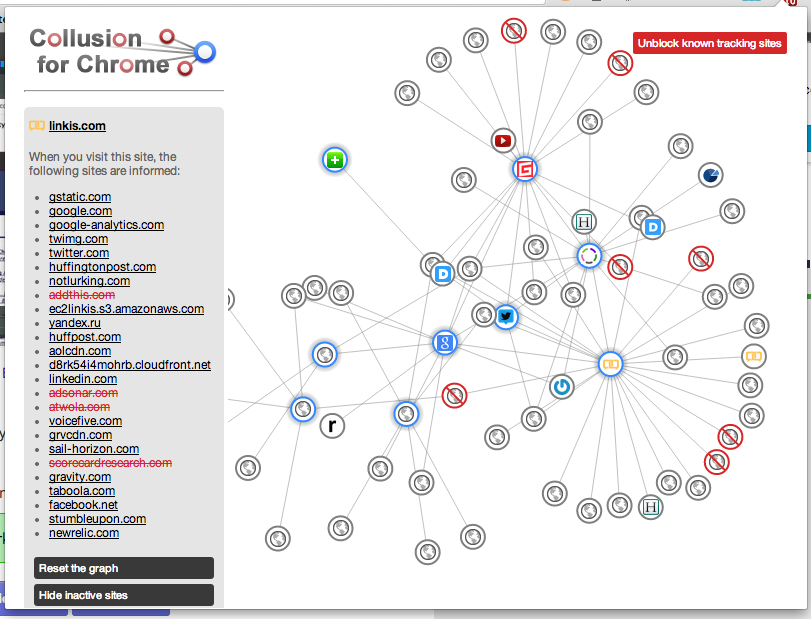
How worried am I about privacy? Depends on how I’m feeling I guess.  I go the total roundabout way to being concerned.  I know I don’t like people tracking me.  I have some add-ons (Collusion) for Chrome that I use to see what’s going on (and block known trackers).  Here’s what I saw yesterday when I started this post.

I know when I’m online I’m connected, I know advertisers use this to collect data, I am slightly worried about how else that information gets used, but my biggest concern is data collection for advertising, because regardless of my deliberate actions I am helping someone make money by just looking around online.  I am very happy that the internet is relatively accessible and cheap (especially here in Cambodia for me). So if advertising is supplementing that, right on, I just don’t want them to gather data about me, and sell it, especially since I purchase so many things online.

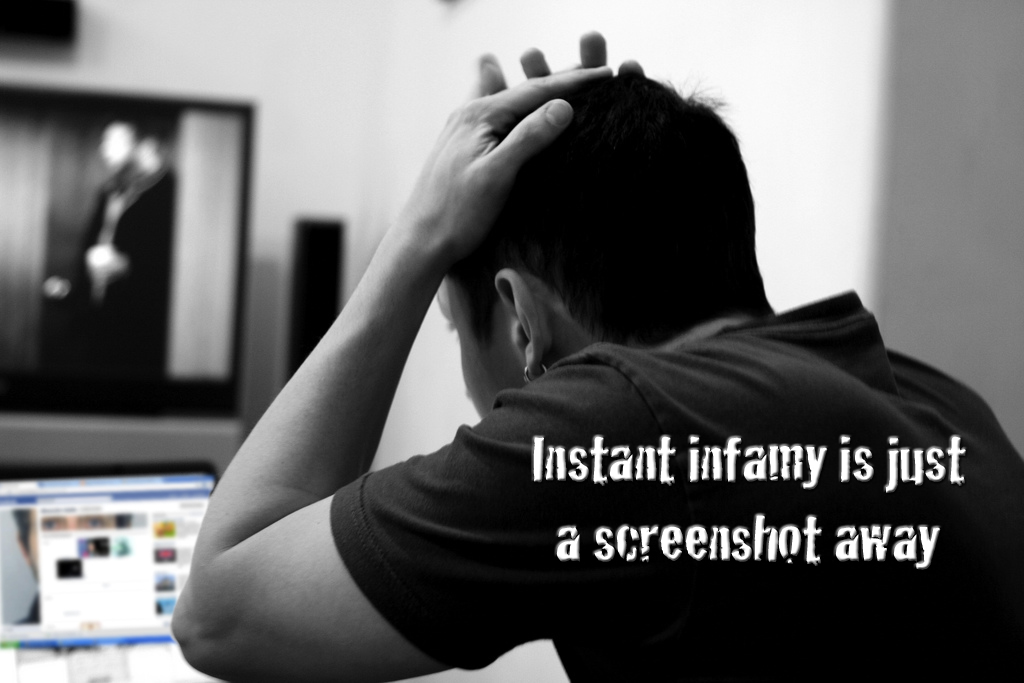
I read this book in January and found it incredibly interesting.

AttributionNoncommercial Some rights reserved by screenpunk

The whole idea that nothing is private, is astounding (and mostly true).  But how much should we care about it.  The scariest thing for me in this book was the idea that you could only have one true identity online.  Right now I have three different profiles open on my chrome browser, work, personal, professional.  So I go to different websites based on who “I” am. That way, I’m using my data the way I want.

Which is what I tell my students… everything online can be made public (basically, unless you’re on the deep internet, or have crazy settings, then why be social). So, use that public aspect to highlight your best self. I don’t tell them about multiple profiles, but they know I have different profiles because they see my different browsers. I want them to know about privacy, not just facebook security settings and realize people want this data.  People want to see what people are buying and looking at.  Collusion (which I show them) connects all the little dots, so we can see where information is going, and as long as we’re happy with our data going places, then right on.  Just be aware, and make decisions based on what you know. 
I guess I think privacy (or openness) should work both ways, I should know who has access to my data if they are going to take my data.  

We need to talk about…


AttributionNoncommercialShare Alike
 Some rights reserved by ransomtech

I’m really happy we started talking about digital footprints, more specifically the benefits of a digital footprint. I remember talking about this problem in course 1. I still am confused why we aren’t giving students a larger say in our “Empowered Use Policy”.  As a school we are still using an Acceptable Use Policy, and like the article mentions the fear mongering behind what that means. Sadly with some of the points in our Acceptable Use Policy I feel like we are making students scared and are making them fearful of technology.

This past year I have been focusing on a “Positive Digital Footprint” or what I call (I stole this from somewhere but it was so long ago I forget) “Positive Media Presence”.  By empowering students and showing them the benefits of a Positive Media Presence” we encourage them to make good choices and dig deep into what the internet is for, and how we can use it to make our lives better.

So, when should we start talking about digital footprints? As soon as possible I would thing.  At our school students are creating showme presentations as young as Early Years, which means these students need to know that other people can see their work (even if it is not tied to their accounts).  Obviously we don’t need to do this in a negative way, but we can start creating excitement for what it means to be a contributor to a larger discussion.

Attribution Some rights reserved by bugeaters

We shouldn’t stop talking about digital footprints either, or a positive media presence.  One of the reasons I signed up for COETAIL, was to continue improving my media presence, to make me more connected, not just to promote myself but to make those connections that are so necessary for success (not only mine but collaborated).

I completed the facebook analytics and looked at my media presence through the calculators provided, but didn’t see anything out of the ordinary. I just know I want to continue to improve and make connections with like minded people who want to enable students to have a larger voice and continue to create in our world.

Sustainability and Technology

This is one of my biggest concerns, and finally I read about it on Edudemic.

I’m not really sure how I feel about this though.  While it does talk about rare earth elements and how important they are, I guess I was hoping for more about the how and the why to teach it.

Many tech teachers (well the ones that I know) all feel this is important, but with limited explicit tech teaching time, we may miss out on these opportunities to talk about recycling products that have things we desperately need if we are to continue this style of life.

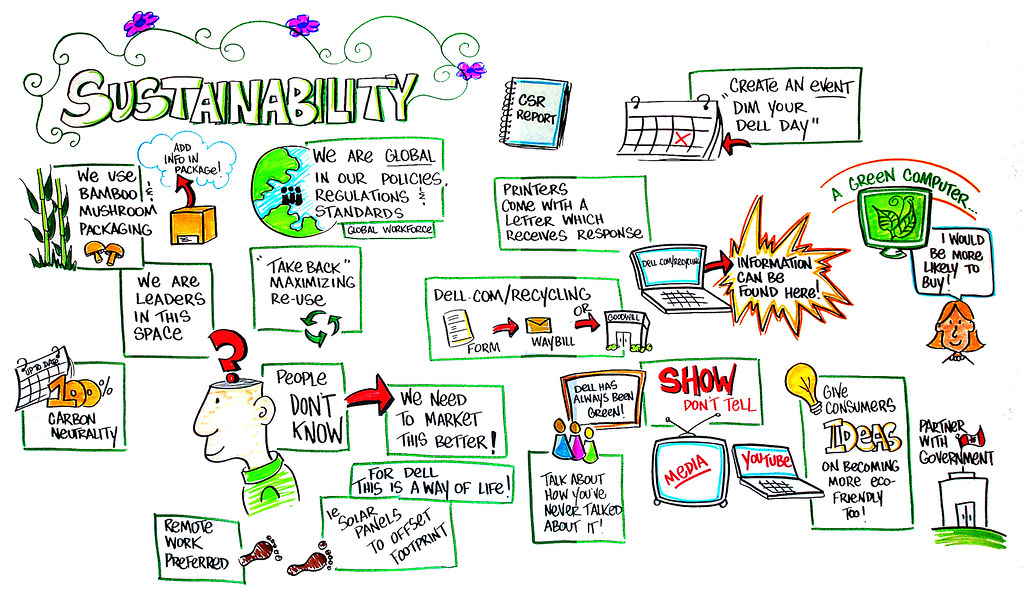
AttributionShare Alike Some rights reserved by Dell’s Official Flickr Page

While I think it is great that companies like Dell (above) and Apple (when you search for it) have recycling programs, I think we have to move beyond that for tech.  By making producers responsible for the goods they create, making the source responsible for recycling, upcycling, repurposing whatever we might be better off.

For those tinkerers and people who want to mess around with the device, they can pay a premium to own it, but other than that, I think our devices should be rented, returned, upgraded and then brought back into our hands, or our classrooms or whatever.

Here in Cambodia, we can’t access these types of recycling programs, so we are just contributing to massive waste by living in a place with no access to these programs (I do go to Singapore often, and would bring my products there, but it seems like a hefty price to pay both with engine fuel and cash to recycle something small like an iPad).

Awhile ago I read in the Big Issue that many Australians have extra mobile phones just hanging around the house, so all of these rare earth elements can’t be extracted. If producers were responsible, I’m sure it would cut down on this type of waste.

Not really sure where I’m headed with this, but how can we teach about sustainability while using technology, any ideas?

What does it mean to be a digital migrant?

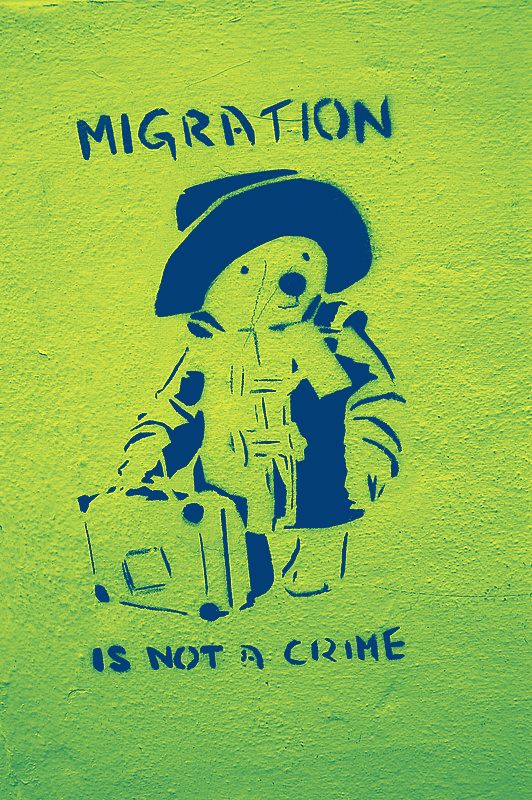
For our unit of inquiry on migrations these past two months, I wanted to add a digital citizenship component. We’ve talked about migrations before, but I was thinking about how often we forget about moving around between the digital world and the “real” world.  We have some different rules online, different expectations, and at times it can be hard to understand tone, etc.

AttributionShare Alike Some rights reserved by dkalo

  I worked with the teachers (in my role as tech coach) to start blogs with the students.  We discussed what we knew about migration, we interviewed our parents or grandparents about migration and posted this on our blogs, and then talked about digital citizenship and what it means when we migrate online.

Luckily I was taking this course while our unit was going on, we changed a lot of things, and have a better plan for next time we do the unit.  What was great for me, is that every teacher has now adopted blogging as a form of reflection, and they have asked to use blogger as their digital portfolio.  The students had people commenting (not just other students) on their blogs and were enthusiastic about the reflection process. It’s been a great first unit in COETAIL, I learned a lot, and I’m looking forward to using my network to help me and my colleagues imbed tech a little more authentically.

Always wanting more

I feel like I have been trying to do this for awhile, and it is so difficult to get to where I want to be with global collaboration. As a technology coach I have heard teachers often say they have no time. 

AttributionNoncommercialShare Alike Some rights reserved by mag3737

This is always frustrating for me because I feel with technology we have the option for asynchronous learning, so we don’t actually need common shared time we can use whatever time we have. 


In Davidson’s article Collaborative Learning for the Digital Age  I often feel like she did when she saw the gorilla (and I think many of my students feel the same way).  Instead of having a legitimate reason for not really paying attention to the assignment, I feel like trying to focus on just one thing (counting the passes) makes us miss out on the larger systemic issues that might be happening.  If we are paying attention to something too closely we can miss out on other learning opportunities.  What we need to do as teachers (connectivist teachers especially) is to link our learners up (either digitally or physically) with people who see the world a little differently. 

The crowdsourcing idea for grading and learning and transforming learning makes so much sense to me, why should I be in charge of what is “good” or “passable”.  Students might take assignments more seriously if their peers, or someone they looked up to were judging them. Again, like Clarissa says “It’s something I can do in my spare time, be creative and write and not have to be graded,” because, “you know how in school you’re creative, but you’re doing it for a grade so it doesn’t really count?”

Personally, I think it’s pretty inspiring that companies like Apple work with schools and let school communities repurpose their apps and technology. I love the idea of App Smashing especially when thinking about how to collaborate.

Our Collaborative Plans

At our school we have been trying hard to work with other schools. We have worked with other schools on our blogs. It has been a decent journey so far, we have people communicating with each other, asking questions and slowly digging deeper. But I would really like to “prosume” with another school.

Right now I am working with an environmental educator Ranger Ridley to work with Ontario schools for our units on Sharing the Planet. Like Andrew Marcinek mentions in his article the purpose of using social media, or blogs should go beyond connecting, which leaves me always wanting more. I am doing okay at connecting students, but how can I reach the empowerment stage?

So our success doesn’t look like this… 


Old things in old ways – Why are we making the rules?

Reading the Living with New Media Report got me thinking about how we are always doing things the same old way.

AttributionNoncommercialShare Alike Some rights reserved by Not So Much

This report talked about how parents and teachers need to give more power to the learners using the “New Media”.

Recently in class we’ve been talking about digital citizenship.  The students have been researching what it means, and how they need to comply with it.  Wild right?  We talk about citizenship, we realize that they are some of the most literate users, but we create the “rules”.  So much of what we (as learners) saw on brain pop seemed to talk about protecting our privacy.  While I agree it’s so important to protect our privacy there were very few examples of how we can leverage media to be more meaningful for us. 
I wonder more about growing up and the rules we were told, how we are using the same old rules in the same old ways.  Don’t talk to strangers… it seems so important, but what if those are the people we need to connect to in order to learn about our passions? How can we do this “mindfully” or being aware of which risks we should/can take?  
The report suggests that we shouldn’t “bear down on kids with complicated rules”.  We need to open up, and be open about the massive benefits and some fears of the internet.  But to be real digital citizens, we need to give our fellow citizens a say and a voice in how they can and should use this valuable and constantly changing digital world. 
Peer based learning is so crucial to all aspects of learning.  Take this course for example, required readings or our blogs, our voice is so important, we are the “prosumers”.  The same with my students, I give them chances to teach and interact with each other, and they learn by pushing each other further, and exploring the knowledge that they feel is important (within the confines of the programs or ideas we are exploring). 
The title of this post is from http://www.edutopia.org/adopt-and-adapt-shaping-tech-for-classroom . While this seems to be dated (2005), it immediately resonated with SAMR for me.
AttributionNoncommercialShare Alike Some rights reserved by jutecht


So often our first, after dabbling according to Jeff, (and not wrong, but first) step is substitution. We know the things we know really well, we see a tool and use that tool in a way we’ve always thought. Augmentation is the second step, but honestly, it’s a pretty huge step for so many people. We are starting to see things in new ways.

As life-long learning models we need to keep pushing ourselves to see things in new ways and open up to other people contributing to our shared digital world.

I know shorter is sweeter, I’ll leave this for now, but would love to discuss these ideas further, so please contribute.

Cultivating Geekdom

Attribution Some rights reserved by birgerking taken from Flickr

Family Geekiness 

Growing up, I was outside most of the time, especially during the summer.  My brother however was almost always near a computer. He fully embraced his inner geek, and at the time I may not have appreciated it as much as I do now.  Most of his friends and community members were part of an online game.  I forget what it was called, but he spent most of his time in it, and just like the Living in New Media Report mentions he learned from it and made profound friendships on this site.  This scared my parents, and to be honest it scared me a little too.  It’s strange not “knowing” who my brother’s friends were.  My parents could see my friends outside, we would come in and eat, hang out in the kitchen or watch TV if the weather wasn’t brilliant.  My brother’s friends were rarely seen.  
I remember I was in University, my brother was in grade ten or eleven and he had been playing this game for three years or so, when one of his friends wanted to meet.  My parents knew they were older, like in their thirties, which made them really uneasy.  They were both travelling to the same place, coincidentally, and thought it would be incredible to see this person they had spent so much time working with (killing monsters, saving the world, establishing a community, to be honest I don’t really know what they did).  
The agreement was my parents would be there for the meeting and introduce themselves to these people.  While everyone was a little tense at first the meeting went really well (I sadly was in school). My parents’ fear slowly dissipated and their friendship grew even stronger.
Reading this report on geeking out made me wonder about my choices being younger. I loved being outside, playing around, learning more about myself and my friends, but did I miss a chance to dig deep into something and learn a specialized skill? Who knows/ 

Cultivating Geeks 

Attribution Some rights reserved by See-ming Lee 李思明 SML
So now I wonder, how do I cultivate geekiness in my students.  Last year I tried implementing Genius Hour, or google time, or whatever you call it when you let students do what they want and explore their own learning. It was somewhat successful but I lacked the expert community connection that would make this time really powerful.  Their was no in-depth community for the students to reach (mainly because of lack of technology in the classroom). 
As a tech teacher now, and coach, I’m trying to start making those connections (thanks connectivism).  I’ve put some teachers on twitter to connect with NGOs taking action about what students are inquiring into. We’ve started classroom and individual blogs (already one of my students thanks to a facebook post has 500 views on one of his summative assessments Zeke’s blog if you’re keen).  I guess my wonder is, how do we cultivate geekdom? How do we get people into these communities, or is it like Clarissa says “It’s something I can do in my spare time, be creative and write and not have to be graded,” because, “you know how in school you’re creative, but you’re doing it for a grade so it doesn’t really count?”

As a “connected” teacher, I realize my role has to change. That means perceptions of my role have to change as well. Do I need to get rid of grading to make learning authentic in my classes? I wonder what the next steps are to help students reach their potential in a meaningful way for them.