What’s your watch?

3131200087_d396ff9f58_o
 Some rights reserved by Will Lion

After about two years, I’m finally a part of a blog sharing program (hooray right?).  Anyway, we can select from a number of different prompts and then we respond to how it’s going.  I chose What is your watch #teachermyth because I think like a lot of us, we have things that don’t work, but we keep around just in case they start to work at some point. The purpose of objects can change, and that can also change our workflow, so, I guess we all need to look a little closer into what’s actually being used effectively in our and our students’ learning.

For me, and I’m not sure how to say this as a digital literacy coach, I’m not sure blogging for students is hitting the same purpose as it was.  When it was new and exciting, lots of my classes had exchanges with different schools from all over. Now it seems more like just a reflection exercise. Blogging isn’t just boring (for students anyway) anymore, I think we have lost the point of transformative learning. On the SAMR model, it might just be augmentation, I guess the point of this is that we really have to get to what is it’s current purpose.

I also wonder about most technology being a watch. Are we still using it to redefine and transform education or are we looking for easy substitutes or to fill in time or to make our lives easier?

Regardless I guess, I was excited by the chance to reflect on what I’m doing in class. I think this article made me think of how and what I teach a little differently.


Implicit vs. Explicit teaching


IMG_1902
At the Apple Store last week


Often I think about what I am implicitly teaching my students. I wonder if I’m acting appropriately in front of them, if I am speaking about all people mindfully, if I’m always showing respect to the environment around me.  I believe that implicit actions outweigh the benefits of explicit teaching.

Last week I went to see Craig Smith speak about creative music making. I went because I was interested in making music, I learned a lot more about teaching than I thought I would have before setting out that night. While he did talk about skoog, music making, coding and giving everyone a choice I learned more about how to be honest in a class.

I’ve worked with a lot of learning support teachers, and many more regular classroom teachers.  Part of my thesis was on how people act based on their values (often they don’t seem to be aligned in the classroom or regarding curriculum).  I felt like I could tell a lot about what Craig believed just by how he interacted with his audience.

From all the presentations I’ve been too, I never had the sense that the person presenting actually respected and valued everyone, but Craig was different.  In all his mannerisms, his speaking and how he handled everything he just showed a ton of respect.  I came to learn about music making, but left thinking about so much more.

So, thanks Craig.

First day in Grade 6


32639305881_5efa37e7f5_b
Some rights reserved by Jamie McCaffrey


This is our first week back, and the adventure begins.

This is also my first year in a classroom in five years.  I’m pretty excited about it, as a Digital Literacy Coach I worked a lot in classrooms and with classroom teacher, but I haven’t actually been guiding a class for sometime.

So my first week back I decided I wanted to be a flexible classroom.  I want the students to be able to decided how and when to sit a certain way. This gives my students a little more agency and just establishes us as co-creators of a classroom which is pretty exciting.

Not too much to report after just a day, but I wanted to start getting in the habit of writing.

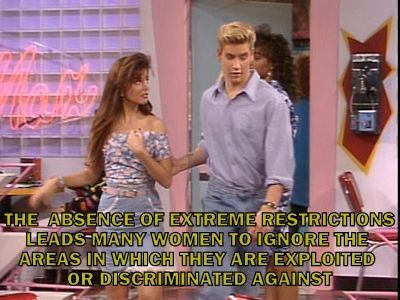
Absence of anything

http://savedbythe-bellhooks.tumblr.com/

Not really sure what this has to do with education, environmental, technological or otherwise, but it’s something I’ve been thinking a lot about.  I’ve used saved by the bell hooks before, I love how provoking some of the images and quotations can be.  

I guess what I’m really wondering is why it takes the presence of extreme anything to finally do something, or become aware. 
In the environment it’s climate change, how big does it have to be before people act.  With technology it’s falling behind as teachers, how much do we have to not understand before we realize that communication has changed and we’re a million years behind (like really who even blogs anymore). With people, I guess it’s everything.  Why do we need extremism, to realize the areas we’re being exploited?
Anyway, just wondering how can we be aware of situations without being or causing extremism.  

Peer feedback and teaching

AttributionNoncommercial Some rights reserved by Ken Whytock

Just came back from a google pd thing.  It was just okay, well just okay for me, I think some other people really enjoyed it.   Too often in PD we just lecture, and it’s pretty boring for everyone (especially someone who spent all weekend sitting and listening).  How can we leverage real time feedback with our peers.

As I present more and more I think this question is going to be at the forefront of my mind.  How are people truly engaged in what I am saying? How do I gather evidence of this? How can adults learn in a more productive way through PD?

Sharing ideas through video

This has been an incredibly busy week, but I am trying to focus on making one blog post a week and this week I’ve been thinking a lot about training, and sharing and how amazing video is at this.

Attribution Some rights reserved by Brian Metcalfe

This week I’ve created two videos for training purposes for my teachers.  Recently I’ve had to go to four or five classes and set certain things up.  While I love spending my time with teachers, I really want my job as EdTech Coach to be focused on learning conversations.  In order to liberate some of my setting up with teachers time I’ve made videos and shared them with teachers, this way they always have access and they can learn at their own time (and not have to ask me which I think some people try to just coast along until we realize that they aren’t doing what’s expected).  The videos have been easy to make using Camtasia2 my coworkers use another program, but I think this is pretty easy to use. 

I’ve been in a number of classes this week working with students making videos.  I just returned from one class that is working on documenting the systems they use.  The students take a video of the system they want to talk about and then use Explain Everything to narrate. 
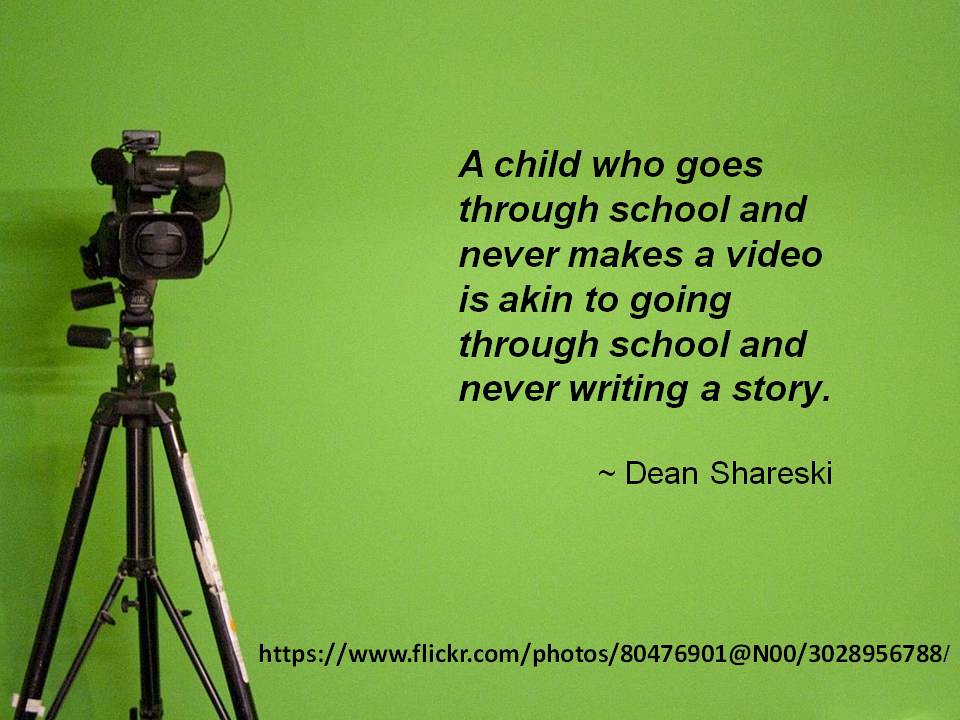
The quotation above is great, we need students to be making videos (especially the younger students) to fully understand what they know and honour how they can explain it.  It empowers the students to share their knowledge in any way possible. 
This week in the #enviroed chat we’ve been talking about nature and technology and Ranger Ridley led me to this link regarding crowd sourcing natural understandings. It’s amazing how videos (and photos) can lead others to see what new natural things are occurring, and what is happening to our natural systems. 
My focus on the next couple of weeks will be bringing video into more of my lessons, and hopefully in more of my teacher professional development.

What does it mean to be a digital migrant?

For our unit of inquiry on migrations these past two months, I wanted to add a digital citizenship component. We’ve talked about migrations before, but I was thinking about how often we forget about moving around between the digital world and the “real” world.  We have some different rules online, different expectations, and at times it can be hard to understand tone, etc.

AttributionShare Alike Some rights reserved by dkalo

  I worked with the teachers (in my role as tech coach) to start blogs with the students.  We discussed what we knew about migration, we interviewed our parents or grandparents about migration and posted this on our blogs, and then talked about digital citizenship and what it means when we migrate online.

Luckily I was taking this course while our unit was going on, we changed a lot of things, and have a better plan for next time we do the unit.  What was great for me, is that every teacher has now adopted blogging as a form of reflection, and they have asked to use blogger as their digital portfolio.  The students had people commenting (not just other students) on their blogs and were enthusiastic about the reflection process. It’s been a great first unit in COETAIL, I learned a lot, and I’m looking forward to using my network to help me and my colleagues imbed tech a little more authentically.

Always wanting more

I feel like I have been trying to do this for awhile, and it is so difficult to get to where I want to be with global collaboration. As a technology coach I have heard teachers often say they have no time. 

AttributionNoncommercialShare Alike Some rights reserved by mag3737

This is always frustrating for me because I feel with technology we have the option for asynchronous learning, so we don’t actually need common shared time we can use whatever time we have. 


In Davidson’s article Collaborative Learning for the Digital Age  I often feel like she did when she saw the gorilla (and I think many of my students feel the same way).  Instead of having a legitimate reason for not really paying attention to the assignment, I feel like trying to focus on just one thing (counting the passes) makes us miss out on the larger systemic issues that might be happening.  If we are paying attention to something too closely we can miss out on other learning opportunities.  What we need to do as teachers (connectivist teachers especially) is to link our learners up (either digitally or physically) with people who see the world a little differently. 

The crowdsourcing idea for grading and learning and transforming learning makes so much sense to me, why should I be in charge of what is “good” or “passable”.  Students might take assignments more seriously if their peers, or someone they looked up to were judging them. Again, like Clarissa says “It’s something I can do in my spare time, be creative and write and not have to be graded,” because, “you know how in school you’re creative, but you’re doing it for a grade so it doesn’t really count?”

Personally, I think it’s pretty inspiring that companies like Apple work with schools and let school communities repurpose their apps and technology. I love the idea of App Smashing especially when thinking about how to collaborate.

Our Collaborative Plans

At our school we have been trying hard to work with other schools. We have worked with other schools on our blogs. It has been a decent journey so far, we have people communicating with each other, asking questions and slowly digging deeper. But I would really like to “prosume” with another school.

Right now I am working with an environmental educator Ranger Ridley to work with Ontario schools for our units on Sharing the Planet. Like Andrew Marcinek mentions in his article the purpose of using social media, or blogs should go beyond connecting, which leaves me always wanting more. I am doing okay at connecting students, but how can I reach the empowerment stage?

So our success doesn’t look like this… 


Who chooses our hangouts?

AttributionShare Alike Some rights reserved by Jeff McNeill flickr
Creating and connecting communities. It’s one of the reasons we are here. When I’m thinking about what we do as teachers, how often do we give power to students to create their own communities.  We’re lucky… we chose to be here, well at least I imagine we all chose to be here.
Will Richardson in World Without Walls suggests that most of the meaningful teachers we meet are of our own choosing.  For us, as educators, to fully empower students Richardson pushes us to challenge our understanding of what it means to be a teacher.  No longer are we “content experts” first instead we think of our primary focus as “connectors”.
While reading the “Living with New Media”  article the authors discuss how youth have always been negotiating what it means to be a “friend”.  While we are online, this creates different opportunities and challenges, but it is still something we are always doing.
This idea that we as teachers and learners, have to be open to change. Open to new ideas, and make our own connections is something that resonates deeply with me.  Creating this COETAIL community is something I’ve been wanting to do for a year.  Creating meaningful learning experiences is powerful for me, and I’m looking forward to learning more about how I can enable my students to enhance their learning through technology.