Sharing ideas through video

This has been an incredibly busy week, but I am trying to focus on making one blog post a week and this week I’ve been thinking a lot about training, and sharing and how amazing video is at this.

Attribution Some rights reserved by Brian Metcalfe

This week I’ve created two videos for training purposes for my teachers.  Recently I’ve had to go to four or five classes and set certain things up.  While I love spending my time with teachers, I really want my job as EdTech Coach to be focused on learning conversations.  In order to liberate some of my setting up with teachers time I’ve made videos and shared them with teachers, this way they always have access and they can learn at their own time (and not have to ask me which I think some people try to just coast along until we realize that they aren’t doing what’s expected).  The videos have been easy to make using Camtasia2 my coworkers use another program, but I think this is pretty easy to use. 

I’ve been in a number of classes this week working with students making videos.  I just returned from one class that is working on documenting the systems they use.  The students take a video of the system they want to talk about and then use Explain Everything to narrate. 
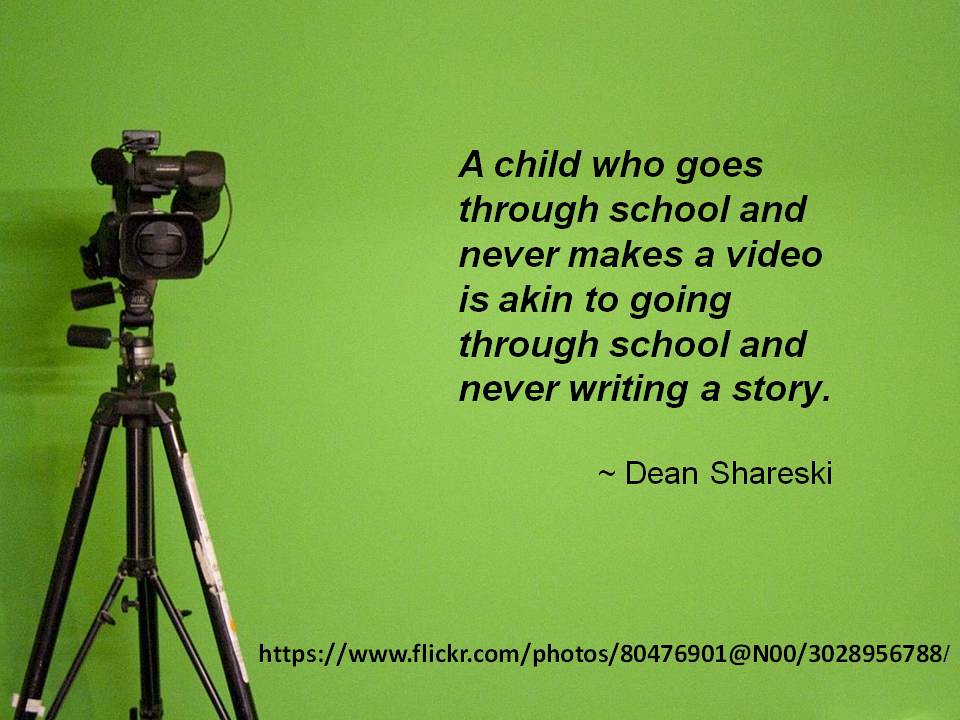
The quotation above is great, we need students to be making videos (especially the younger students) to fully understand what they know and honour how they can explain it.  It empowers the students to share their knowledge in any way possible. 
This week in the #enviroed chat we’ve been talking about nature and technology and Ranger Ridley led me to this link regarding crowd sourcing natural understandings. It’s amazing how videos (and photos) can lead others to see what new natural things are occurring, and what is happening to our natural systems. 
My focus on the next couple of weeks will be bringing video into more of my lessons, and hopefully in more of my teacher professional development.

Thinking about coaching

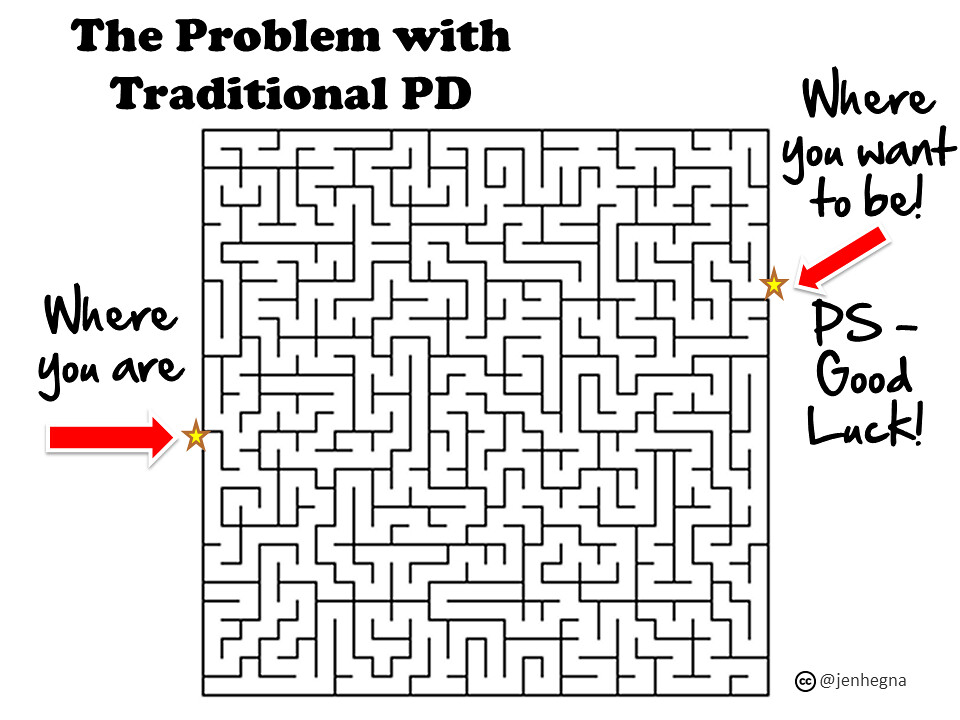
I’ve been thinking a lot about coaching (what it means to be an Edtech coach, a learning coach, a sports coach, are they different?) this week.  Mostly in relating to professional development for teachers.  I think a lot of us know where we want to be, or what we want to do, we just need someone there to help us get there, and make sure we’re doing it while following our school’s vision. 
One of the best things about life is change, and my job is constantly evolving.  In order to keep up with this, I need heaps of PD, and I’m reading as much as I can.  Currently I’m reading this book. 

amazon.com

I’m trying not to think of myself as “just” an Edtech Coach, but as a learning coach. While I don’t have the whole skill set yet, it’s something I’m working on. 

One of the most important concepts that this book made me reflect on, and I use in my EdTech job is the importance of trust.  Moving to a new school means the first thing I have to do is build those relationships with teachers.  I’m going to a lot of meetings, listening and supporting, and finding out what they think should be happening.  By listening and then acting, I’m hoping that the teachers will know that I have their backs when they want to try something, so that when I want to encourage them to go somewhere new in their learning journey, they’ll know I support them. 
Attribution Some rights reserved by torbakhopper

I think it all goes back to the sense of community and connection.  If we all feel like we are connected, and we are trying to do the best for learning (students’ and ours) then we need to be open to some direction.  Any kind of peer coaching can be helpful.  

Getting into classes this week was amazing. So good to see happy kids, and inspired teachers doing their best. We’re starting individual student blogs in the next couple of weeks, working on class blogs and storytelling apps this week. All in all an exciting time to be working with teachers.

Consuming or Creating or Both

AttributionShare Alike Some rights reserved by barbourians

I was reading George Couros’ blog today about “work phone mentality“, while I always enjoy his blog posts, this one really got me thinking.

At my previous school, before we introduced iPads to the classroom we gave them to our teachers for six months.   The first two months were playing, and like Couros mentioned, not everyone played. Some people used it for personal communication, some looked into how they could use it with students, but I guess everyone who used it thought about how they could use it to enhance their teaching (which is great).  But I don’t think anyone used it to try to create something (myself included).

Consuming
I don’t think we were solely consuming (or we were aware of solely consuming), rather I think so much of what we know as educators is to consume and adapt. Rarely are we asked to create change, or stimulate change (well in our students yes, but in the system? I don’t think so).

For the past two years as an EdTech coach, I’ve been asking teachers to create rather than consume with their learners.  And I fully support that idea today, but I think I’ve missed out on some of the benefits of consuming, or I’ve been using the word improperly or just leaving off the creating aspect from consuming.

Consuming, creating and the commons


AttributionShare Alike
 Some rights reserved by The Daring Librarian

While I often think of the potential of creative commons, I don’t always think of it as a tool for both creating and consuming (although now that I think of it, I can’t actually imagine it any other way).  Coming from a constructivist view point, I believe we build on from our previous knowledge, besides direct experience and then consumption (reading, watching, listening, interacting) to other people’s experience, I don’t know what other ways we can acquire knowledge.

As I head into my classes on digital citizenship, and crediting sources this week, I really want to highlight this opportunity to consume and create for our whole learning community. 

Making Parent Communication Folders

Screen Shot by Maureen
This week our team has been focused on creating a presentation for delivering information to parents.  Before we sent out numerous links for parents, but most of our parents received and email on their phones and clicked links to access the information.  Their phones opened many new tabs which made browsing difficult for them.  So we decided to use a different approach this year. 
Since we are using Google Apps for Education, we decided to create folders where parents can view the information being sent out through one main folder.  When they open the folder they get subfolders which will bring them to curriculum, media and single subject teachers. 
As a tech team, this seemed pretty straightforward, but we all learned a lot when trying to share the message to administration and grade level teams.  While sharing settings were easy to manage and control with a small group of people, it was more difficult when using the same folder in multiple drives (for our grade level teachers), we worked with the sharing settings making people editors for a short period of time and then making them viewers only. This way we could manage how the drives were organized.  
More than anything, as an EdTech team, but mostly I learned a lot about breaking steps down and differentiation.  One of the teams was very comfortable using Google Drive and blogs and they flew through the presentation in fifteen minutes mainly concerned with our privacy settings and size of the drive. Another group (much larger) took an hour to get set up.  Some of this was due to our prep, but some of it had to do with the comfort of using the drive.  I learned a lot about the importance of knowing your audience.  Since I’m new to the school, I had prepared a uniform presentation, but as I am getting to know the groups better, it’s important to start changing how and what I present (all best practice really, I guess this is just pre-assessment). 
I have two more presentations to go, but I feel much more prepared for sharing the information, and hopefully making it more meaningful to the teachers. 
Next comes the parent step (well a week from now).  It will be interesting to see how well the information gets from one place to the next.  


Back to School

Attribution Some rights reserved by BiblioArchives / LibraryArchives

Well summer was full on, read a lot but didn’t create very much.  Going through the presentations we are giving this week and next week, our EdTech team keeps talking about the powerful learning opportunities with creation. Sadly, I’ve been out of that loop for the last couple of weeks. 

While we dive into all teacher training next week, the teachers new to the school are getting ready this week, figuring out systems, learning the school, interacting with each other, so far so good I would say. 
I bought some screen casting software recently, and want to take the plunge into offering more personalised learning opportunities for teachers, not just with content but with time. I’ve talked about this but at times teachers feel like there is not enough time. 
AttributionShare Alike Some rights reserved by Sergey Galyonkin

Part of what I see as my job this year as EdTech is to promote this idea of a “flipped classroom” using screen casting opportunities, an having my google calendar open, I hope will create a way teachers can either access me during the day, or access learning material in the evening, or on the weekends (not that I want people working all weekend, I just want them to be able to learn whenever they want to learn). 


Being a part of a community


AttributionNoncommercialShare Alike
 Some rights reserved by cjnoof

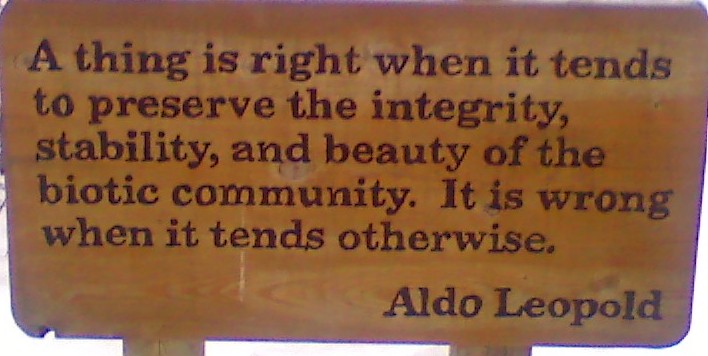
It’s been two weeks or something since the last post, and this quotation has been floating through my mind.

During my studies in environmental education Aldo Leopold was someone I always admired, but it’s pretty easy to admire someone like this.  I’m trying to think about connections and the importance of “preserving the integrity” of the communities of which I’m a part.


AttributionNoncommercial
 Some rights reserved by Halina Ward

During the summer break I’m going to be working hard at preserving the integrity of my community.  I need to continue to focus on blogging, just in order to keep reading, and reaching out to my community of like minded people.  So I’m asking for help, how do the rest of you keep going during this time, who do you connect to, and how do you connect (especially if you live overseas)?

Being on the other side

It’s the time of year where teacher appraisal is happening, this is the first year where I have been on both sides of the process (thanks to the tech goals our school has and my role as tech coach).

AttributionNoncommercialShare Alike Some rights reserved by dkuropatwa

Like most things, I’ve been totally unaware of how others approach the idea of appraisal. I have been through a number of appraisal methods, and to be honest, none have really worked for me. Regardless I have tried to make the most out of each method and I feel I have grown personally and professionally in all my jobs. 

Being on the other end and being responsible for appraising is much more difficult than I originally thought.  Everyone I work with approaches their appraisal different.  Some just want the box checked and do it superficially, some write out everything they do, some have meaningful reflections but about things I haven’t thought of, or thought would be on an appraisal sheet (I do find them incredibly interesting though), in short I guess, I’ve learned a lot more about being on the other side. 
AttributionShare Alike Some rights reserved by symphony of love
For almost anything, being able to empathize and think about where others are at help us to grow and develop.  I talked to a colleague last night about the importance of qualitative data when doing appraisals.  For me, qualitative data is just so much more important than quantitative.  By having teachers write what they’re thinking, without it being in a small little box, we can really think about how we want to develop, get away from the traditional appraisal system and create ourselves. 
Reading the qualitative reports from my colleagues helped me to understand them better, but also helped me to reconsider my goals and ambitions. I fully believe my reflection process has improved as a result of this process, so I’m really thankful. 

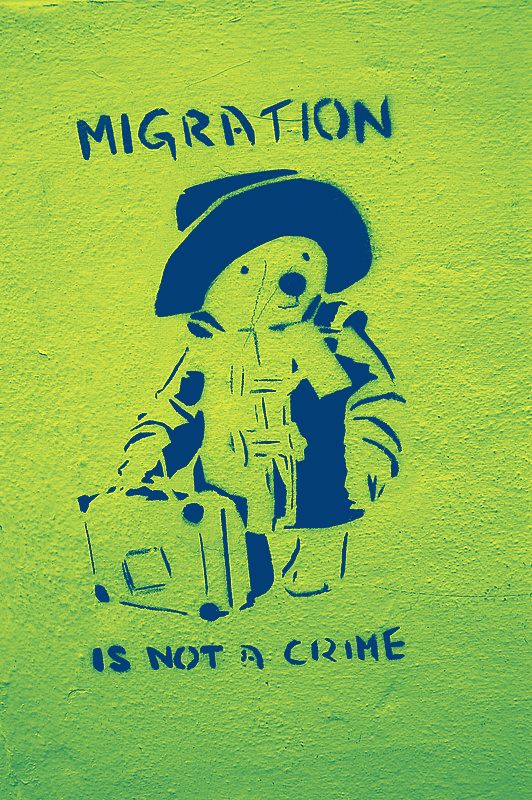
What does it mean to be a digital migrant?

For our unit of inquiry on migrations these past two months, I wanted to add a digital citizenship component. We’ve talked about migrations before, but I was thinking about how often we forget about moving around between the digital world and the “real” world.  We have some different rules online, different expectations, and at times it can be hard to understand tone, etc.

AttributionShare Alike Some rights reserved by dkalo

  I worked with the teachers (in my role as tech coach) to start blogs with the students.  We discussed what we knew about migration, we interviewed our parents or grandparents about migration and posted this on our blogs, and then talked about digital citizenship and what it means when we migrate online.

Luckily I was taking this course while our unit was going on, we changed a lot of things, and have a better plan for next time we do the unit.  What was great for me, is that every teacher has now adopted blogging as a form of reflection, and they have asked to use blogger as their digital portfolio.  The students had people commenting (not just other students) on their blogs and were enthusiastic about the reflection process. It’s been a great first unit in COETAIL, I learned a lot, and I’m looking forward to using my network to help me and my colleagues imbed tech a little more authentically.

Old things in old ways – Why are we making the rules?

Reading the Living with New Media Report got me thinking about how we are always doing things the same old way.

AttributionNoncommercialShare Alike Some rights reserved by Not So Much

This report talked about how parents and teachers need to give more power to the learners using the “New Media”.

Recently in class we’ve been talking about digital citizenship.  The students have been researching what it means, and how they need to comply with it.  Wild right?  We talk about citizenship, we realize that they are some of the most literate users, but we create the “rules”.  So much of what we (as learners) saw on brain pop seemed to talk about protecting our privacy.  While I agree it’s so important to protect our privacy there were very few examples of how we can leverage media to be more meaningful for us. 
I wonder more about growing up and the rules we were told, how we are using the same old rules in the same old ways.  Don’t talk to strangers… it seems so important, but what if those are the people we need to connect to in order to learn about our passions? How can we do this “mindfully” or being aware of which risks we should/can take?  
The report suggests that we shouldn’t “bear down on kids with complicated rules”.  We need to open up, and be open about the massive benefits and some fears of the internet.  But to be real digital citizens, we need to give our fellow citizens a say and a voice in how they can and should use this valuable and constantly changing digital world. 
Peer based learning is so crucial to all aspects of learning.  Take this course for example, required readings or our blogs, our voice is so important, we are the “prosumers”.  The same with my students, I give them chances to teach and interact with each other, and they learn by pushing each other further, and exploring the knowledge that they feel is important (within the confines of the programs or ideas we are exploring). 
The title of this post is from http://www.edutopia.org/adopt-and-adapt-shaping-tech-for-classroom . While this seems to be dated (2005), it immediately resonated with SAMR for me.
AttributionNoncommercialShare Alike Some rights reserved by jutecht


So often our first, after dabbling according to Jeff, (and not wrong, but first) step is substitution. We know the things we know really well, we see a tool and use that tool in a way we’ve always thought. Augmentation is the second step, but honestly, it’s a pretty huge step for so many people. We are starting to see things in new ways.

As life-long learning models we need to keep pushing ourselves to see things in new ways and open up to other people contributing to our shared digital world.

I know shorter is sweeter, I’ll leave this for now, but would love to discuss these ideas further, so please contribute.