Starting the project

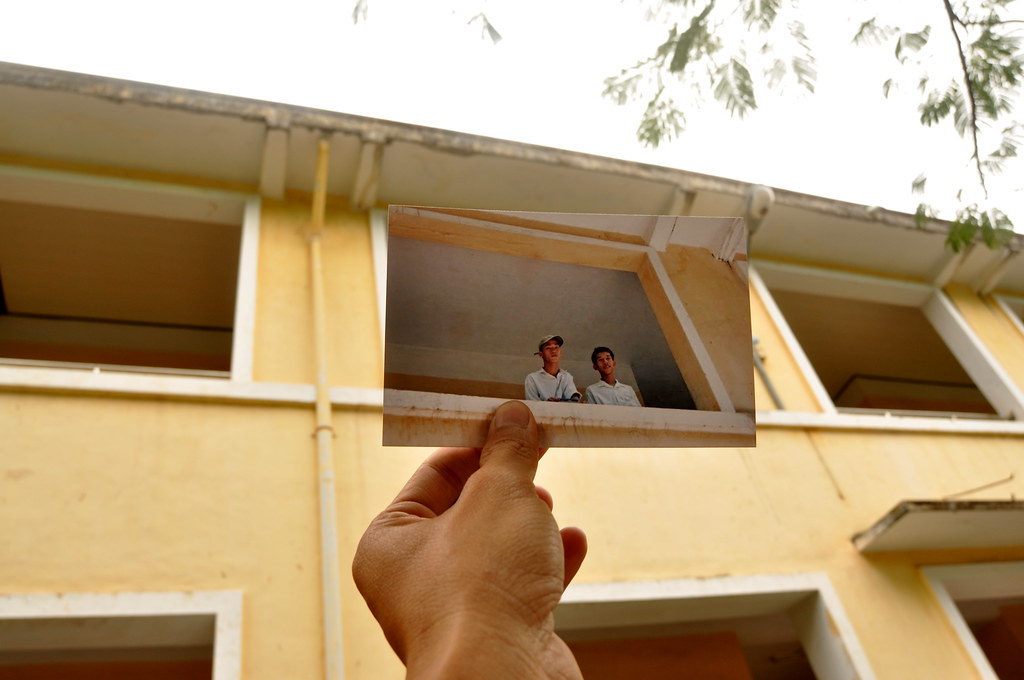
Attribution Some rights reserved by Magic Madzik

We’ve started trying to make connections regarding our places in school.  I’m planning on working with students to make meaningful connections.  If you want to know more check out this post for my UbD.

The first thing we did was sit in a circle and talked about what it felt like to move from place to place. We all felt an anxiety about moving, when we dug a little deeper we discovered that this anxiety might be a result of not knowing the place or the people. 
As a group we decided to write blog posts about our favourite place (and soon favourite people) in the school in order to alleviate some of the anxiety potential migrants to our school might feel. 
The students are keen to share what they know about the school, and since it’s not content driven most students feel like they know their place, so everyone wants to participate. 
The project isn’t fully what I wanted, but it is student driven which is important.  I was hoping for more of a shared project, but maybe it will morph into that.  
I’m also slightly disappointed that more students didn’t choose an outside place as their favourite spot, but, it’s interesting to see why they chose different places. 

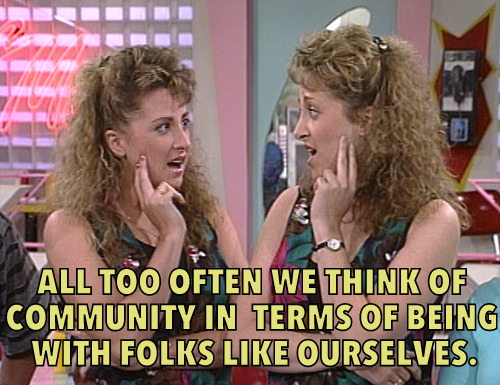
Thinking about community

http://savedbythe-bellhooks.tumblr.com/

As an edtech coach, and an environmental educator, I find that most of my conversations happen with people who I think are in my community.

So, I wonder… who am I missing, who am I marginalizing, am I really growing as an educator? 
I hope so, but anyway, it’s a wonder.   A crazy busy week, well two weeks, but working hard on my enviroed project. 
It’s funny because I always want to push kids to go further, but so often I let teachers feel comfortable.  If we learn from being uncomfortable am I making it difficult for my colleagues. 
Not much to write today, just want to write so I don’t forget to keep in the loop.  Next blog post will be about the project.

How disruptive is silence?


AttributionNoncommercialNo Derivative Works
 Some rights reserved by jsdilag

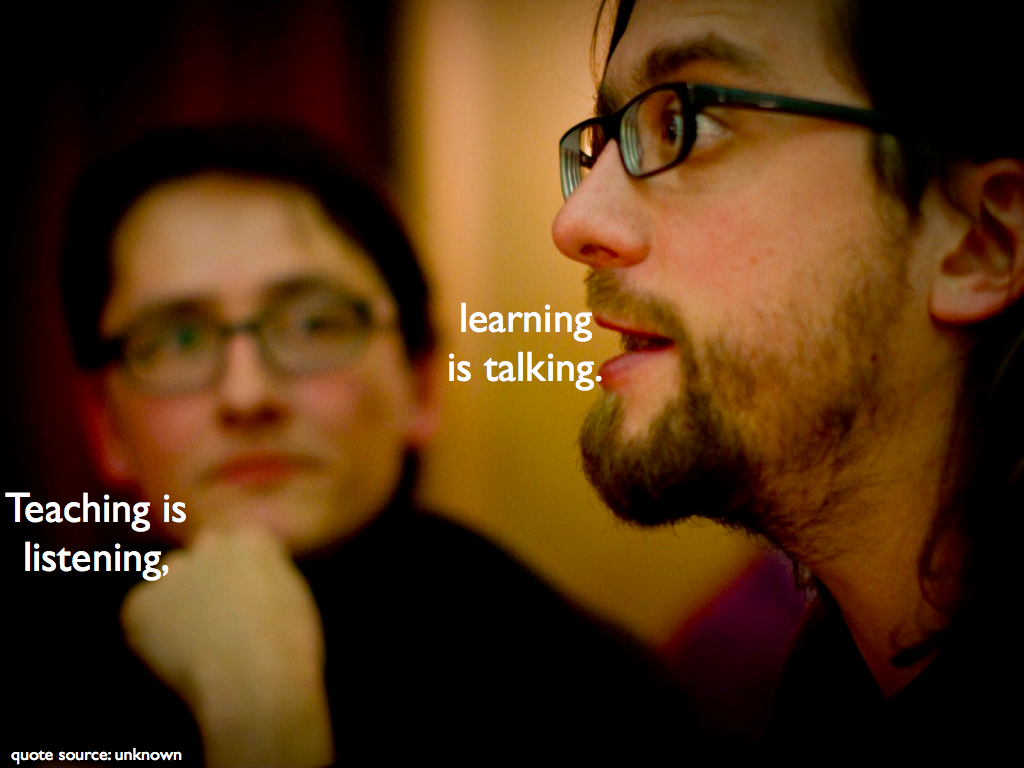
Just returned from a course on Cognitive Coaching with Bill and Ochan Powell where we talked about the power of listening, and being uncomfortable can be to our learning.

One of the things I started last year (and Bill and Ochan mentioned at the workshop) was the idea that as teachers, we don’t really teach listening.  Well maybe some teachers do, but things like looking at a person, focusing, and keeping eye contact doesn’t really mean listening to me.  I think listening means being able to summarize the thoughts of another, and make connections (without the purpose of summarizing or making connections).  I don’t know, I find it hard to fully describe (probably because I was never really taught).  Listening can be powerful, in this course we spent a lot of time listening, to each other, our instructors and ourselves, and honestly, I learned a lot. Mostly because I was quiet. This was incredibly difficult for me, I’m almost always trying to make connections to what people are thinking, and stopping myself from talking was something I had to learn. 
The point is, I think anyway, that making myself uncomfortable, really improved my learning.  Putting myself in a new situation, really trying to figure out someone else’s point of view, helped me learn more about them and myself. 
Since my main wondering are with technology and the environment,  I wonder how we can incorporate silence into our learning with technology.  So often we use our tech to distract us from the silence and those uncomfortable moments.  This, I feel, takes us away from those deeper learning opportunities. 
As teachers who use technology how do we initiate and establish those silence moments with a device, first in ourselves and then in our students? How can we make listening (active listening, or reading) a habit online rather than just consuming? 
Repurposing media


AttributionNoncommercialShare Alike
 Some rights reserved by Topeka & Shawnee County Public Library

Just got back from a vacation and have been wondering a lot about what we need to do to fully redefine what we think of media literacy.

I’ve been reading a number of articles and papers, this is one of my favourites, talking about what digital literacy and media literacy might be.  
What my main wonderings are, right now anyway, surrounds the idea of socialisation of media and literacy.  This could easily involve role plays, or something more “real”, but we also can dig deep into how we can redefine what we are reading, how we are reading and how we show what we’ve read.  
Blogs seem pretty obvious for some of our students, but even though we put our learning out there, that doesn’t actual socialise what we are doing, people might not respond, or might never read.  We can get students in the classroom filling the role of responder, but that doesn’t redefine what we could already do in a traditional classroom setting.  So, I’m working on connecting our students to places around the world.  Not for just taking content. 
As I was writing this I found +Jeff Utecht ‘s post on community trumps content.  
So how do we do this with reading? 

Practicing going slow and listening

Attribution Some rights reserved by NJ

Last week of classes for the term.  Exciting times for sure, and a good time to practice our listening skills. Most of us are distracted, thinking about other things, wondering what is going to happen, what we’re going to get, so this week has been great for trying to clear our mind, we haven’t been totally successful, but it has been fun.

Starting to formalize this final project for Coetail, collaboration is new for some of these students, especially collaboration of project or educational design, so it’s not easy.  But I think it will be rewarding for all of us.

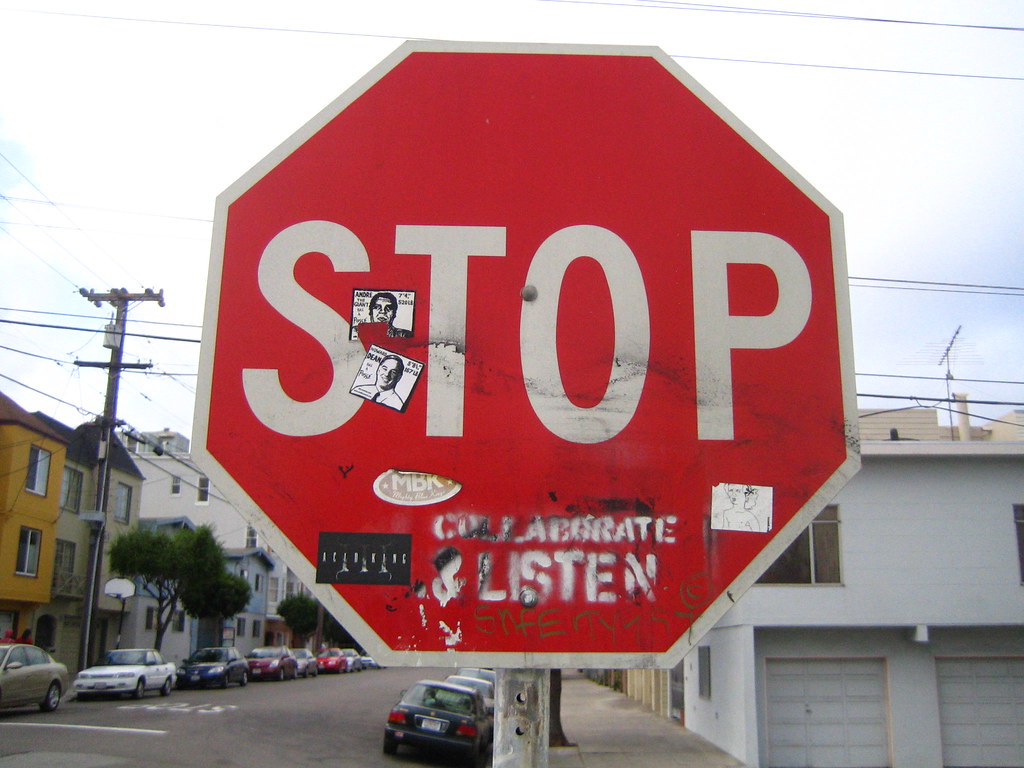
Listening to collaborate


Attribution
 Some rights reserved by rick

We’ve started our project about connecting students, seems okay so far, but we noticed something, we rarely listen.  Before we went online, we started sharing our migration stories, what that meant to us, but no one really listened to the other stories.

One of the worries teachers have about incorporating technology (and one of mine as well) is how much it speeds things up.  We need to slow down in elementary, and really think about why and how we interact with each other.  
It got our whole class thinking about what does it mean to listen.  We threw words around like “focus”, “pay attention”, “look at the person”, and other kinds of things.  We couldn’t really define what those things looked like though.  After some discussions and some personal blogging about listening some of the students had some great ideas.  One student though about using only one or two tabs, that would keep her focused on the task at hand.  One other student talked about the importance of finishing her work, and waiting until we finished.  
We transferred these ideas over to “real” life.  By keeping only one tab open, we’re only thinking about one thing (the conversation).  By finishing your work before moving on, we’re going to wait until the person is finished before we think about responding.  Some abstract ideas for sure, but we’re focusing on listening first. 
I’ve been thinking about this for a couple of weeks. For research we’re learning to skim and scan, there are more opportunities to look at how to finish more books rather than re-read or read deeply. So much of what we’re doing is encouraging students to speed up, then we get frustrated when they don’t stop and listen to us.  I really think we need to slow down.  

AttributionNoncommercial
 Some rights reserved by Thomas Hawk
Modelling this is going to be important for sure.  How do we listen to our students, what does it mean to be a teacher, especially in a connectivist world?  Lots of wonderings this week as we move forward. 
AttributionNoncommercialShare Alike Some rights reserved by dkuropatwa

Final Project – Making Connections

AttributionNoncommercial Some rights reserved by Khánh Hmoong

I really want students to start thinking about how to make positive connections online, and then transfer those feelings into the “real” world.  I think that if we start fostering a connection before students transition into a new school we can make friendships more meaningful before students come.  We can also make deeper connections to other schools who may not be ever coming to see us.

I’m going to start this project in the new year with the grade 3 class studying migration ( I just checked my first UbD for Coetail and it was also about migration, funny huh?).

The important bit for me is making the emotional connection, the product and most of the process will be student led (I hope) because we are working on empathy and connectivism.

Here’s hoping anyway, let me know if you have any ideas.

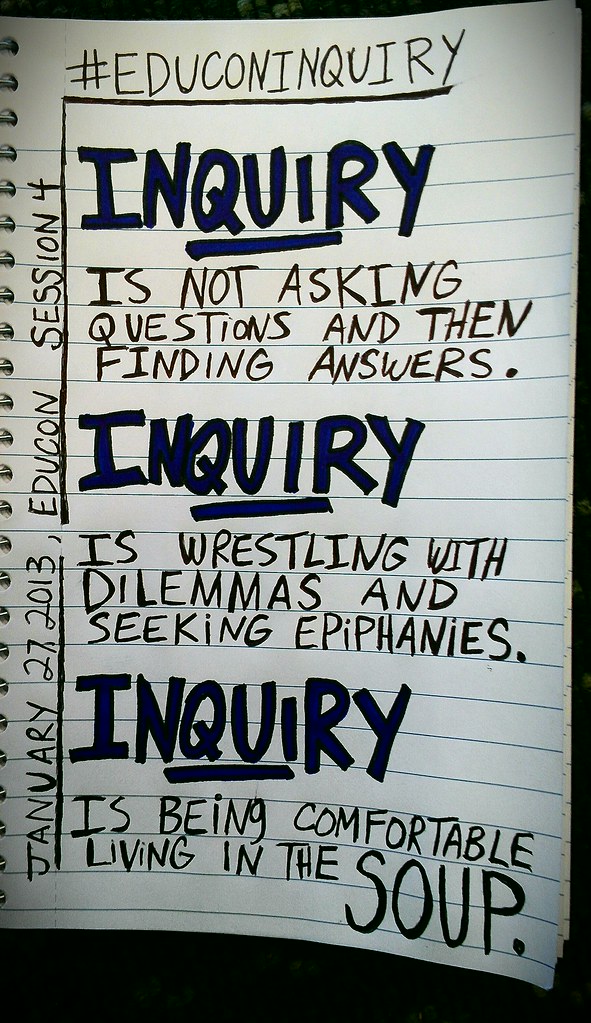
Problems could be real inquiry

AttributionNoncommercial Some rights reserved by William M Ferriter

I think problem based learning is pretty critical for our developing of thinking skills.  We need to start seeing problems without the need for immediate solutions, we need to work with teachers to help students understand it’s okay not to know “the” answer.

Often I work with open-ended problem based questions and at the beginning of the year, many students have a difficult time.  They want to know the answer, but in my world there is rarely an answer. 
Using technology seems like an easy way to explore possible solutions to problem based curriculum and as a way to connect. 
This is where my mind has been going, as we’re getting ready for course five, connecting, the world, and action. 
I’m wondering how I can pose a problem to my students, and get them to work on finding a solution. 
I think… right now anyway, I’m going to ask them to come up with a solution to my problem.  How can we create a relationship with a community we don’t “know”.  Working with some colleagues in Ontario, I hope our class can create an opportunity to interact with, and create an emotional connection with a “community” there. 
I think it’s a “problem”  because I don’t know how to do it, so there is no easy solution.  I just hope we can all be motivated to make it happen.  
This post is a little scattered, but hopefully by our blog next week with the ubd will be sorted. 

(Re)connected

AttributionNoncommercial Some rights reserved by sorokti

In George Couros’s quick blog about what learning is, he talks about the importance of connectivism.  The whole purpose and idea surrounding education now (or so it seems) is that we can connect to other people, and grow together. Like Louise I’ve always considered myself a co-constructivist, and I think that these two theories blend together quite well.  We co-create our knowledge, it is no longer limited to within classroom walls, or at a specific time.  Learning is everywhere, all the time.

I think though, that at times, we forget to make those emotional connections to people, places and things.  It’s easy to connect and still consume things from others (like we do online most of the time), it’s easy to connect and learn on the surface.  But I think for those deep learning opportunities we have to connect emotionally.  It’s possible, but not easy. 
In the video about the University of the People we learn about people who have made emotional connections to subjects, and others and how they want to move forward to create a better world.  Daniel Pink talks about how intrinsic motivation works more effectively than any kind of external reward (and as teachers don’t we know this already), so we need to make those connections to our work place, and students in order to truly and transformatively change something. 
So this has been my goal this week, with students as well as myself.  Make emotional connections, to things, people, places, I can do this online (and have been with my parents and friends this week), but also take time to do it in the “real” world too.  If connectivism shows the power behind the connections in our learning, then we have to make them meaningful.

I think that slow education can be powerful for this, even if we are online we can have meaningful interactions, we just have to focus on our connections.  Going slow, even online, to make those connections meaningful and emotional can make for powerful learning (I think).