Since the holiday things have been full on, exciting, but busy. We want to move more towards a fish bowl model of professional development at our school. We’ve put in our proposal and are waiting for our chance to talk with administration.
Right after though, I applied for a job as an Open Minds Coordinator. During the interview I was able to talk more about the fish bowl concept and what I wanted to do with it, as I was talking this whole new idea unfolded, who do I actually collaborate with, and how do I collaborate with them. Often I feel I just talk to my fellow Digital Literacy Coaches, sometimes teachers, sometimes STEAM, but not as many people as I should.
The goal now is to take over the library, with the Digital Literacy Coaches (I don’t think Open Minds is for me), bring in the Librarians, the STEAM people, the Open Minds people and other Learning Leaders at school. Then do all of our PD. We have people who are experts in areas constantly offering PD, sharing expertise with the other experts so we can all present, and then people book out specific coaches for individual needs based on individual goals.
Just had an interesting conversation with a grade 5 teacher about “nature smart”.
He wasn’t totally convinced that multiple intelligences were something we should be teaching towards, specifically with nature smart ideas.
I fully understand that encouraging people to develop growth mindsets can get them out of a box of learning a specific way and not just focusing on their strengths. The conversation which really got me though was, what was nature smart?
In the book he was looking at it said something like liking animals as a basis, his question (and rightly) was who doesn’t like animals? Does that really make you nature smart.
I started talking about the ability to see things in systems, not really sure if that’s nature smart, but looking at connections between animals, and creating empathy that kind of thing. But wasn’t really sure.
So this week will be digging a little deeper into my ecoliteracy book, trying to convince him about maybe thinking ecoliterate is a little different from nature smart, we’ll see.
With our grade 3 classes we’ve been using blogs to reflect what we are learning. More than that though, I am hoping to make our reflections interesting. Almost all of my students think that reflection is like a recount. Here’s what we learned, this list of things. I know now this.
It’s frustrating, mainly because I want to move away from that kind of learning, but my students obviously still see learning this way. I try to tell them that let me know what you learned, not what was taught, what’s your big take away, why does it matter?
Then I wonder why or who taught us how to reflect. I think for my next couple of lessons I’m going to look at some other student blogs and teacher blogs to talk about what’s really important about learning. Then go to maybe tumblr or something to show how we are always kind of reflecting. Maybe some comics, to talk about processing visually, maybe Nicki’s Blog to show how we can even think differently.
School is off for two weeks so I have heaps of time to prepare, but how can we teach students to write interesting reflections, I’ve used them as the audience, and even they are bored. So time to inspire I guess.
Reading George Couros‘ blog today about being Learning Savvy. In it he was talking about being tech savvy, and how he isn’t always comfortable with the term.
As an EdTech coach, people definitely see me as someone who has technology skills (even though I don’t necessarily see myself that way). Like George, I want to be more learning savvy.
Part of my action towards this is working on the Cognitive coaching workshops. I want to be more focused on how we approach learning, with a tech and environmental ed perspective, but the goal is the same, what is best for students’ learning.
Through my project on community, we have just finished our stories, and some of our blog entries. We’ve talked about our favourite places and people in hopes that we can connect with incoming students, to make their transitions a little easier. It’s not really about the tools we used, it’s about what we learned about ourselves, our favourite spots, and how we can improve our community.
Just returned from a course on Cognitive Coaching with Bill and Ochan Powell where we talked about the power of listening, and being uncomfortable can be to our learning.
One of the things I started last year (and Bill and Ochan mentioned at the workshop) was the idea that as teachers, we don’t really teach listening. Well maybe some teachers do, but things like looking at a person, focusing, and keeping eye contact doesn’t really mean listening to me. I think listening means being able to summarize the thoughts of another, and make connections (without the purpose of summarizing or making connections). I don’t know, I find it hard to fully describe (probably because I was never really taught). Listening can be powerful, in this course we spent a lot of time listening, to each other, our instructors and ourselves, and honestly, I learned a lot. Mostly because I was quiet. This was incredibly difficult for me, I’m almost always trying to make connections to what people are thinking, and stopping myself from talking was something I had to learn.
The point is, I think anyway, that making myself uncomfortable, really improved my learning. Putting myself in a new situation, really trying to figure out someone else’s point of view, helped me learn more about them and myself.
Since my main wondering are with technology and the environment, I wonder how we can incorporate silence into our learning with technology. So often we use our tech to distract us from the silence and those uncomfortable moments. This, I feel, takes us away from those deeper learning opportunities.
As teachers who use technology how do we initiate and establish those silence moments with a device, first in ourselves and then in our students? How can we make listening (active listening, or reading) a habit online rather than just consuming?
I really want students to start thinking about how to make positive connections online, and then transfer those feelings into the “real” world. I think that if we start fostering a connection before students transition into a new school we can make friendships more meaningful before students come. We can also make deeper connections to other schools who may not be ever coming to see us.
I’m going to start this project in the new year with the grade 3 class studying migration ( I just checked my first UbD for Coetail and it was also about migration, funny huh?).
The important bit for me is making the emotional connection, the product and most of the process will be student led (I hope) because we are working on empathy and connectivism.
Here’s hoping anyway, let me know if you have any ideas.
Phenomenology is the idea of making meaning from your lived experiences (basically). During my master’s research I used this methodology to dig deeper into my understanding of what it meant to be an environmental educator. As a teacher, I believe in the idea of constructivism, and making meanings based on your previous experiences. So much of learning for me is experiential based, we learn by doing, and reflecting on our actions (either in groups or on our own). With this idea of knowledge as being, I wonder a lot about gamification in the classroom.
What’s Real?
My main questions when thinking about gamification or anything really online, is what is real? If we learn from our experiences, what is an “actual” experience. I think this video is pretty powerful, and I think it’s something we have to think about as educators, especially when we are moving beyond “connections”. So as educators when we are thinking about gamification, we have to think about creating authentic gaming experiences.
Frustrations first, earlier this year we had a math website rep come to our school and talk about how their website gamified education, we had a lms platform come in saying they gamified learning. They did this through badges and scores. It totally put me off. Badges, scores, etc. don’t make a game. A real purpose or challenge makes a game. Through this real purpose you can have opportunities to level up, or earn points but clicking a button to “practice” math skills is not a game. It’s clicking a button (that has no real learning value).
I struggle with gamification, because I don’t think I like the term. Apple uses challenge based learning, PYP uses their performance task to illuminate their central idea, and using pedagogy like this to engage your class can create a game like atmosphere. Setting challenges for students to complete before they meet the next challenge is more what I think of when I think of gamification.
I loved the minecraft history project video. No where was the teacher trying to create a game like atmosphere. There was a question posed (create a sustainable city) and different ways to reach that goal. I personally have a hard time imaging someone doing a more in-depth job than the student who used Minecraft, but I’m not sure using Minecraft on it’s own would’ve gamified the situation.
In the “Raising Engagement in e-learning through gamification” there is an emphasis on fast feedback that I believe is crucial. In games you quickly get a sense if you’re winning and losing. Using connectivism to interact with other people can help you correct your actions. This formative assessment is crucial for engaged learners.
One of the quotations from this week that resonated deeply with me was:
“It’s not about the technology; it is about new ways of thinking. The barriers are in our heads,” Harrison says. “Learning is not about content, it is about creation. Isn’t that our job: to help kids learn how to do things? Our job is to prepare children for the world that exists.” – Nick Morrison
We need to change how we think about learning, not just gamify something. We need to encourage students to create and engage in their learning, not just consume by clicking buttons. A program or an app can’t do this. Teachers need to do this, and I think creating authentic learning experiences (online or otherwise) is the most difficult part: however, it’s likely the most important part.
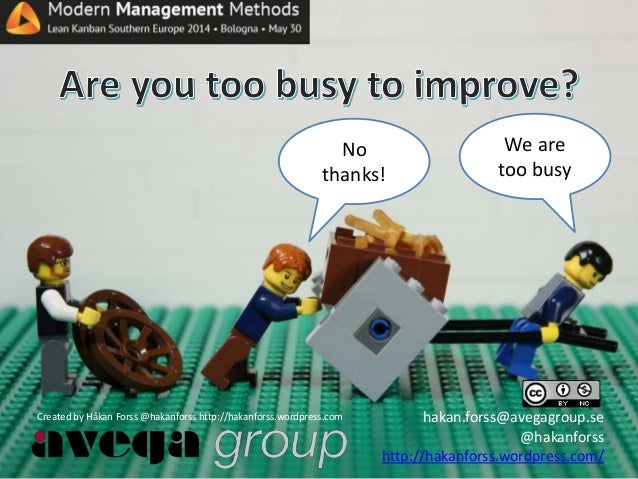
I think we read the old things in old ways article in Course 1. This article resonated with me (and my frustrations as an EdTech Coach) because often we find something that works, and we just stick with it. A colleague sent me this image and I think it resonates with how I feel at times.
This blog is actually really interesting. Too often we feel like we are too busy to “add on” new ideas and as a result we keep doing the same thing poorly. We can then switch to new things in old ways, and both the coach and the teacher still feel the frustration.
I really like this quotation from edutopia:
Integrating technology into classroom instruction means more than teaching basic computer skills and software programs in a separate computer class. Effective tech integration must happen across the curriculum in ways that research shows deepen and enhance the learning process. link
We need to integrate to enhance learning (and independence), not integrate for the sake of integration. To do this, I do believe we need a framework (like most things without a framework we lack direction or purpose which makes it difficult to do anything).
I do like SAMR, and have taken a course with Punya Mishra on TPACK in Singapore last year. I like the openness of TPACK and the linear structure of SAMR, I find SAMR much easier to explain to teachers because of ladder images or linear images.
I’m no longer teaching, so I can’t comment on my integration in the classroom all the time. But I do use the idea of enhancing education as the backbone of my work. We use all kinds of technology (like wood and nails, to ipads and phones, to paper and pencil) and I work with teachers at making sure the learning is at the centre of what we do.

 Some rights reserved by familymwr










 Joe Teft