Creating as learning

20614420712_a7b044d3be_b
 Some rights reserved by mrkrndvs


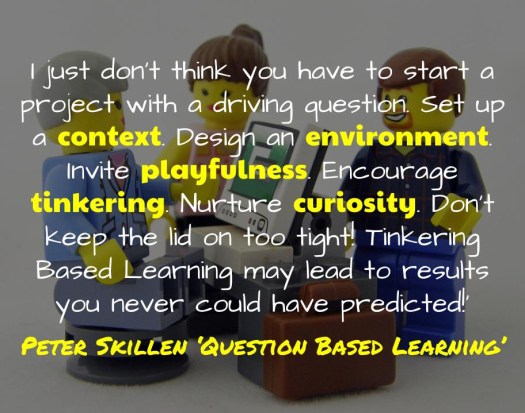
I’ve been thinking a lot about the idea of personalised learning and how to set it up so different people learn differently.  If we can encourage curiosity and provide engaging contexts we can have students pursuing their own goals.

Our next unit is about how our changing understanding of energy effects living things.  I think this a pretty great unit for students to start exploring their own interests. We are asking them (for at least three times every week) to work on a problem they see connected to our central idea.  At first we had some issues if we needed to provide different problems for students to explore, however, after some talking to colleagues we agreed that we would let students pick their own problems.

We used forms to ask students what they thought a problem might be, we lumped the big ideas surrounding each problem together and a teacher will take a group with related problems together.  Students can decide to work in either groups or on their own to pursue this idea.

It starts on Monday, really looking forward to it.  Any ideas for things they might be able to create?


What’s your watch?

3131200087_d396ff9f58_o
 Some rights reserved by Will Lion

After about two years, I’m finally a part of a blog sharing program (hooray right?).  Anyway, we can select from a number of different prompts and then we respond to how it’s going.  I chose What is your watch #teachermyth because I think like a lot of us, we have things that don’t work, but we keep around just in case they start to work at some point. The purpose of objects can change, and that can also change our workflow, so, I guess we all need to look a little closer into what’s actually being used effectively in our and our students’ learning.

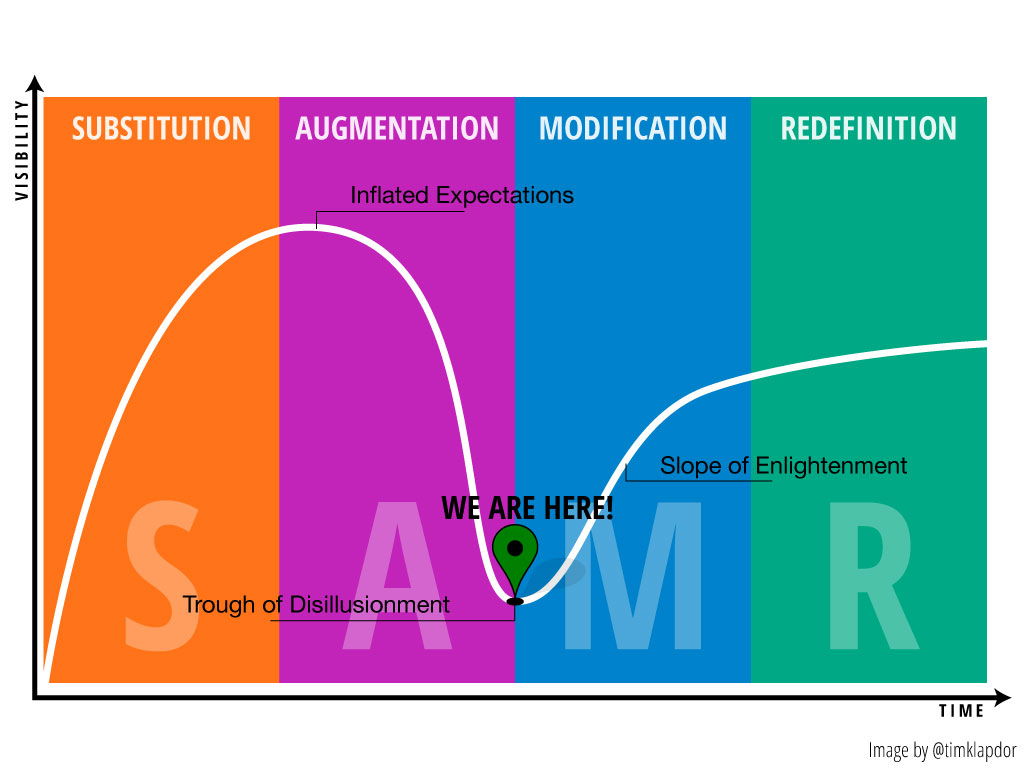
For me, and I’m not sure how to say this as a digital literacy coach, I’m not sure blogging for students is hitting the same purpose as it was.  When it was new and exciting, lots of my classes had exchanges with different schools from all over. Now it seems more like just a reflection exercise. Blogging isn’t just boring (for students anyway) anymore, I think we have lost the point of transformative learning. On the SAMR model, it might just be augmentation, I guess the point of this is that we really have to get to what is it’s current purpose.

I also wonder about most technology being a watch. Are we still using it to redefine and transform education or are we looking for easy substitutes or to fill in time or to make our lives easier?

Regardless I guess, I was excited by the chance to reflect on what I’m doing in class. I think this article made me think of how and what I teach a little differently.


Flexible Seating so far.

IMG_1896

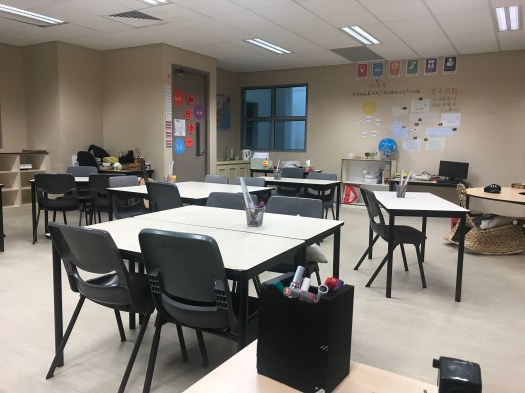
As a classroom, our idea of flexible seating is evolving.  The students are still (so it seems) a little bit unused to the idea of agency and are still waiting for teachers to control how things move.

So, we’ve suggest a couple of things, and our classroom has switched the tables around three or four times, but I’m hoping that they soon start taking ownership of why and how the tables move.


First day in Grade 6


32639305881_5efa37e7f5_b
Some rights reserved by Jamie McCaffrey


This is our first week back, and the adventure begins.

This is also my first year in a classroom in five years.  I’m pretty excited about it, as a Digital Literacy Coach I worked a lot in classrooms and with classroom teacher, but I haven’t actually been guiding a class for sometime.

So my first week back I decided I wanted to be a flexible classroom.  I want the students to be able to decided how and when to sit a certain way. This gives my students a little more agency and just establishes us as co-creators of a classroom which is pretty exciting.

Not too much to report after just a day, but I wanted to start getting in the habit of writing.

Stages of Learning

Attribution Some rights reserved by pgbailey

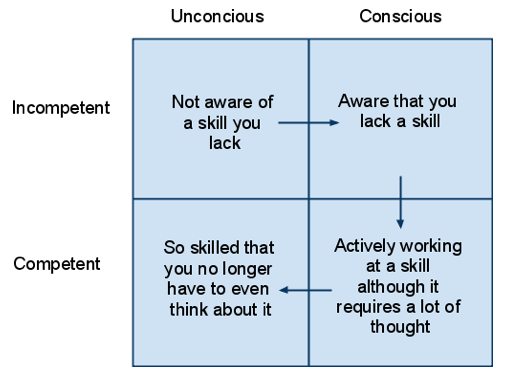
I do a lot of things in my off time, even though I really like doing nothing.  One of the things I’m doing this year is captaining/coaching a frisbee team.  We have a great coach we work with, and he was talking about stages of a great ultimate player, and I thought this applied a lot to learning too. 

I wonder how often we are stuck in the conscious incompetent stage. Without a learning coach or someone explicitly helping us become conscious and competent, how can we easily navigate our own life long learning.  
Part of the job I think I am good at is listening and helping shape consciousness and direct people towards competence.  When we can understand what we need to do to get better, I think it’s much easier for us to make that progress, it’s when we don’t understand that we feel frustrated. 
As a beginner things can be liberating because we don’t even know what we’re doing wrong, everything is just kind of fun, but as we get through the process things can become more difficult. 

AttributionShare Alike
 Some rights reserved by tim.klapdor

I think we can apply this easily to many aspects of our learning, but I like how this image shows the disappointment.  Once we start becoming more conscious we enter into this “trough of disillusionment”. 

So how can we remain optimistic about the future like we are when we are unconscious and still promote and develop consciousness?

New problems

We were walking in the outdoor discovery center the other day, and it looked like a lot of our problems (litter, dying plants, chalk) had disappeared, or been taken care of.  So we started looking for new things we could solve.  
It had been raining a lot, so there were lots of puddles (it’s been a really strange rainy season here in Singapore).  Anyway, the learners found tadpoles. So currently we are wondering how we can make the tadpoles environment a little more secure.  It was an interesting day.

Growing together

AttributionNoncommercialNo Derivative Works Some rights reserved by madame_urushiol

I love my job, seriously, it’s up there with top jobs in the world, at least in my opinion.  But, like everyone at times I get frustrated with my colleagues. 

Lately it has been revolving around this idea of growing together. A lot of the people I work with are amazing, literally.  Their passion and desire to grow and become amazing educators is overwhelming at times.  There are a few people I am always a little frustrated with, and I think that’s my growth area for the next couple of weeks.  The people I work with, I do think they want to get better, but they have a lot to focus on and at times, I feel that my focus isn’t their focus, this new revelation is that’s okay.  
I need to recommit to the idea that I’m helping them achieve my goals, not my reaching my goals. I need to help them become better and actually grow together.

Personalized Learning

AttributionNoncommercialNo Derivative Works Some rights reserved by Schockwellenreiter

Back to school! 

I’ve been thinking over the break about the whole idea of personalised learning, and who should be “in charge” of the experience. 
I think as a teacher it can be overwhelming at times to think about all the organising we have to do for a personalised learning experience.  Often we try to guide and direct and shape the future, even with personalised learning we aren’t fully wondering about what the students want. I’ve been working a lot with maker spaces this year, and iTime inquiry and I think that letting students have some control of the learning while still being able to hit most of the outcomes necessary.
I think working towards personalised learning is crucial, but I’ve been wondering more about how to make it also communal. 
I want to start bringing experts in from near our school. I want to start building a community, but I also want students to start working together (maybe even being assessed together). 
I don’t know, it’s the beginning of the year.  I love personalised learning, but I don’t just want to focus on the individual.  

Deep Learners

AttributionNoncommercialNo Derivative Works Some rights reserved by atomly

Just got back from a Deep Learners Conference in Malaysia.  I went with some of my colleagues and presented on “Real Connections”.  I posted my first draft up here a couple of weeks ago, but it turned out a lot different after last week.  It ended up like this…

A lot of it was the same, but I wanted to make mention of how I kind of wanted the future to look. 
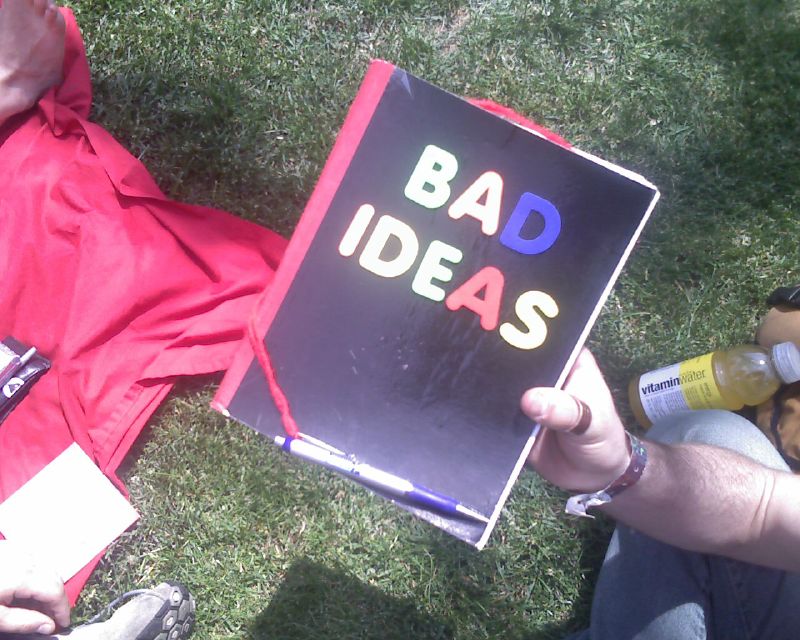
One of the most interesting aspects of the conference for me was the focus on bad ideas. I like how we can change our thinking around, how we can look at a bad idea and eliminate the “bad” parts of it. 
We had a lot of time to work through our idea, and as a group, we laughed, grew and got to know each other a little better.  I think this focus on having a bad idea and honouring it, really helped us as a team. 
A couple of my colleagues presented which was nice to see us grow as a school. It was all around a great conference actually. I love the format where you can go and discover new ideas in the morning (no big commitment, only twenty minutes) and then do something in the afternoon.  
Check it out if you’re keen Deep Learners