
How do we create wonder?

Pancho wondering

In part of Place * Being * Resonance it discusses the power of technology.  The worry presented is that when we use technology we attack a problem from one point of view, and using one solution in mind.  Regardless of the multitude of options technologically we are still thinking from a technological standpoint, and therefore think about an anthropocentric solution. 

How can we as teachers use technology to enhance education without limiting our options?  The more I think about it the more I wonder if this is what the Redefinition aspect of SAMR could be all about.  How can we really redefine our thinking regardless of the tools we use? 
Derby posits that we must always be open to other ways of thinking and listening to other ways of being without being focused solely on humans and how we interact with the world.  We need to listen to language that isn’t always our own (maybe coding) and learn to create, and use metaphor to embody other living things. 
Anyway, I wonder about the power of ipads in situations like this, we can use them to create (always movies or books) that can use examples of this other-mindedness. One of my goals this year is to really try for this.  Capture images (although there is some argument that just looking at images negates the importance of actually being outdoors) create stories that bring about other points of view.  I want my students to really strive to be open-minded and other-minded, and I think using the iPad can help. 
The base of this (I think) is to wonder, actually wonder, critically wonder, Derby would say ironically wonder I think, but really question what we are thinking and why we are thinking it, and wonder about what other voices are being missed.  As always going outside and actually seeing other things is the first step. 

Using questions to dig deeper

This is the second year I’ve done this particular “sharing the planet unit” with grade 1 students.  Last year the focus (their focus, not mine) was on butterflies, we had seen a lot.  This year, we are focusing a lot on millipedes.   Through questioning we are able to help the students use online resources to identify and figure out what these living things are about. 
I want to start changing (drastically at times) how my questioning skills can dig deep fast.  I’ve been working all year on structuring questions, my co-teachers think it’s a natural skill of mine, but I’ve worked very hard on it.  However, I’m not yet where I want to be. 
I’ve been reading coaching books to help develop questions that will make my teachers more effective, and I’m hoping I can transfer these questions, or these questioning techniques to students.  How can we go deep fast though? Is it possible, recommended? 
These are the thoughts that are running through me right now.  How do I become the most effective questioner? 

Changing our language

AttributionNoncommercialNo Derivative Works Some rights reserved by autumnal_hedge

Rarely do I think about poetry and it’s opportunity to create relationships by making metaphors.  I’ve been slowly (but diligently and thoughtfully) reading this book.

you can buy it here

It continues to change the way I think, and how I want to grow as an educator.  The whole idea of slowing doing, and really creating those deep connections is so important.  This book calls for a change in approach to how we view aspects of environmental education.  Specifically I enjoy the opportunity to engage more in poetry (which is something very new for me). 

The argument is, in order to create connections we have to foster a feeling (which I have read so many other places and firmly believe).  Before we actually get to know something, we need to feel something about it, and this is where poetry and metaphor come into play.  Instead of learning about a plant scientifically first, we have to create that awe, and that connection.  Here is where we use poetry.  
For the past week and a half I’ve been talking the grade 1 teachers and students out to the garden. First we look at something and draw it, then we listen to the world around us, and then (we don’t label) we write some poetry.  Try to fully describe our thing beautifully.  We don’t have to know the correct names, we don’t label the parts or explain what it is or does (this will all come later in the unit) we just write about it, how it looks, feels, smells, sounds and how it makes us feel.  
It’s been a really interesting exercise so far.  Everyone enjoys being outside (even if it is a little hot from time to time). The focus on the change in language has made learning more accessible for the younger students. They aren’t as worried about being right, they just need to talk about how they feel, so it’s easy for them to start.  Once we’ve made some connections then we start the deeper understanding (which will be easier because we actually care). 
It’s a great start so far.

Why so slow?

https://www.flickr.com/photos/befuddledsenses/

The end of the year is quickly approaching, and this is a time I find when teachers are definitely trying to speed things up.  We want to get all of the content in before the students go to their next great, before they try to get things presentable to parents, and before we rush off to our summer vacations.

At our school at least half of the grade levels I work with are finishing the year with sharing the planet, so I’m pushing for a go slow movement for the next six or seven weeks.  We need time to fully experience what it’s like outside in order to actually make those connections (something I feel I talk about all the time).   I now have four classes I take outside every week.  It’s a start (one class is trying to move to everyday next year), but we are moving forward which is great!

We are taking the time to wonder and think, something that is difficult for some teachers.  We have to talk about connections and thinking deeply about how things work together (which is the central idea for most of our units, but never really adressed this way).

All in all, in just one week I’ve seen more excitement about the unit. Students are actively engaged and posing good questions.  This week we are trying to “look closely” to see how things work and what things look like.

Going slow is great for us right now, hopefully I can convince some teachers to keep it up after these seven weeks.

Frustration then Faith

AttributionNoncommercialNo Derivative Works Some rights reserved by sarahgb(theoriginal)

Wow, these last couple weeks have been really frustrating. Working with teachers and coaching one on one, a lot of them feel frustrated that they haven’t met the particular outcomes they felt they needed to meet.  We’ve talked a lot about content vs concepts, and moving towards changing our thinking with our culture of thinking model. 

However, what struck me recently was how important documentation can be to bring faith back into the teachers.  Too often when we are in the classroom we are seeing the students as they are, not where they were.  At the beginning of the year, it required so much faith in our students in order to believe they could get as far as they did, now that they are here, we can’t be frustrated, we need to know they can get to the next level. 
In teacher’s college we talked about the importance of high expectations, and I think this is very similar.  We need to have faith that students will get there, they will understand, they’ll be successful in our classes. If we are only looking at the things the students can not do, we foster that kind of thinking, we need to help the students believe that all things in learning are possible. 
Reports are coming up, working with some teachers on how to create more evidence for next year. It’s been really exciting so far. I’m glad I’ve started coaching more than just being in an edtech role.  It has got me outside a lot more, had me more meaningfully involved in planning meetings, and teachers are now asking me a broader range of questions. 
Happy days. 

Back at it

AttributionNoncommercial Some rights reserved by MACSD

We just returned from break, a wonderful time but before we left I didn’t have time to write about our excursion week. 
I was really worried before we went about the quality of environmental education that we would be receiving. We had outsourced the week so a company would be working on the activities and preparing our kids for learning about Malaysia.  
It turned out way better than I thought it would.  We had lots of time to just sit and be present in nature. Some, but not many of the students went out to the ocean and played in tide-pools, so this is where I spent most of my time. 
We were just looking at life, observing, documenting with technology and then researching later on about what we were seeing and thinking and wondering. 
Now, back in the building. Things are alright, winding down.  
Been reading a lot about different interview techniques and styles.  I’m trying to support some teachers for their bid to apply for new jobs next year. Talking about redesigning infographic style resumes, how to make sure their websites are up and running and looking good.  Exciting times for sure. 

Joyful Places

AttributionNoncommercialNo Derivative Works Some rights reserved by GlobalPartnership for Education

I’ve been thinking a lot about places and how to get people connected to places.  Recently I was asked if Singapore was a “joyful place”, it really got me thinking. 

What is a joyful place, how do places become joyful, can we make this happen?  I’ve explored this a bit in my thesis, but it’s something I often revisit.  I didn’t know how to explain this.  The first thought was no, it’s not joyful, but I do find joy.  Mostly because of how I interact with my place.  I’m outside a couple nights a week playing some sort of sport.  We go to the gardens and by the water.  We take the dogs for a walk twice a day.  I find joy in all those moments.  
But when I’m walking around I see many unhappy people, working late, angry in their cars, overheated and I think it’s not the space that’s joyful. 
It’s how you live in a place.  We can only fully become comfortable in our place if we spend time in it, and once we spend that time we can start working on the relationships, and then the positive relationship in our place. 
I do think it would greatly increase work place satisfaction if we spent more time outside and interacting with our community. 

Place Based Education


Attribution
 Some rights reserved by _paVan_

Connecting people to a place has been an ongoing concern of mine. I have just started reading this book. 

Link to Amazon

One of the things I worry most about is that the focus of place based learning all seems to be on certain countries.  While many of the issues are global and easily transferable not everything makes sense in my tropical world. 

Most of what we need to do is have teachers understand their place.  Many of the international teachers are transient, we move from place to place.  This results in us not knowing so much about the place we are teaching.  We need to know more about where we live in order to help students understand the systems in place. 
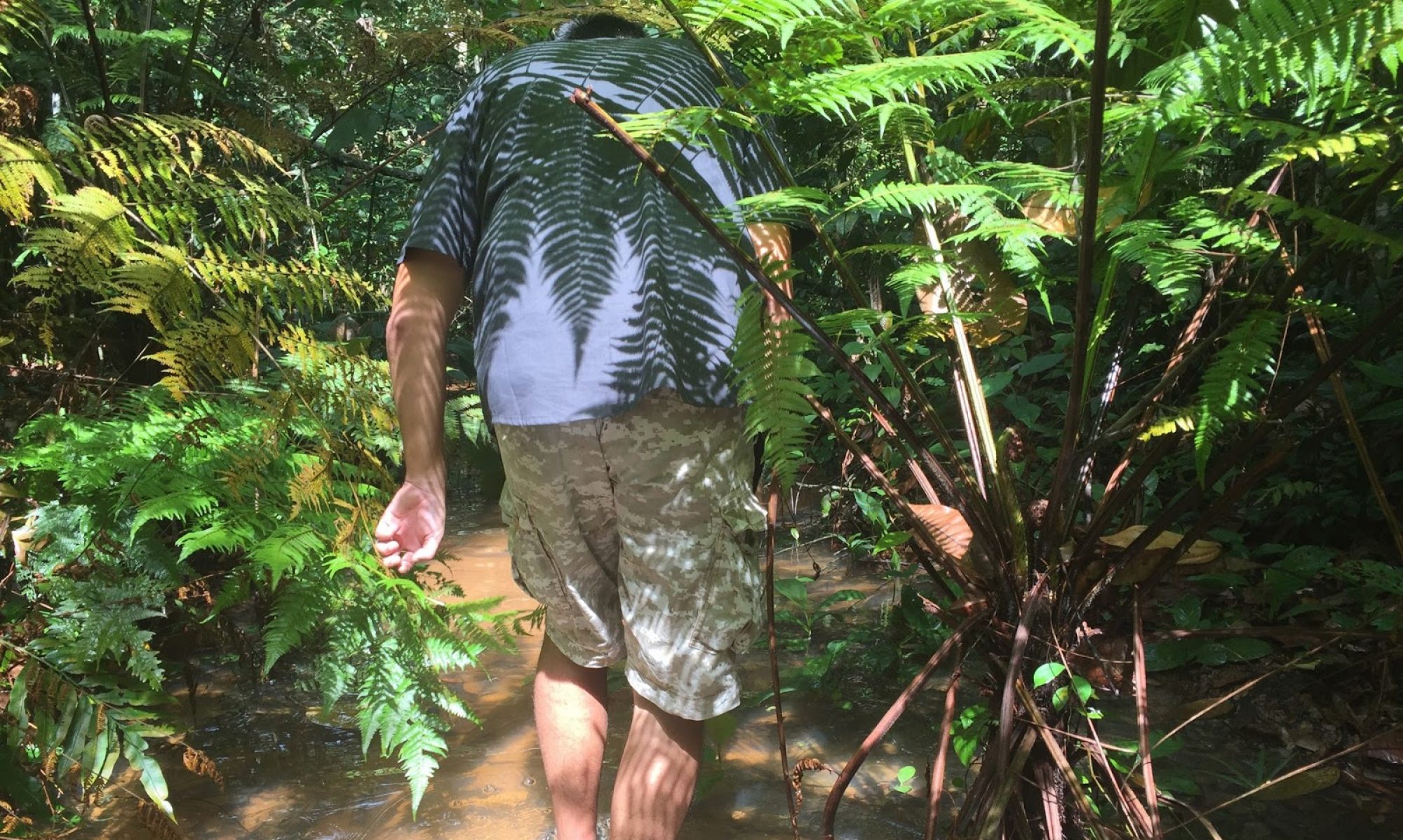
Walking through the jungle with Han the other week was a totally eye-opening experience. 

Bukit Timah Nature Reserver

Working with an expert in my new country, I learned a lot about what things were living in Singapore, where our water source was, and how to find my way around the bush without too much equipment. 

I feel much more tied to my habitat and as a result I think I can teach more effectively when I’m bringing the students outside. 

Place based learning in an unknown place

AttributionNoncommercial Some rights reserved by feeinternational

I have been thinking about this a lot and it played a role in my thesis work a couple of years ago.  I wonder how as international we can teach about a place without fully knowing it.  This year we’ve been working hard with our outdoor discovery centre trying to connect teachers to where we live.  By looking at local plants, and seeing the wildlife that lives around our area we are hoping that people are more connected. 

Sadly though this last week we had a plant catastrophe for some of the kindergarten students.  The teachers had some plants they had been growing with the students inside, and they transplanted a week or so after they sprouted.  We had the weekend off and when we came back the plants were gone.  The teachers were worried that something had eaten them, but I don’t think that was the case.  Not really sure what happened but we need to make sure that everyone in the community has the same goals.  But we need to look closely in order to figure things out.