Personalized Learning

AttributionNoncommercialNo Derivative Works Some rights reserved by Schockwellenreiter

Back to school! 

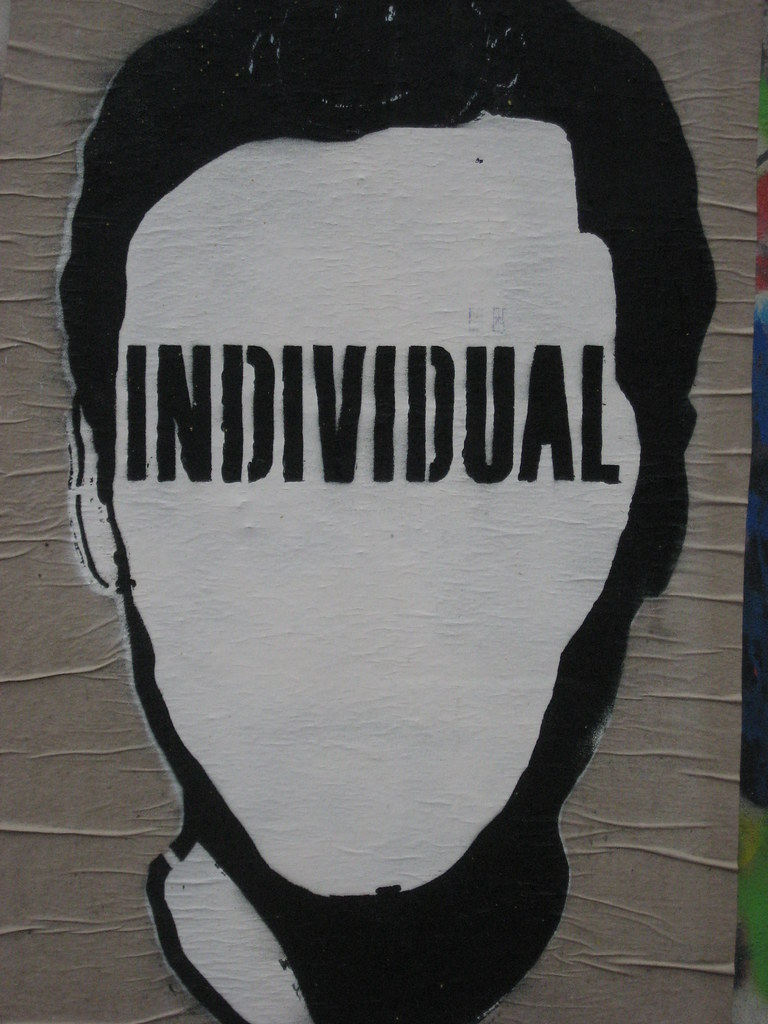
I’ve been thinking over the break about the whole idea of personalised learning, and who should be “in charge” of the experience. 
I think as a teacher it can be overwhelming at times to think about all the organising we have to do for a personalised learning experience.  Often we try to guide and direct and shape the future, even with personalised learning we aren’t fully wondering about what the students want. I’ve been working a lot with maker spaces this year, and iTime inquiry and I think that letting students have some control of the learning while still being able to hit most of the outcomes necessary.
I think working towards personalised learning is crucial, but I’ve been wondering more about how to make it also communal. 
I want to start bringing experts in from near our school. I want to start building a community, but I also want students to start working together (maybe even being assessed together). 
I don’t know, it’s the beginning of the year.  I love personalised learning, but I don’t just want to focus on the individual.  

Always growing

AttributionNoncommercialNo Derivative Works Some rights reserved by hellojenuine.

I’ve been thinking a lot about how to continue to grow. As a digital literacy coach, I think it is my job to grow and continue to grow. Not just for the sake of growth, but always looking and wondering about how to change and enhance what’s happening in the classroom.  

Sometimes I fear that I’m just growing and changing for the sake of growing and changing, other times I’m worried that I’m too stagnant and not growing enough. 
I have honestly felt that we learn the most and change the most when we are feeling uncomfortable. One of the things I try to do throughout the year is to put myself in uncomfortable situations in order to help me see my work from different perspectives. 
So I guess I’m wondering what my next growing opportunity is going to be.  I’ve tried things from a maker space perspective this year, and it’s pretty interesting.  It’s especially interesting to see the commonalities between design perspective and systems thinking in environmental education.  I also have loved the idea of critiquing the user experience model, so it’s been a lot of fun. 
I’m looking for the next big shake up though so I can change how I’m learning.

Deep Learners

AttributionNoncommercialNo Derivative Works Some rights reserved by atomly

Just got back from a Deep Learners Conference in Malaysia.  I went with some of my colleagues and presented on “Real Connections”.  I posted my first draft up here a couple of weeks ago, but it turned out a lot different after last week.  It ended up like this…

A lot of it was the same, but I wanted to make mention of how I kind of wanted the future to look. 
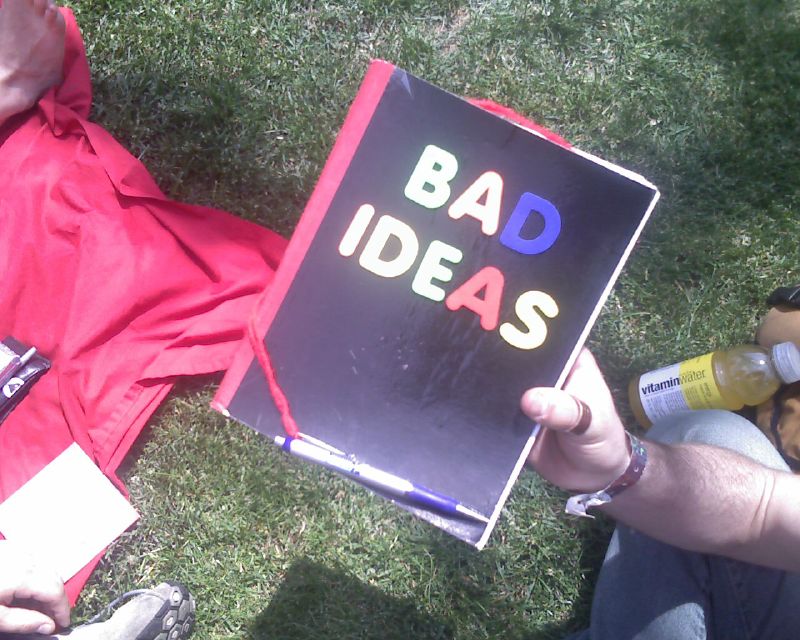
One of the most interesting aspects of the conference for me was the focus on bad ideas. I like how we can change our thinking around, how we can look at a bad idea and eliminate the “bad” parts of it. 
We had a lot of time to work through our idea, and as a group, we laughed, grew and got to know each other a little better.  I think this focus on having a bad idea and honouring it, really helped us as a team. 
A couple of my colleagues presented which was nice to see us grow as a school. It was all around a great conference actually. I love the format where you can go and discover new ideas in the morning (no big commitment, only twenty minutes) and then do something in the afternoon.  
Check it out if you’re keen Deep Learners

Wow?

Attribution Some rights reserved by a loves dc

I don’t often talk about feelings I guess, which is not great; but, this week was crazy.

Two of the things I firmly believed in (not just thought I believed in, but thought everyone believed in) were proven to be untrue this week.  
I believe(d) that people genuinely were starting to care more about our environment, our place, our world, just I guess everything that is involved in our living system.  I thought everyone in the world was moving towards a better (even if it was still far from perfect) world.  Wow, the election proved me wrong.  How can people still deny climate change? How does that honestly still happen?  I honestly couldn’t believe it. 
Connected to this, I believe(d) that people are more connected to something in their community or globally now.  I thought that it was more global, but also believed we were just overall more connected to something around us.  Again, isolationism as a result of our election.  How can people seriously believe that we can operate on our own anymore? How can people think that imaginary lines drawn across land mean anything?  What benefits do we have from doing things on our own? 
I don’t know.  
I think media failed me and many others, I didn’t that this was possible. I understand the role I played, how I was compliant to listen to people who believed the same thing I do, but to not even think of this as a possibility is alarming.  As an educator I have to be more aware of how we actually search and what we intentionally make ourselves available to.  
I think we failed each other.  We haven’t really been listening to each other and our problems, we don’t know what our community is feeling especially in regard to what they are scared of.  
As an educator I think we have an exciting opportunity to work with students to make sure change is going to continue to happen. But it’s been a disturbing week.
First Draft

I’ve been working on a brief fifteen minutes sense of place presentation for a conference in a couple of weeks.  Most of what I focus on is images, and after going over this a couple of times. I really notice that my font choice needs a lot of work (that will come in the next two weeks for sure).

Regardless it’s allowed me to really think out what I believe and try to condense that down into fifteen minutes and I need to entertain other educators as well.  The process is really helpful and this is now my fourth presentation and I can feel my story becoming more focused and clear.

One of the benefits of me doing an image focused slide show is that it helps me tell a story, and the images work with the words to create some new neural pathways.  One of the detriments is that it doesn’t make much sense without the story.  However, I’ll embed it anyway.

Deep learners is one of my favourite conferences because after the two fifteen minute sessions people choose what they want to spend an hour on in the afternoon.  So the deep dive will be more hands-on based where we can try to sell our favourite places, and maybe dig into some conservation photography.

Rebranding

AttributionNoncommercialNo Derivative Works Some rights reserved by flyingkiwigirl

This year we are changing some of how we do Professional Development.  What we are thinking of doing is offering drop in sessions during Recess and Lunch and making it more relatable to what the teachers need on demand.  We are always here to help, but this is a less intimidating way to work with larger groups of people.  
We are calling our sessions >Towards Wicked (based on the New Horizons Report). What we are looking to do (eventually) is address some of the truly wicked problems we as teachers face. So the name came from there. 
I’ve been spending more time outside with teachers as well. We are getting more buy in for the mix between environmental education and technology integration, so that is really exciting. We have many teachers out there using the iPads to uncover some of what they could be learning in the classroom. 
Happy days. 

Why Quantitative?

AttributionNoncommercial Some rights reserved by Ken Whytock

This week I’ve been thinking a lot about how to actual see where we are in our learning journey.  I know that many schools have a focus on quantitative data.  We use standardised tests to make sure we are learning at the right time. We focus a lot on quantitative data because it is easier to show a big picture with lots of data at the same time (I think anyway). 

So, how can we present more personal qualitative data to parents.  Right now we are entering conference time, and we want to share the stories and make it personal, so I wonder how our teachers are doing that, and what the parents are thinking. 
I was reading this article about Modern Learning and wonder how we can use qualitative data more effectively.  We can use it to paint a bigger picture and a more complete story, but how do we use it to enhance our teaching practice.  How do we use it to drive inquiry? 
Way too many questions this week. 

Peer feedback and teaching

AttributionNoncommercial Some rights reserved by Ken Whytock

Just came back from a google pd thing.  It was just okay, well just okay for me, I think some other people really enjoyed it.   Too often in PD we just lecture, and it’s pretty boring for everyone (especially someone who spent all weekend sitting and listening).  How can we leverage real time feedback with our peers.

As I present more and more I think this question is going to be at the forefront of my mind.  How are people truly engaged in what I am saying? How do I gather evidence of this? How can adults learn in a more productive way through PD?

Launching our Enviroed

A group of us here have been working on reading this book for a book club.  We’ve started chapter one, and it talks about some of the barriers to growing, but also to the opportunity for success.  We need to make learning real, and meaningful for our students.  The authors suggest that one of the best ways to do this when making something is to actually release it to the public. 
As always I think back to how does that work for environmental education.  What does that mean for people who don’t have a product? 
So I thought that instead of launching a thing, we launch our place.  We need to get our community involved in our place, and how we grow with it, and for it.  By bringing in parents, grandparents and people throughout the community we are sharing our learning and wondering in a more real way, something that transcends the classroom. 
I’ve been thinking a lot about intergenerational learning in an international school.  Can we show different gardens from around the world, have people walk through their gardens on skype or something and talk about them, why they grow what they grow, how they do it, what their soil is like, how to know when to harvest. 
Bringing people together is so important, with the Launch mindset we need to somehow launch our learning space, and our ideas, get feedback from the community and work on building our community, rather than building a product.