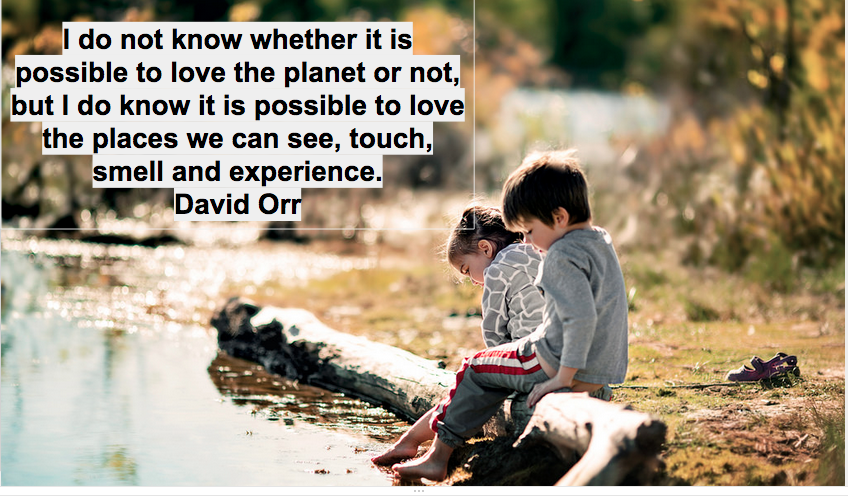
Environmental Leadership

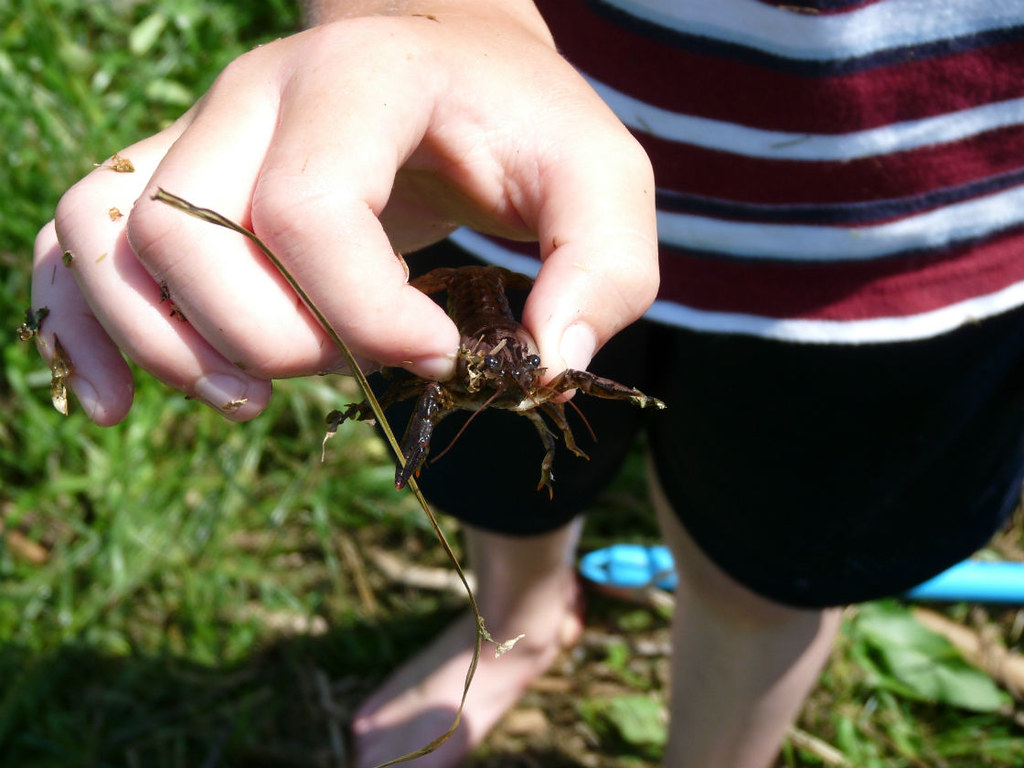
AttributionNoncommercialShare Alike Some rights reserved by North Cascades National Park

This week was pretty exciting.  One of my teachers has asked me to do an environmental leadership class which was great. Now every Tuesday I have dedicated environmental time in a class. 

It’s been a year, but it’s a huge first step for me. 
Our first adventure will be in our garden, and then we’re going to sit outside and find our sit spots.  We’re going to start developing a sense of place and a better understanding of our environment in order to be real leaders and work with our community to enhance our place. 
I’m really excited.

Making our own paths

AttributionNoncommercial Some rights reserved by glennia

One of the best things about this job is the ability to constantly (re)define my role.  So, it’s pretty great for me, although I can understand that people who need clearly defined roles might not be as happy.

So, what I’m really going for this year is experimental iPad groups. I recently read this “Challenging Tweet” post.  It’s been consuming a lot of my thoughts recently.  We are reinforcing this idea of hierarchy and traditional classroom values while using tools that could be used for student led learning.  I’m trying to get my teachers and students to see this, but I’m not sure about it myself. I just know it’s something we have to start thinking about it. 
My first thought is, this is why we need to teach coding.  Students are taking part in a world they really don’t have a lot of control over. Coding will give them some power. Actually teachers need to know more about this (and so do I for that matter). 
My second thought was, get them outside and start creating their own knowledge, they can do this inside too, but I really want them outdoors to reinforce this idea that learning has no boundaries, when you’re in a class, the walls are already there. 
Anyway, trying to go down these new paths, some lead nowhere, but hopefully one or two will take me to some place pretty great. 

Sit Spots into Nature Journals

AttributionShare Alike Some rights reserved by eliduke

Over the summer break I read Coyote’s Guide.  I want to get better at mentoring people who go outside.  I used to call them Magic Spots, but in the book they are called sit spots.  Sit spots help build empathy, understanding and systems thinking in students.  By sitting outside in your specific place you can watch change, and see how nature “works”. 

Last year, I tried to develop a sense of place in students by taking photos then making a time lapse to see change, and then share that change with others.  I think it worked alright, but I want to incorporate a nature journal this year. 
I had a bit of time this summer, so also read To Look Closely.  The idea of the nature journal and sit spots are tied together pretty tightly here.  It adds another level to the sit spot.  I used to sit in a circle and discuss what we saw and felt but there was no other form of documentation.  I think that by using a sit spot with a nature journal I can help develop a sense of place in students. 
I’m not quite sure what the nature journal is going to look like just yet, but I’m going to start with notebooks, hopefully with blank pages, no lines to inspire a whole no boundaries approach. 
Here’s hoping.

Welcome back

AttributionNoncommercialShare Alike Some rights reserved by Amarand Agasi

We tried to change our domain over the summer, and we misplaced a whole a significant number of google docs.  It hasn’t been great, but I’ve been thinking a lot about the opportunity for redefinition.

Way too often we rely on what we did last year, we change it, make it slightly better.  I wonder about the opportunity to do great, rather than the chance to do less bad.  We can make a mediocre unit slightly better, but do we take the opportunity to really change what we’re doing, and make it as great as possible, I’m not sure we all have the courage. 
When we lost our documents, I thought this was the opportunity to do such a thing, but people are relying on former paper copies to reconnect what we’ve already done, so it’s not ideal right now. 
At international schools we change teachers pretty frequently.  Teachers go to different grade levels, different teachers come from different places, but at the beginning of the year, we’re not always open to these new ideas. More often, we want to stay with the status quo, and just keep what was going okay going. 
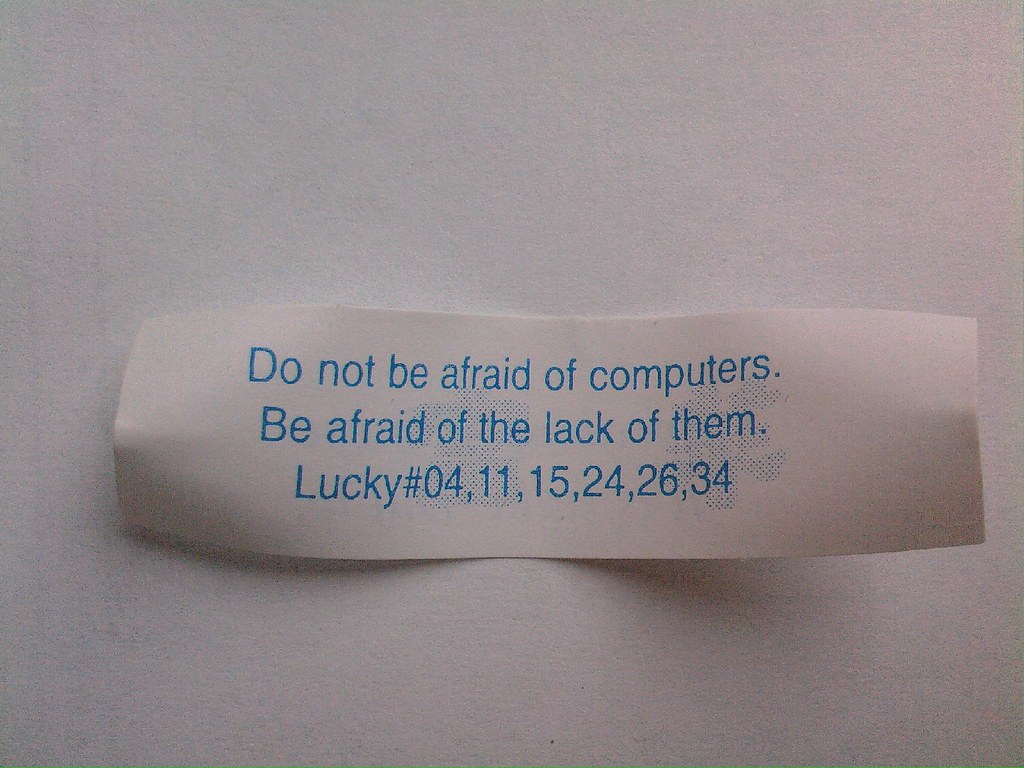
Since we’ve misplaced some data, I know that teachers are a little more hesitant to use computers.  I think this image really makes me think of computer literacy. If we were all a little more literate, I’m not sure we’d have misplaced this information.  The more people know, the more likely we are to save our data (not that I want it saved in this particular instance).  
So for me, at the beginning of the year, I just want teachers to take a risk to be more literate online.

What is a school focused on Environmental needs?

Attribution Some rights reserved by U.S. Fish and Wildlife Service – Midwest Region

I’ve been asked to think about what an environmental education looks like, what things we need, what do we want?

For most of these things it was really hard for me to answer.  Mainly because I think it’s a lot like EdTech, sure we need things, but more than that we need a shift in how teachers think and interact with students.

More than anything, I think we need time for teachers and students to be outside, slightly unstructured but thinking and looking, this probably isn’t the biggest seller in a standards, university focused world.

But students with time develop great systems thinking habits, they are passionately curious and are able to think creatively because their imagination has been developed.  They are used to being bored so they understand more about what it means to create things.  I feel they just understand more, and appreciate more.

We need people to stop thinking about specific skills students will gain, especially in a world where climate change is happening.  What the individual gains for themselves isn’t so important, we need to focus on what we will gain for our planet, how we can all make a difference for our shared survival, not my immediate gain.

But still, I need to think about these things.  So any help would be great, what do we need to start something focused on environmental education, what skills will students develop, where do we go from here?

Presentation

So, here’s my enviroed story.  It’s a story more than a presentation, walking through why I am an environmental educator, and some of the worries I have, it moves to the hope that we collaborate together in a 21st century learning community.

My primary worry is that we are becoming too individual, and as individuals it is harder to make large scale changes.  I love the idea of personalized learning, but worry about how that effects our ability to work as a community and make decisions as a community.  My desire is to  move towards community based learning and problem solving while focusing on individual talents and ideas.

For me though, the formation of this community is key, and a big part of my community is the #enviroed team. So thanks for that.  +Nicki Hambleton has also been a huge part of my community development, and a big reason for my belief in the community based education with individual talents.

Final Project for Coetail

Creative Commons Creative Commons Attribution-Share Alike 2.0 Generic License  by Gerry Dincher

Wow, this project took a lot of turns, but I feel it’s much better now than when I envisioned it many months ago.

This was my original UbD.

We started off on high notes, all the grade 3 classes started by taking pictures and then blogging about their favourite spots at school, almost all of the students finished and almost all of the students shared with at least one person. So It was somewhat successful as a start.

Most students took a picture of their spot, and thought about it.  Most were of staircases, some were of the lunch area, a couple were of the soccer field.  They then described it with the potential audience of someone who is coming to the school. They used their blogs to write an entry.

Almost all of the students ended with the task, two students (who I was working with a little earlier) picked an outdoor spot and created a stop motion video (which will be in my video).  They then recorded some of the feelings over the images.

One of the students had a spot with a tree, and that tree died.  Just this week we planted a tree in that same spot.  His talking about his spot to his community really made a change in how people viewed their space.

Next time, I would want to have more time with the students.  I only had them once a week, which isn’t a whole lot of time to dig deep into places and feelings.  We needed to spend more time on creating a more meaningful platform I think, and developing connections with other places.

I want this to be a more meaningful exercise on developing sense of place, so next time I would work with that as well. I want students to develop emotional connections to people and places. By developing our stories, we can work on this connection. Next time I would try to use more video (stop motion) and blend in more images than just the one.


All in all I enjoyed the whole Coetail experience.  It’s been great building the standards into our shared units, and building more meaningful digital citizenship lessons into my co-teaching experiences. I’m going to continue to develop connections, I firmly believe in connectivism and will help my students find people they want to learn from as well.
AttributionShare Alike Some rights reserved by Andrew_D_Hurley

Comm-unity

AttributionNoncommercialShare Alike Some rights reserved by Choconancy1

For +COETAIL most of my community involvement has been focused on #enviroed.  Since I’m merging the tech and environment.  We talk every Thursday, which is pretty amazing, well Thursday for me Wednesday night for everyone else.  Here is one of my favourite chats , mainly because it focuses specifically on tech and 21st century skills in environmental education.

As a group we explore what each other are doing, ask each other questions to get specifics, I’ve worked with two other teachers on their specific research project, and have asked a couple of teachers to work with me on my coetail project. 

I’ve been trying to merge these two for awhile

+Nicki Hambleton has helped me out a ton too. We talk often in person. We bounce ideas off each other with pizza and wine (even if we shouldn’t always be eating it).  It’s great for us (well me definitely) to be able to see reactions and just check in on and get checked in on.  This personally has been one of the most valuable tools for me, not that Nicki is a tool.  But she has directed me towards other people like Kerri-Lee and Dave, and has directed me towards Cognitive Coaching where I met up with other coetailers as well.  

Mostly I feel like I’ve moved beyond just messing around, I’ve built part of my community (especially with #enviroed).  Connectivism is a real thing in my life.  I’m building on my connections, sand still reaching out for others.  
It’s been a great journey so far, and I’m looking forward to even more in the last month.