Collaborating


Attribution
 Some rights reserved by familymwr

Since the holiday things have been full on, exciting, but busy.  We want to move more towards a fish bowl model of professional development at our school. We’ve put in our proposal and are waiting for our chance to talk with administration. 

Right after though, I applied for a job as an Open Minds Coordinator.  During the interview I was able to talk more about the fish bowl concept and what I wanted to do with it, as I was talking this whole new idea unfolded, who do I actually collaborate with, and how do I collaborate with them.  Often I feel I just talk to my fellow Digital Literacy Coaches, sometimes teachers, sometimes STEAM, but not as many people as I should.  
The goal now is to take over the library, with the Digital Literacy Coaches (I don’t think Open Minds is for me), bring in the Librarians, the STEAM people, the Open Minds people and other Learning Leaders at school.  Then do all of our PD.  We have people who are experts in areas constantly offering PD, sharing expertise with the other experts so we can all present, and then people book out specific coaches for individual needs based on individual goals. 
I’m very excited.
Presentation

So, here’s my enviroed story.  It’s a story more than a presentation, walking through why I am an environmental educator, and some of the worries I have, it moves to the hope that we collaborate together in a 21st century learning community.

My primary worry is that we are becoming too individual, and as individuals it is harder to make large scale changes.  I love the idea of personalized learning, but worry about how that effects our ability to work as a community and make decisions as a community.  My desire is to  move towards community based learning and problem solving while focusing on individual talents and ideas.

For me though, the formation of this community is key, and a big part of my community is the #enviroed team. So thanks for that.  +Nicki Hambleton has also been a huge part of my community development, and a big reason for my belief in the community based education with individual talents.

Hybrid Minds

AttributionNoncommercialShare Alike Some rights reserved by Sam Judson

This week, well the last couple of weeks, have been looking at Richard Louv’s idea of Hybrid Minds. Technology is something we have always been working on, and I imagine always will, the natural world, the world we are connected to (without wireless) is always here, and hopefully always will be.  How can we pay attention to both? How can we develop both sustainably? Where do we go from here?

Lots of questions as I started reading these past couple of weeks, and while nothing has been explicitly answered, I feel my original thoughts are being reaffirmed. 
My project with getting the students outside and documenting their spots has taken a smallish turn.  Although they haven’t been publishing their thoughts or feelings so much, they have displayed a different attitude towards being outdoors. 
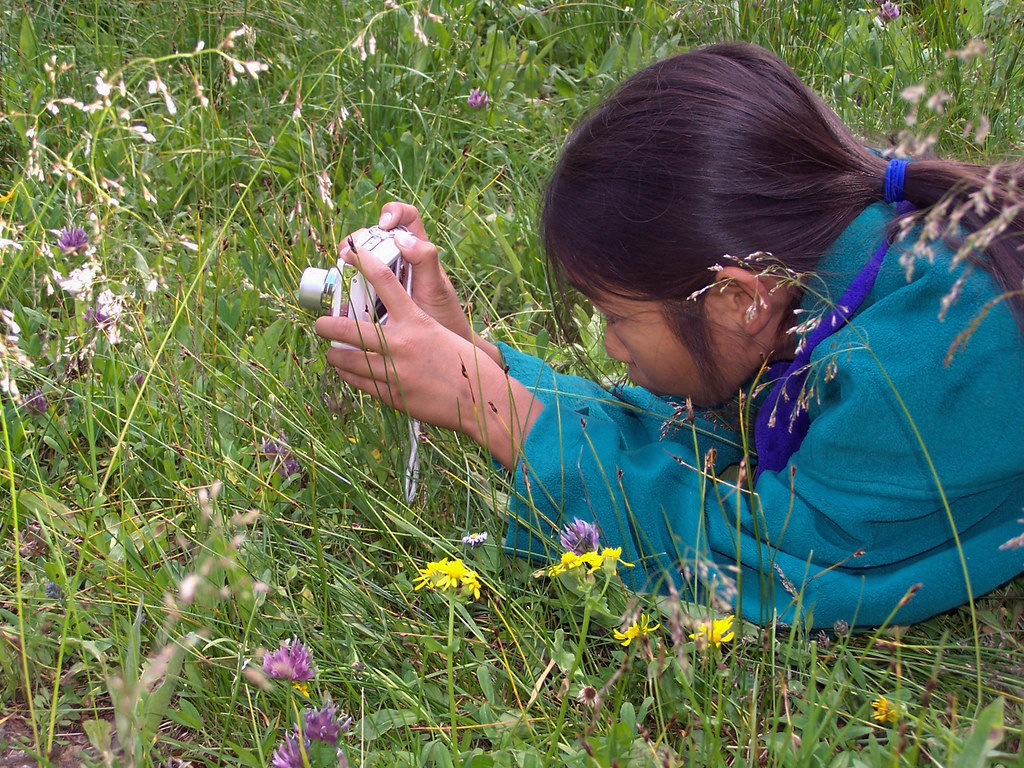
Earlier in the year it was difficult to get them to put the ipads down, they wanted to keep holding on to them, checking out youtube videos, now they want to relax outside.  They’ve been putting the ipads down, and just laying down, looking at their spots and just being in nature. 
We have to find some way to mix the two of these realities though, and as I continue reading and working with our students, this is the goal.

Thinking about it


AttributionNoncommercial
 Some rights reserved by SomeDriftwood

For +COETAIL I am well into the process of collecting evidence and working with students to share spaces.  I’m not sure how successful it will be but the process is enlightening for sure.

With students these past two weeks (the ones who aren’t working on my Coetail project) we are exploring digital citizenship, with the idea that it can shape the future of who we are. 
Spencer Harrison and I used to work together, at the time I wasn’t as aware of the idea of personal brand.  I was very conscious of displaying the image I wanted to show with the intention of challenge other people’s viewpoints. Spencer was one of the first people to tell me, my image or brand could be shaped without shaping me. 
What this means for digital citizenship is that we aren’t always who we appear to be online.  We all need to understand that a google search or looking at someone’s facebook, linkedin profile or whatever is not who that person really is.  We can create our identity. 
Since we are creating our identity, we should make sure it’s the best version of ourselves, and then try to live up to it. Our digital citizenship classes go into who do we want to be (as in what kind of person) and then how do we take action to be recognised as that type of person, what do they do. 
The last two weeks have been pretty interesting to see what versions of themselves each students wants to present.  They are thinking about their future, about who they want to be online, and how they can achieve this reality. 

How disruptive is silence?


AttributionNoncommercialNo Derivative Works
 Some rights reserved by jsdilag

Just returned from a course on Cognitive Coaching with Bill and Ochan Powell where we talked about the power of listening, and being uncomfortable can be to our learning.

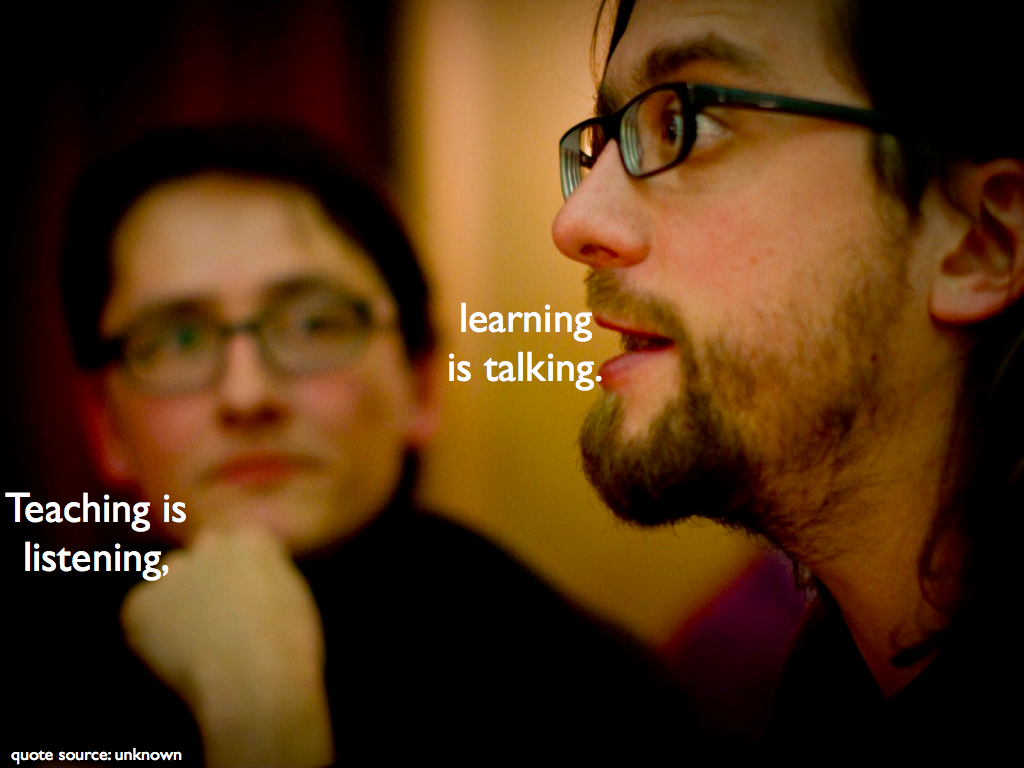
One of the things I started last year (and Bill and Ochan mentioned at the workshop) was the idea that as teachers, we don’t really teach listening.  Well maybe some teachers do, but things like looking at a person, focusing, and keeping eye contact doesn’t really mean listening to me.  I think listening means being able to summarize the thoughts of another, and make connections (without the purpose of summarizing or making connections).  I don’t know, I find it hard to fully describe (probably because I was never really taught).  Listening can be powerful, in this course we spent a lot of time listening, to each other, our instructors and ourselves, and honestly, I learned a lot. Mostly because I was quiet. This was incredibly difficult for me, I’m almost always trying to make connections to what people are thinking, and stopping myself from talking was something I had to learn. 
The point is, I think anyway, that making myself uncomfortable, really improved my learning.  Putting myself in a new situation, really trying to figure out someone else’s point of view, helped me learn more about them and myself. 
Since my main wondering are with technology and the environment,  I wonder how we can incorporate silence into our learning with technology.  So often we use our tech to distract us from the silence and those uncomfortable moments.  This, I feel, takes us away from those deeper learning opportunities. 
As teachers who use technology how do we initiate and establish those silence moments with a device, first in ourselves and then in our students? How can we make listening (active listening, or reading) a habit online rather than just consuming? 

Listening to collaborate


Attribution
 Some rights reserved by rick

We’ve started our project about connecting students, seems okay so far, but we noticed something, we rarely listen.  Before we went online, we started sharing our migration stories, what that meant to us, but no one really listened to the other stories.

One of the worries teachers have about incorporating technology (and one of mine as well) is how much it speeds things up.  We need to slow down in elementary, and really think about why and how we interact with each other.  
It got our whole class thinking about what does it mean to listen.  We threw words around like “focus”, “pay attention”, “look at the person”, and other kinds of things.  We couldn’t really define what those things looked like though.  After some discussions and some personal blogging about listening some of the students had some great ideas.  One student though about using only one or two tabs, that would keep her focused on the task at hand.  One other student talked about the importance of finishing her work, and waiting until we finished.  
We transferred these ideas over to “real” life.  By keeping only one tab open, we’re only thinking about one thing (the conversation).  By finishing your work before moving on, we’re going to wait until the person is finished before we think about responding.  Some abstract ideas for sure, but we’re focusing on listening first. 
I’ve been thinking about this for a couple of weeks. For research we’re learning to skim and scan, there are more opportunities to look at how to finish more books rather than re-read or read deeply. So much of what we’re doing is encouraging students to speed up, then we get frustrated when they don’t stop and listen to us.  I really think we need to slow down.  

AttributionNoncommercial
 Some rights reserved by Thomas Hawk
Modelling this is going to be important for sure.  How do we listen to our students, what does it mean to be a teacher, especially in a connectivist world?  Lots of wonderings this week as we move forward. 
AttributionNoncommercialShare Alike Some rights reserved by dkuropatwa

First week of "magic spots"

Student photo

This was our first week of magic spots.  I am only doing this with two students so far.  We are working on a year long project to make a stop motion video (as well as address feelings regarding) a specific spot in school.  The point of this project is to connect students to a place in nature.

When we first went out I was excited to get the project underway. We have a rather large field, and I said to the students you can pick anyplace you would like to be for your spot.  Both students stayed relatively close to the school, and only one picked a view of a tree (the other picked a view of a slide).  I had explained what I thought was important about the project, but both students had said they had already picked their spots (before we went out together). So while it was great they had been thinking about a space meaningful to them, I was a little concerned about where the space they chose. 
After the first day we did a short debrief regarding their feelings.  Both students just felt hot, and not real attachment, which was to be expected.  I found some grass that was seeding and got them to look deeper into their space.  This seemed to be effective.  After recess one of the students came up to me and noticed more grass that looked strange. 
So far, the project has been going as planned I guess.  The students seem interested, but it’s only the first week.  It might be a challenge to keep this enthusiasm happening all year. 
When I was a classroom teacher it was easy to make sure every student got outside and was quiet for at least five minutes a day, it seems so much more difficult without a class. 
They are all very excited about making the video though.  

Connecting students with nature

Attribution Some rights reserved by USDAgov

Starting next week I am going to be working on my “magic spot” project with students.  I have been doing this without technology for a couple of years but I want to incorporate technology more meaningfully into the students work. 

So, starting next week I will be taking a couple of grade three students and some iPads outside.  They will take a photograph of their spot.  With hope we will get outside every school day and take a photo.  We will then put these photos together into a stop motion video. 
I hope to create deeper connections between people and places. Often at international schools I feel that students and teachers do not feel connected to their place.  When people feel more connected they will be more likely to take action for their space (check out my thesis if you’re really more interested in this). 
Would love some ideas if anyone has them.