Sense of Place in Australian Environmental Education Research: Distinctive, Missing or Displaced?

I’m trying to re-read articles and come up with some points so I have a better understanding of what I’m researching. I have more comprehensive notes, I just want to see how my thinking changes.

Some of the ideas from this article have jumped out at me differently than previous readings. “emplacement is not something people choose – it is, ontologically speaking, a condition of human being” (Trigger, 2008, p.301, in Stevenson, 2011).

As an expat. I’m not sure this is entirely true. While my birthplace was not chosen, I’ve been lucky enough to have the experience (at times) to choose my place. Stevenson (I think) argues more on my side, that we have a choice but mostly that choice is how we build our identity around our sense of place. Since a sense of place can be somewhat (depending on who we read) socially constructed, I wonder how this fits together.

I do agree, so far anyway, that we can’t really exist without place, we need to form some sort of relationship, regardless of how fleeting it might be, with the space we occupy. Regardless of where we are, this article suggests that place has some role to play on self identity.

As an expat, I also wonder about Gruenewald’s idea of globalisation as placelessness. This is a line I think I want to get more into as I wonder about the idea of displacement as being disempowering, which leads us do almost lack an identity?

These are my thoughts from relooking over this paper, hopefully I can be a little more disciplined and write more in the coming months.

Stevenson, R. B. (2011). Sense of Place in Australian Environmental Education Research: Distinctive, Missing or Displaced? Australian Journal Of Environmental Education,, 27(1), 46-55.

New Media?


 Some rights reserved by See-ming Lee (SML)

One of my courses this year is on New Media and the impact it has on education.

These are always interesting things to think about, but right now I’m in a class where many of the people who are working are in a school that has different views and ideas than our school has. Our underlying philosophy of education is somewhat different which means, we have different access to how they can use media.

One of the things that has always struck me as a digital literacy coach (although I’m not one anymore) is the idea that people really need to shift their thinking before they really dig deep into new media. We can’t really get into what Web 2.0 is if we don’t know how to act in a participatory way. If our whole world is top down, why does 2.0 matter?

Other people are concerned with the types of tools, and the idea of screen time. While I get that I can be wrong (and mostly likely am wrong about this and many things) I really believe, from my experience, that tools come after frameworks and thought shifts. If we don’t know how to build, why do we need a tool?

Anyway, some of the conversations are interesting, the course is structured in a way which allows students to feel the experience of participation (which was very uncomfortable for some). She believes, from what I gather, that we can shift thought through experiences. I agree, for the most part, but we need to reframe the conversation I think. The experiences have to be more focused on collaboration of anything, rather than just a digital tool.

My thoughts will likely change, but these are my wonderings for now.

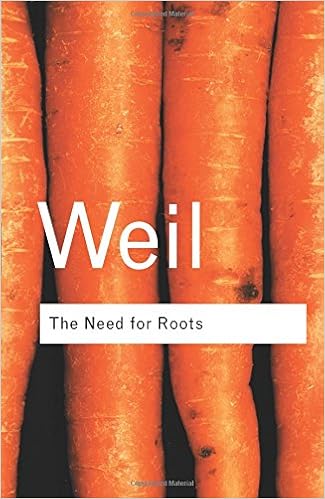
The Need for Roots


I’ve just started this book, I’ve been trying to connect things to this idea of Sense of Place. One of the things that both this book and the Thomashow book brought up is the idea of how we use things we own to construct our own identities. The things we have make up who we are.

I wonder how we can start to transfer this, or start to notice that this might also be related to place, and how and where we are. I’m still working through this book, it’s complex and at times difficult to fully understand so I’m not sure where it will take me, so far I’ve been surprised.

I think what I would like to do is work the things activity into our class work on natural resources. Our central idea is that people can make choices to support the sustainability of Earth’s natural resources. I wonder if looking at what we have, and how that forms our identity can lead us to make more sustainable choices, or if that concept is a bit too abstract for ten year olds. Still wondering about it.

Reporting for learning

 Some rights reserved by zgware

It’s report time (hooray!).  At our school, we are always trying to make reports better for learning. At times this can make things a little more difficult for teachers, but we’re always hoping for the best for learning.

So, I am wondering about how are reports really helping students succeed.  The PD I’m getting and the books I’m reading suggest descriptive feedback is one of the best ways we can help students grow.  If this is true, does the mark really matter? And who does the mark matter for?  I understand that we need to have something standardised so students can go to other schools, university, etc.  so I guess when does the mark matter, and how do we best communicate it? 

Just some random thoughts before reports. 

Learning Community

In our school garden

The enhanced PYP moves towards action for the learner and this new focus or (re)newed focus on the importance of the learning community.  I guess the easy connections are parents, other people within the school, and maybe even experts from outside our school but somewhat connected to our school community.  

I’ve been thinking more about how our community should involve the more than human world (a phrase I love from Place, Being and Resonance). This idea that we don’t really go out and treat our place as a community, what do the little lizards have to teach us, what about the ants, the leaves, anything? If we want students to love our land we have to know it, but maybe before we know it we have to acknowledge it’s a part of our community.  

There’s been a lot of reading, reporting, new role wondering this past week and I really think that this idea is one I have to think seriously about how to incorporate into the rest of the year.  

First week

3044180780_1795cb58fe_b
Some rights reserved by atibens

Wow, the beginning of the school year flew by.  The first week is over (almost) and the real fun is just starting.

This week I tried to focus on making good relationships, with my team and my kids. I really believe that this will set the whole year up for success. If we trust each other and believe in each other we can work things out together and with each other in mind.

Maybe more cynically I’ve been reading and listening about how people make decisions, and for good or ill, we make them based on our identity and usually our identity revolving how we see ourselves in a group.

If this is true then we need to make sure our group feels cohesive. We need to make sure we feel united so our decisions reflect how we can best work together. We’ll see how it goes, but it’s been a good start.

First days

6174352238_6c73d689b1_b
 Some rights reserved by KendraMillerPhotography


First week of new staff at school. It’s amazing the things you forget, the things that become ordinary, the things we somehow don’t know but should, and the way we normalise our work lives.

I’ve been getting a lot of great questions, about the hows and whys of school, not just the whats which is really exciting. It’s good to be back in the flow of things, good to be writing, and pushing thoughts and just reconnecting with the lit review writing too. Still need a lot more to go, but feeling really confident this year, and happy to be working on getting some great things done in the fifth grade.

Hoping the next couple weeks continue being great.

Pursuing Narratives

5832764969_eedb64358d_o
 Some rights reserved by Magenta Rose

I’m at the paper writing time of my school work. So things are full on, and it’s difficult to find time and desire to write about things. Especially school things.

For one of my assignments I have to choose a methodology that supports my research questions.  I’m mostly interested in the how we are regarding where we are.  Why do we act certain ways in different places, how does the interact with our idea of teacher identity and maybe what does that mean for learning?

I think pursuing narrative inquiry is the way to go for this type of work.  I really want to know who the teachers are, I want their story and I want their ideas.  I want to know how we are linked together, not just because we work together, but because our stories are connected. Stories are woven together, and nothing is isolated, so I hope that this path works out.

Sharing Stories

8188824613_037d664dc0_b
Some rights reserved by cogdogblog


Talking to a colleague today about how to start the beginning of the year.  We’re thinking about the importance of sharing.

Working in grade six the kids are making a transition into high school. The students are a little nervous and want to know a little more about what’s coming. I’d like to be more honest and open with them about some of the transitions I’ve made, and what problems I’ve encountered and how I dealt with it, but I think more importantly I have to listen and actually acknowledge their fears and concerns.

By promoting the idea that it’s okay to feel certain things, and believe certain things I hope the students are better able to cope with emotional changes.