Absence of anything

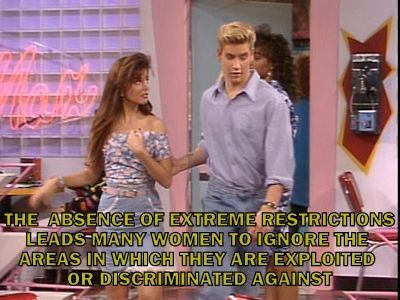
http://savedbythe-bellhooks.tumblr.com/

Not really sure what this has to do with education, environmental, technological or otherwise, but it’s something I’ve been thinking a lot about.  I’ve used saved by the bell hooks before, I love how provoking some of the images and quotations can be.  

I guess what I’m really wondering is why it takes the presence of extreme anything to finally do something, or become aware. 
In the environment it’s climate change, how big does it have to be before people act.  With technology it’s falling behind as teachers, how much do we have to not understand before we realize that communication has changed and we’re a million years behind (like really who even blogs anymore). With people, I guess it’s everything.  Why do we need extremism, to realize the areas we’re being exploited?
Anyway, just wondering how can we be aware of situations without being or causing extremism.  

When are things actually private


AttributionNoncommercialShare Alike
 Some rights reserved by nitot

It’s been interesting this year talking to students and other teachers about what is private, and how things are private. 

One of my teachers wants to share more of her work.  She is doing pretty interesting things and wants feedback and ways to share her knowledge.  She is however afraid that her ex will follow her, and she doesn’t want anything to do with him.  She’s worried about what it means to go public and if sharing is actually worth the stress of knowing he is still watching.  I totally get that, I mean, it’s obvious (at times) to see who is watching and when, but if you go public it can be hard to stop specific people from accessing. My wondering is how important is it, I mean as long as there is no harassment, who really cares and if there is harassment we can block and go to the police, however, she feels much safer not publishing. 
One of my students email was “hacked” he was telling people about his personal account, and someone accessed it and sent some not nice email. I guess firstly I don’t believe it was hacked, but if it was, that’s an interesting story, we keep using the common sense media image where we protect our private information, but that is difficult for younger students. 
My wondering most of this week is, as we continue to be more connected we are less private, and I don’t know if we are teaching how to actually be safe to students, or how to live safely in a very connected world. 

Systems and code


Attribution
 Some rights reserved by kjarrett

This past year we’ve tried to be more active with getting coding into the classroom.  There has been some great successes, and a fair amount of indifference, but I think the most confusing part for me is the conversations with teachers. 

We talk (the teachers and I) often about empowerment, like how do we actually help students be successful in the future.  We talk about the types of skills that might be needed.  Our biggest difference is I believe coding will be one of the only skills required for Digital Literacy.  Most of us navigate the internet as illiterates, we can converse, but we can’t actually make a change or look for deeper meaning.  
When people who lead countries can change the idea of what “fake news” is and people are only trained to consume media, mainly the internet, I think we are in for a scary future.  However, my teachers think that there are different necessary skills (which I also understand are important, just not as crucial). 
Moreover, I guess, I wouldn’t teach anything (especially coding) in a static environment.  For real challenge based, or problem based learning (looking at the system) we need to have coding embedded into may summative assessments, many daily learning engagements, so we’re not just coding, we are solving a problem (hopefully a systemic one). 
Anyway,  I believe that all people can code. We just need to find a way to get them doing it purposefully, and in a way that the teachers easily see the value.

Focusing different

AttributionNoncommercialNo Derivative Works Some rights reserved by ĐāżŦ {mostly absent}

I was reading this article the other day and really liked the idea of “other focus” when on screens. 

There is a lot of talk about screen time and how it may be damaging or even may be good, but I think we often think just about the person who is consuming the screen time and how spending time on screens effects them.  
Like most things we need to look at the broader impact.  How does this effect our relationships, the environment, what is the broader systemic impact? I want to start focusing on this with students, start talking about different options for interactions, and how to keep things positive. 

Growing together

AttributionNoncommercialNo Derivative Works Some rights reserved by madame_urushiol

I love my job, seriously, it’s up there with top jobs in the world, at least in my opinion.  But, like everyone at times I get frustrated with my colleagues. 

Lately it has been revolving around this idea of growing together. A lot of the people I work with are amazing, literally.  Their passion and desire to grow and become amazing educators is overwhelming at times.  There are a few people I am always a little frustrated with, and I think that’s my growth area for the next couple of weeks.  The people I work with, I do think they want to get better, but they have a lot to focus on and at times, I feel that my focus isn’t their focus, this new revelation is that’s okay.  
I need to recommit to the idea that I’m helping them achieve my goals, not my reaching my goals. I need to help them become better and actually grow together.

Personalized Learning

AttributionNoncommercialNo Derivative Works Some rights reserved by Schockwellenreiter

Back to school! 

I’ve been thinking over the break about the whole idea of personalised learning, and who should be “in charge” of the experience. 
I think as a teacher it can be overwhelming at times to think about all the organising we have to do for a personalised learning experience.  Often we try to guide and direct and shape the future, even with personalised learning we aren’t fully wondering about what the students want. I’ve been working a lot with maker spaces this year, and iTime inquiry and I think that letting students have some control of the learning while still being able to hit most of the outcomes necessary.
I think working towards personalised learning is crucial, but I’ve been wondering more about how to make it also communal. 
I want to start bringing experts in from near our school. I want to start building a community, but I also want students to start working together (maybe even being assessed together). 
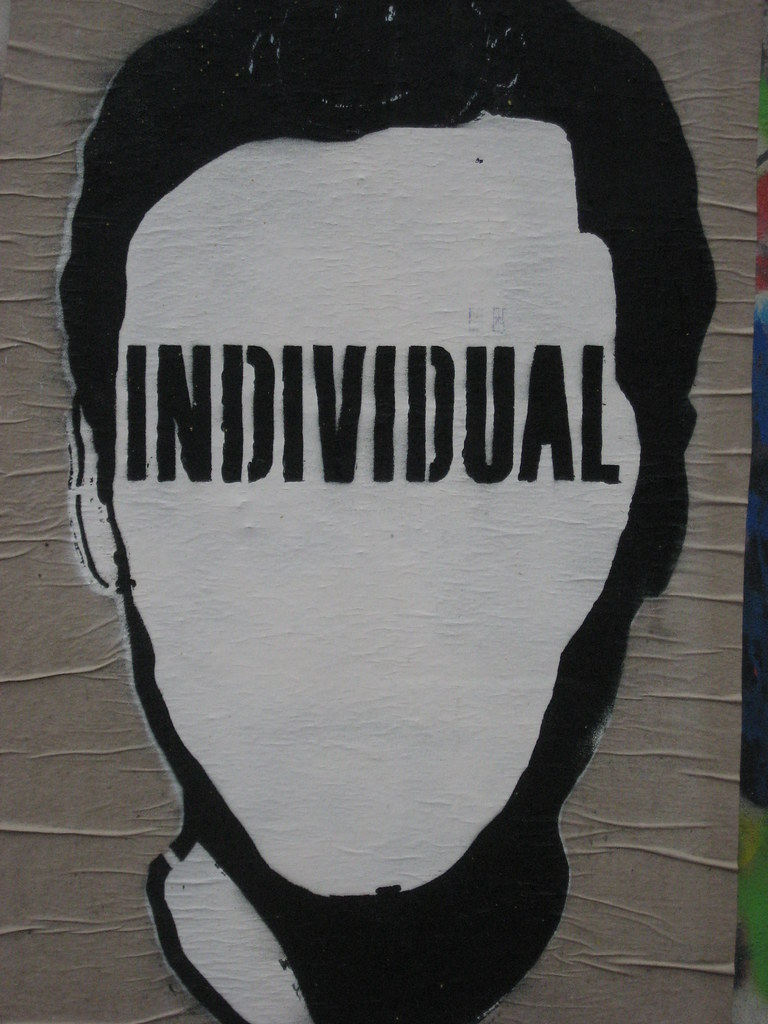
I don’t know, it’s the beginning of the year.  I love personalised learning, but I don’t just want to focus on the individual.  

Always growing

AttributionNoncommercialNo Derivative Works Some rights reserved by hellojenuine.

I’ve been thinking a lot about how to continue to grow. As a digital literacy coach, I think it is my job to grow and continue to grow. Not just for the sake of growth, but always looking and wondering about how to change and enhance what’s happening in the classroom.  

Sometimes I fear that I’m just growing and changing for the sake of growing and changing, other times I’m worried that I’m too stagnant and not growing enough. 
I have honestly felt that we learn the most and change the most when we are feeling uncomfortable. One of the things I try to do throughout the year is to put myself in uncomfortable situations in order to help me see my work from different perspectives. 
So I guess I’m wondering what my next growing opportunity is going to be.  I’ve tried things from a maker space perspective this year, and it’s pretty interesting.  It’s especially interesting to see the commonalities between design perspective and systems thinking in environmental education.  I also have loved the idea of critiquing the user experience model, so it’s been a lot of fun. 
I’m looking for the next big shake up though so I can change how I’m learning.

Deep Learners

AttributionNoncommercialNo Derivative Works Some rights reserved by atomly

Just got back from a Deep Learners Conference in Malaysia.  I went with some of my colleagues and presented on “Real Connections”.  I posted my first draft up here a couple of weeks ago, but it turned out a lot different after last week.  It ended up like this…

A lot of it was the same, but I wanted to make mention of how I kind of wanted the future to look. 
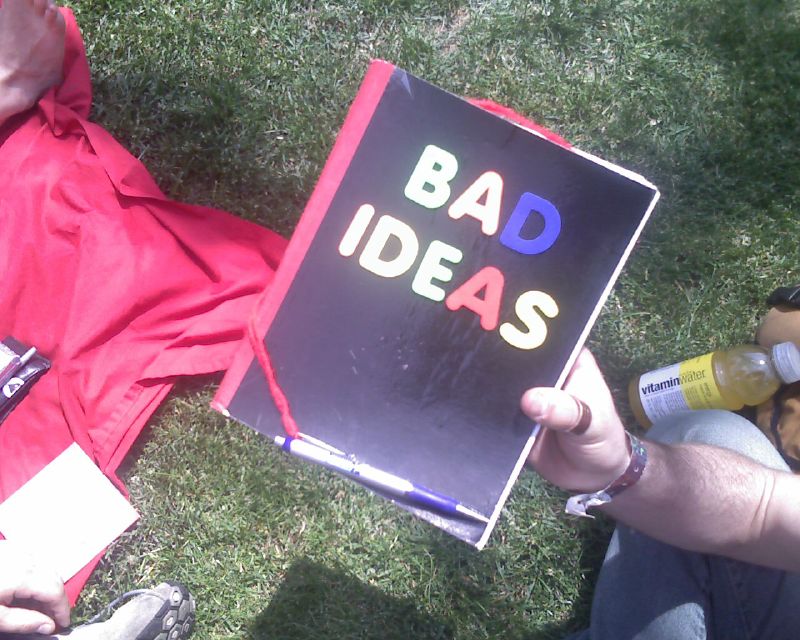
One of the most interesting aspects of the conference for me was the focus on bad ideas. I like how we can change our thinking around, how we can look at a bad idea and eliminate the “bad” parts of it. 
We had a lot of time to work through our idea, and as a group, we laughed, grew and got to know each other a little better.  I think this focus on having a bad idea and honouring it, really helped us as a team. 
A couple of my colleagues presented which was nice to see us grow as a school. It was all around a great conference actually. I love the format where you can go and discover new ideas in the morning (no big commitment, only twenty minutes) and then do something in the afternoon.  
Check it out if you’re keen Deep Learners

Wow?

Attribution Some rights reserved by a loves dc

I don’t often talk about feelings I guess, which is not great; but, this week was crazy.

Two of the things I firmly believed in (not just thought I believed in, but thought everyone believed in) were proven to be untrue this week.  
I believe(d) that people genuinely were starting to care more about our environment, our place, our world, just I guess everything that is involved in our living system.  I thought everyone in the world was moving towards a better (even if it was still far from perfect) world.  Wow, the election proved me wrong.  How can people still deny climate change? How does that honestly still happen?  I honestly couldn’t believe it. 
Connected to this, I believe(d) that people are more connected to something in their community or globally now.  I thought that it was more global, but also believed we were just overall more connected to something around us.  Again, isolationism as a result of our election.  How can people seriously believe that we can operate on our own anymore? How can people think that imaginary lines drawn across land mean anything?  What benefits do we have from doing things on our own? 
I don’t know.  
I think media failed me and many others, I didn’t that this was possible. I understand the role I played, how I was compliant to listen to people who believed the same thing I do, but to not even think of this as a possibility is alarming.  As an educator I have to be more aware of how we actually search and what we intentionally make ourselves available to.  
I think we failed each other.  We haven’t really been listening to each other and our problems, we don’t know what our community is feeling especially in regard to what they are scared of.  
As an educator I think we have an exciting opportunity to work with students to make sure change is going to continue to happen. But it’s been a disturbing week.